

The Full Essay
The Project's Position: An Extreme Archaeology of Conceptual Art
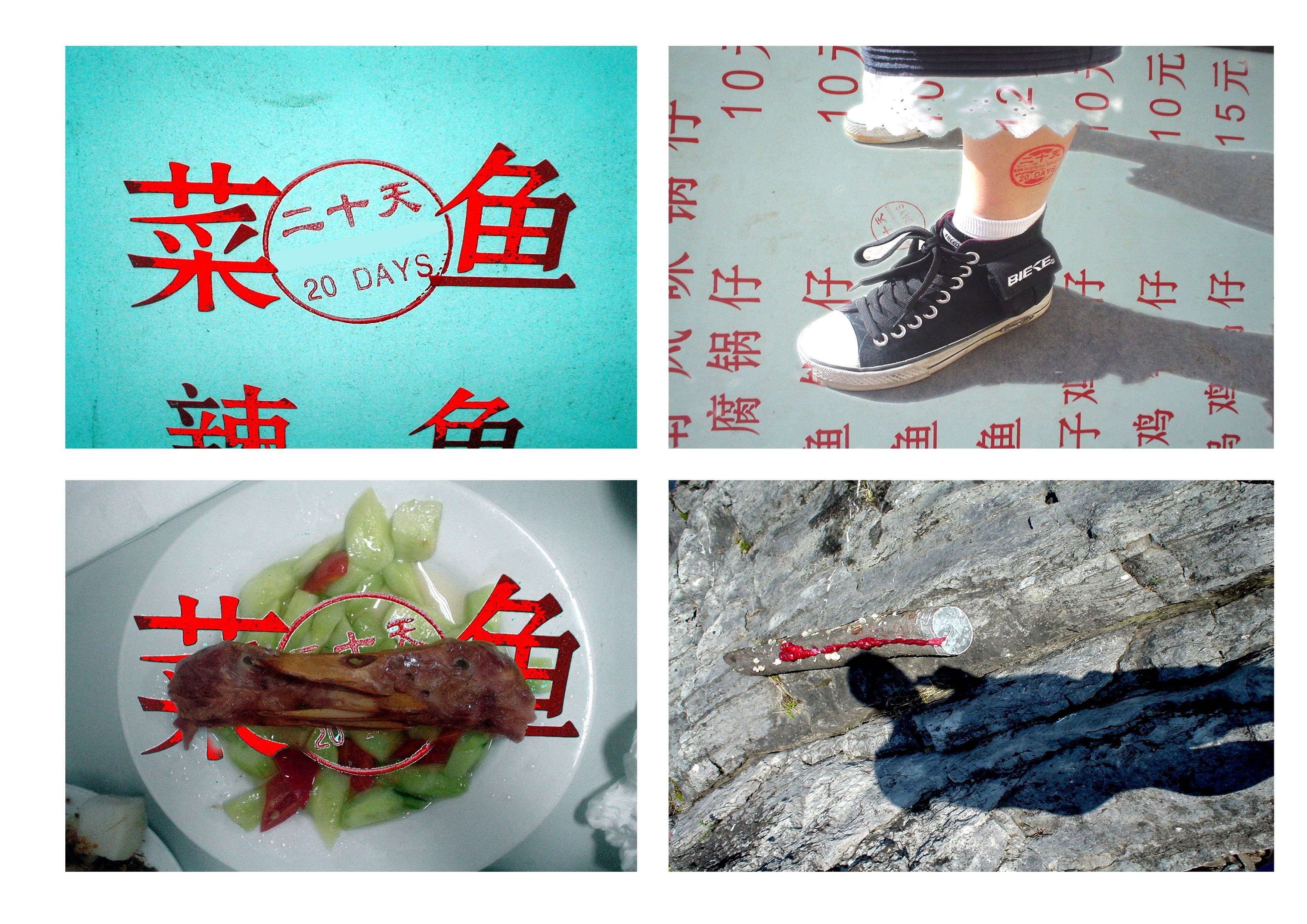
In 2003, the artist Lao Mu returned from the Norwegian Royal Academy of Fine Arts and, facing the increasingly institutionalized and marketized reality of Chinese contemporary art, launched an extreme archaeology of conceptual art. This is not a “local supplement” to the Euro-American genealogy of conceptual art, but a reverse inquiry from its endpoint: if language is stripped away, if institutions are stripped away, if theoretical presuppositions are stripped away, if Western-centrism is stripped away, does conceptual art still exist? Taking active rejection — rather than passive exclusion — as its core methodology, the project launched the “20 Days” extreme experiment at the Loft in Kunming.
The Threefold Operation of Active Rejection
Rejecting funding: refusing foundation applications, sponsorship conditions, and the logic of market exchange, rebuilding an art economy through street donation, barter, and free exchange. Funding is never neutral; it carries the funder's aesthetic presuppositions, time frame, and standards of success. To refuse funding is to refuse the colonization of these presuppositions, to seize back the power to define “what art is.”
Rejecting institutions: refusing the “white cube” isolation of the museum, the commercial agency of the gallery, the bestowal of “international recognition” by the biennial. Finally persuading the Loft to provide a free exhibition hall was not “obtaining institutional support” but demoting the institution to a temporary tool — the Loft was not a sponsor but something used; not a giver of legitimacy but a provider of space.
Rejecting identity: actively dismantling the artist's professional identity while simultaneously bearing the torn multiple identities of creator, curator, beggar, hall-seeker, and organizer of daily life. On the tenth day, in physical and mental collapse, all identities dissolved at once, and the remaining “body without organs” had only hunger, fatigue, and the desire for sleep — the completion of identity's dissolution is precisely the starting point of art's return to bodily inertia.
The Core Practice: The Painting of a Thousand People and a Phenomenology of Matter
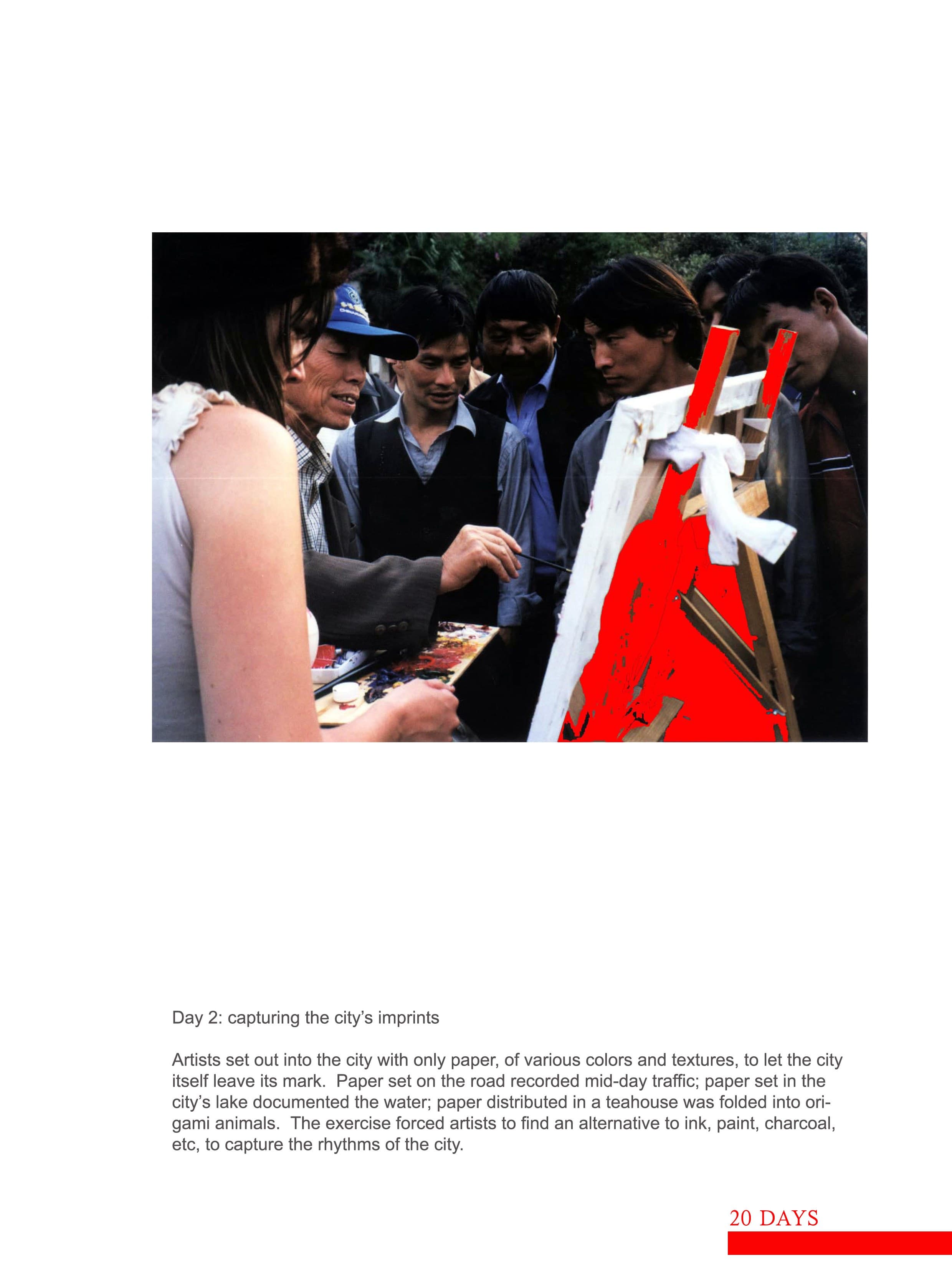
On the first day, the artist took a blank canvas frame and paint onto the street and invited 1,000 ordinary people (non-artists) to paint freely on the canvas. With no guidance, no aesthetic presupposition, no aesthetic standard — from children to the elderly, from vendors to clerks — 1,000 hands turned the canvas from white to gray-black within eight hours.
This was not the warm interaction of “participatory art” but an extreme collision — the artist's body and the city's body, strangers' gestures and strangers' gazes, the materiality of paint and the ineffectiveness of discourse, formed an uncontrollable chemical reaction on the street. Each subsequent day the participants were a different group: market vendors, park elders, children let out of school, teahouse card-players… and the creative result each day was utterly different — a storm of scribbles, a geometric order, complete faces emerging in alternation.
The philosophy of gray-black: the white canvas turning gray-black is not the generation of “meaning” but the dissolution of “meaning.” The superimposition of 1,000 anonymous strokes transforms the canvas from an “art surface” into a “social stratum” — each person's trace is covered by others' traces, and in the end no individual trace can be identified. Gray-black is the silent superimposition of 1,000 voices, the paradox of democracy: everyone's participation equals everyone's disappearance. This forms a dialogue with Jean-Luc Nancy's “inoperative community”: community is not the sum of individuals but the irrecoverable loss of the individual in the common.
The Threshold of Collapse: The Sovereignty Reversal on the Tenth Day
The project's true challenge lay not in creation but in survival. Ten consecutive days of high-intensity social interaction, rushing about for space, unstable sleep, the continuous tearing of multiple identities, survival anxiety overwhelming everything. The artist recalls: at the time making art was no longer the problem; the real problem was how to find a place to eat and sleep each day.
The verge of physical and mental collapse on the tenth day is the completion ritual of active rejection — when all that can be rejected has been rejected, what remains is not “freedom” but “necessity”: must find something to eat, must find somewhere to sleep, must continue to the eleventh day. This “bodily compulsion” is not the discipline of an institution but the inescapability of materiality.
The key reversal: on the tenth day he wanted to give up, but giving up required more energy than continuing. The collapse itself became new creative material — creation without expectation, continuation without meaning, a purposeless “getting through.” This is precisely the ultimate concept of conceptual art: when all concepts have been eliminated, what remains is not nothingness but the inertia of continuing. With the pure intensity of the “body without organs,” the artist crossed the threshold and entered the “meaningless continuation” of days 11–20.
Extreme Formation and Collective Carnival: The Dialectical Reversal of Rejection
After the tenth day, with his remaining energy the artist persuaded the Loft art space to provide a free exhibition hall, and went into the street to publicly solicit donations, persuading the public to provide drinks for the opening. Within the extreme time span of twenty days, he completed the impossible task of going from “zero” to a “professional exhibition.”
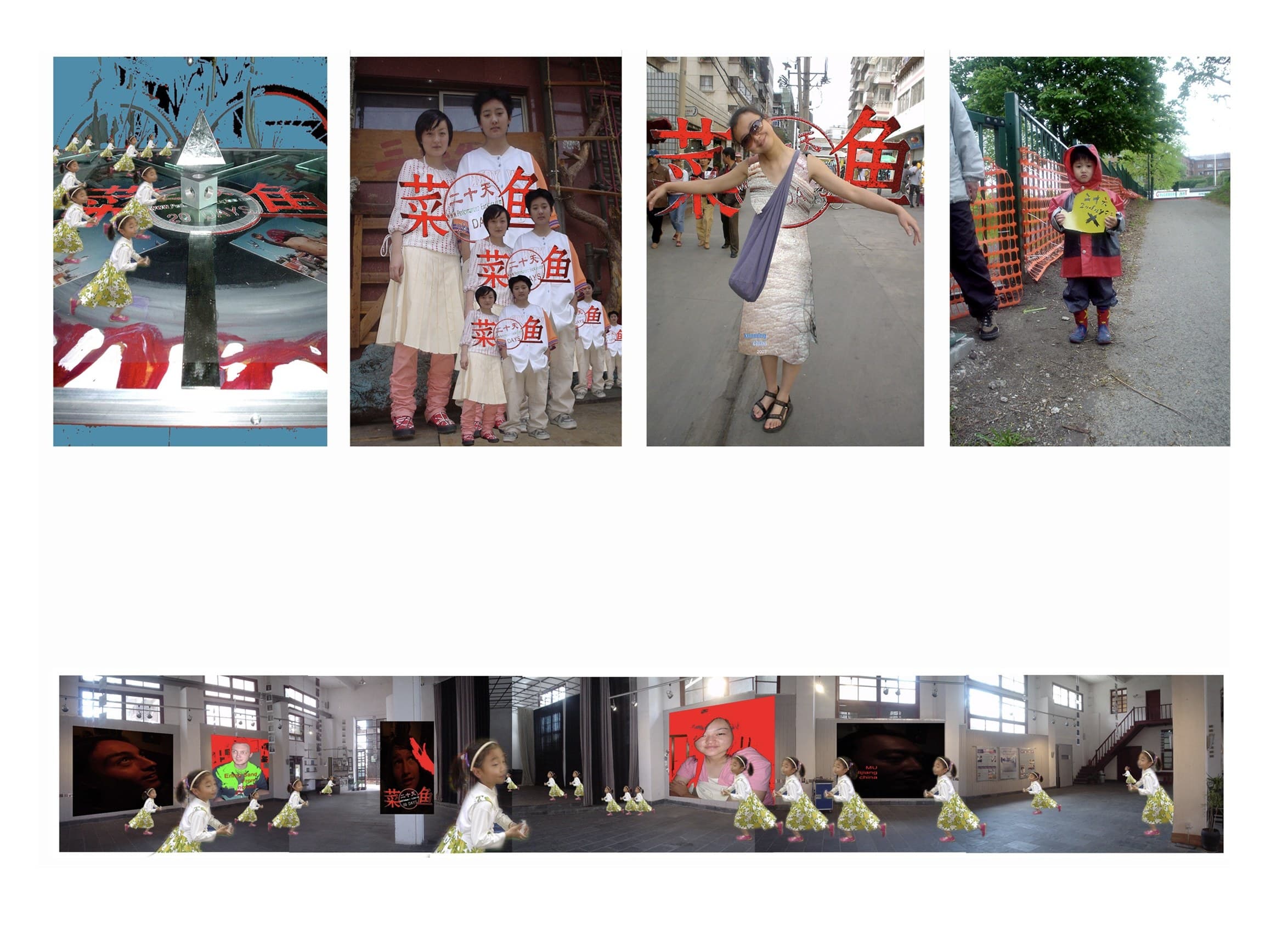
The key turning point: the exhibition opening was not the artist's “display of personal achievement” but a collective carnival of all the public participants. The 1,000 ordinary people who had scribbled on the canvas, the strangers met during street fundraising, the peers gathered in the Loft space — all entered the free hall together and celebrated amid free drinks. This was not a ritual of “viewing art” but a liberating moment of “experiencing becoming an artist” — everyone had left a trace on the canvas, everyone had taken part in the creation, and everyone in this moment confirmed: I too can become an artist.
Dialogue with Beuys: Beuys's “everyone is an artist” “taught” the public through education, lectures, and political action; the Kunming station, through extreme street encounters, direct material participation, and the shared consumption of drinks, let the public themselves experience the joy of becoming artists. This was not a right that is “bestowed” but a pleasure “seized for oneself” — from “art for the other” to “art for oneself,” from the “object of viewing” to the “subject of production.”
The Philosophical Dimension: An Intersection of Multiple Theories
Foucauldian archaeology of knowledge: the project does not seek the origin of conceptual art but rediscovers, at the rupture, suppressed possibilities — the scribbles of 1,000 ordinary people are a “non-knowledge” (savoir) outside institutionalized knowledge, a residue that the power of discourse cannot fully archive.
Deleuzian deterritorialization: the simultaneous tearing of multiple identities is a deterritorialization of the concept of the “artist” — desire is no longer coded by identity-function but freely combines in the flow of intensities. After identity dissolved on the tenth day, the pure intensity of the “body without organs” let creation continue.
Bataille's general economy: street fundraising and the exchange of drinks are not the accumulation logic of “restricted economy” but the expenditure logic of “general economy” — non-productive gift-exchange, festive carnival, and shared consumption are the source of social cohesion.
Benjamin's dialectical image: in the final exhibition, the gray-black canvas, the records of street fundraising, the traces of negotiation with the Loft, and the band's improvised performance form a dialectical superimposition of twenty “nows” — they are not “documents” but an “archive of the state of emergency,” making the audience realize: art is not a “work” but a “witness of extreme survival.”
The Creation Dimension of Chongren-Li'en
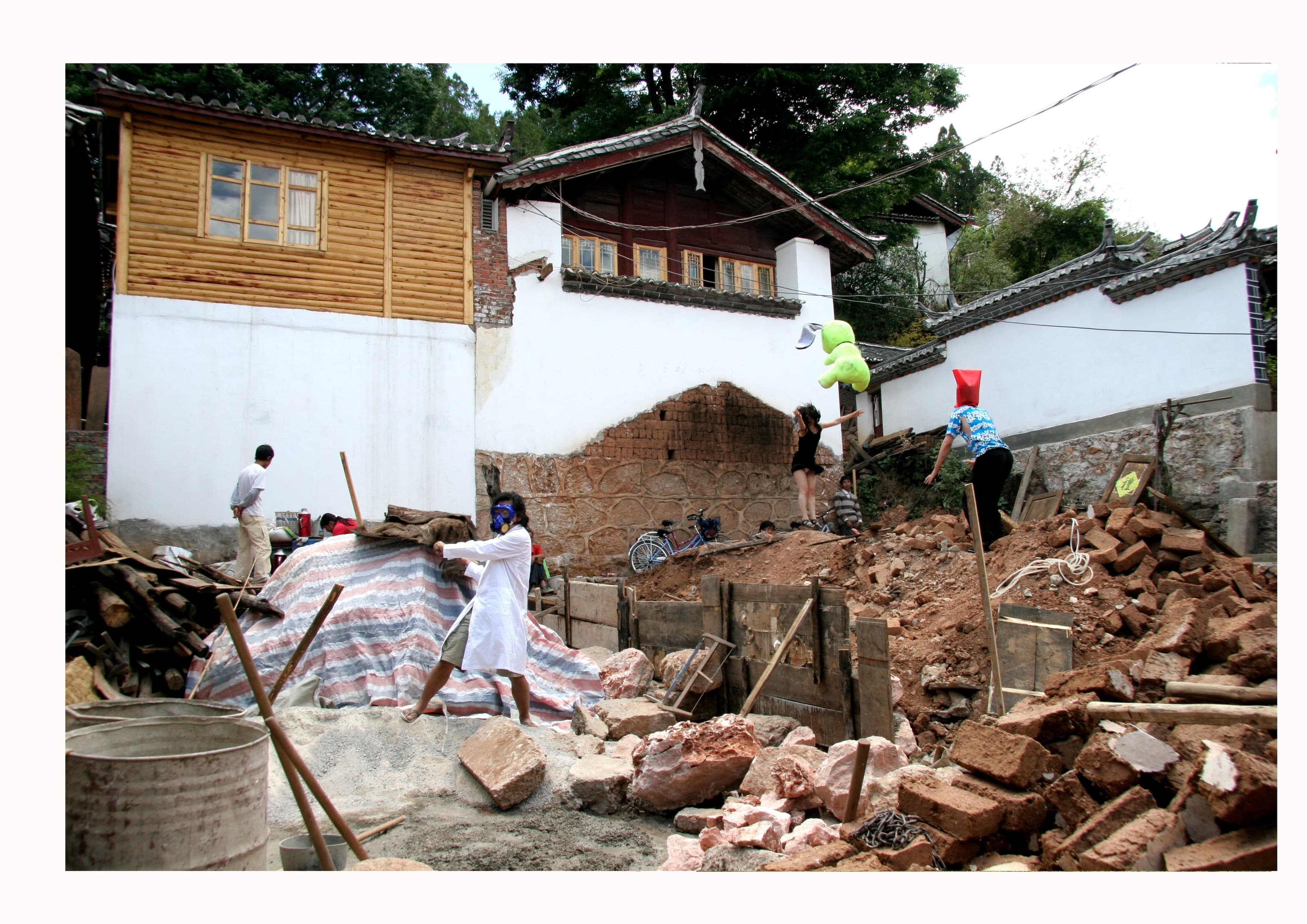
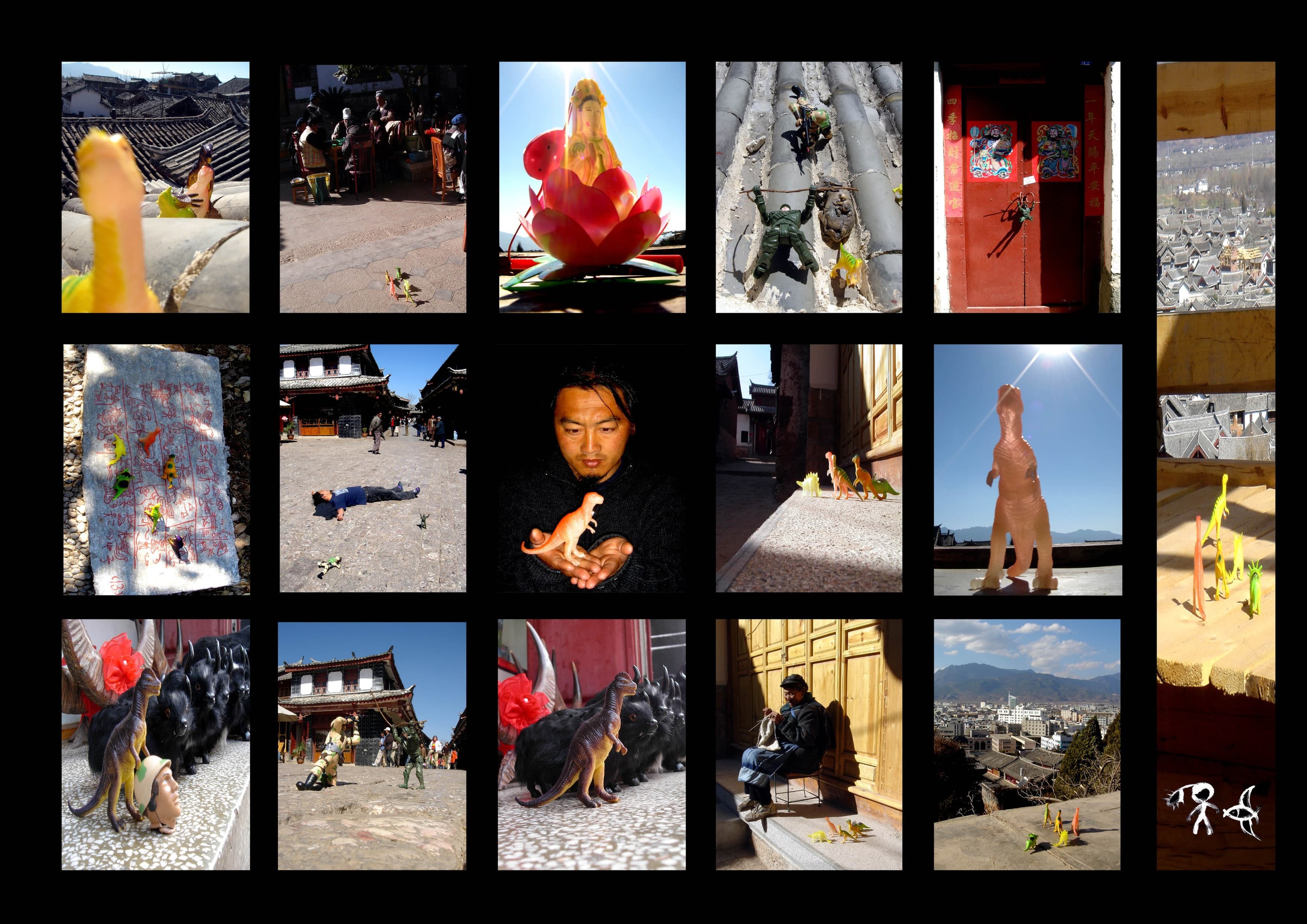
In the Naxi Dongba creation epic “Chongbantu,” Chongren-Li'en comes from heaven to the human world, actively choosing to leave perfect order to face the extreme trials of the poison sea, the demon mountain, and the false people. The Kunming station is a contemporary re-enactment in the manner of Chongren-Li'en: the artist returns from Norway (“heaven”) to Kunming (“the human world”), actively rejecting institutional shelter, and within the “poison sea” of 1,000 strangers, the “demon mountain” of the tenth-day collapse, and the “false people” of identity's dissolution, rebuilds the primordial conditions of art. The gray-black canvas is a contemporary “failure of creation” — not the establishment of order but the demonstration of order's impossibility; not the completion of the myth but the reduction of the myth to a heap of matter.
The Project's Legacy
“20 Days · Kunming” is the methodological prototype of the subsequent Oslo, Amsterdam, and Brittany stations, and also the first direction of a two-way experiment with “Lijiang Studio” (the institutional-collective path). It proves: extreme conditions are not an obstacle to creation but a catalyst forcing art to return to the social scene; active rejection is not self-destruction but a radical method of creating a gap of sovereignty; collapse is not the project's failure but the extreme data of conceptual art.
In the end, art is not the artist's patent, not the product of an institution, not the crystallization of funding — but a common joy that everyone seizes for themselves in the extreme moment, in the gap of rejection, in the shared consumption of drinks.