The Full Essay
Full Essay
From May to June 2005, the third station of the “20 Days” project entered the Rijksakademie in Amsterdam — one of the most important artist-residency institutions in Europe. Utterly unlike the street public space of the Kunming station or the city square of the Oslo station, the Netherlands station for the first time placed the project inside a mature art institution, and completely covered its three-layered power structure: director, guest professors, resident artists.
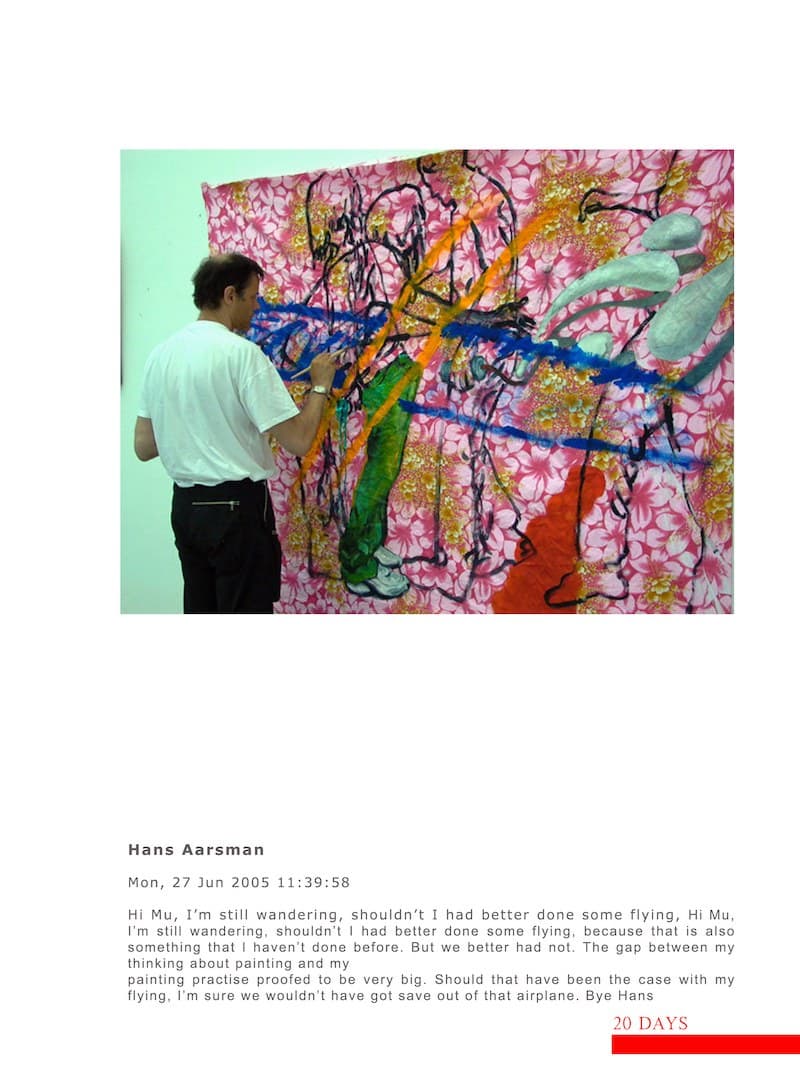
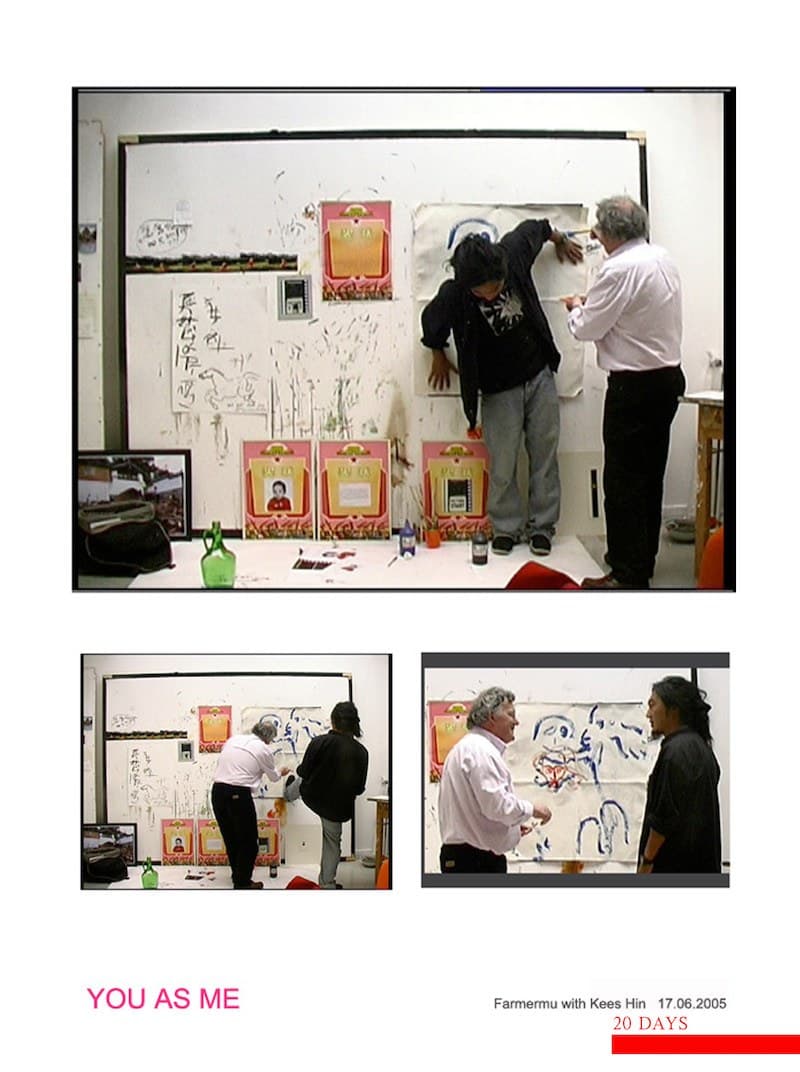
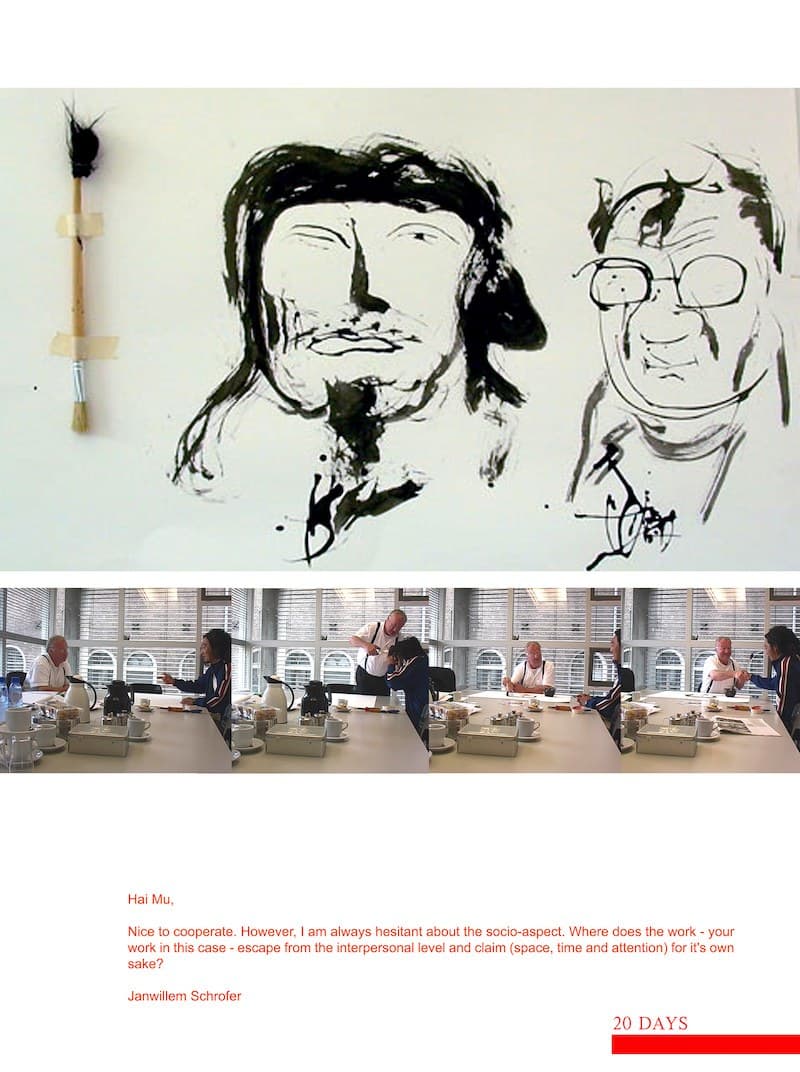
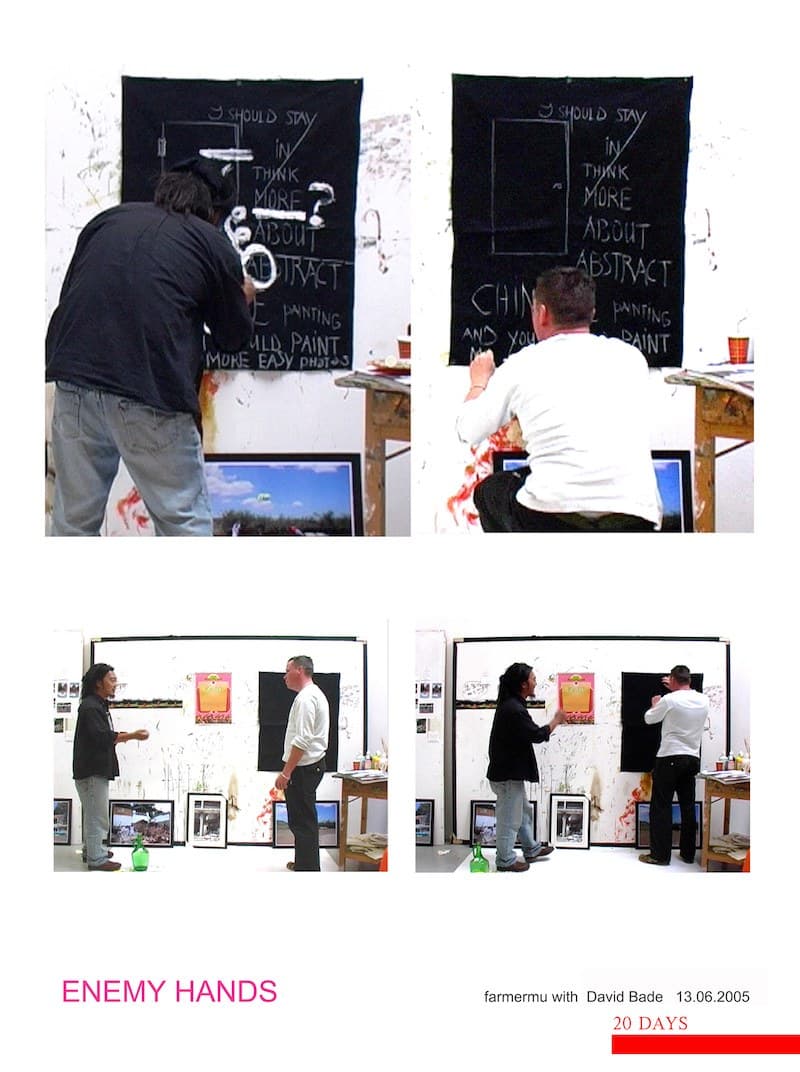
Over the twenty days, Lao Mu collaborated closely with a different person each day, performing or making art according to the perspectives and curiosity of both sides. The director Janwillem Schrofer participated with an ink double-portrait and a meeting scene; his correspondence pointed directly to a core inquiry: “When does the work escape the interpersonal level and claim space, time, and attention for itself?” — a philosophical challenge posed by a resident artist to the director, itself evidence that the institution's highest power had been temporarily suspended. The guest professor Hans Aarsman (a famous Dutch photographer) created on a floral-patterned canvas, his correspondence confessing that “the gap between thinking about painting and practicing painting is enormous,” academic authority exposing its professional predicament in collaboration. The guest professor Kees Hin's “YOU AS ME” was presented as a two-person whiteboard drawing, with Dongba-script calligraphy juxtaposed on the wall with a red certificate-like image, completing a two-way substitution of cultural power. The guest professor David Bade's “ENEMY HANDS” unfolded as interactive blackboard writing, the argument over “abstract painting” reducing academic discourse to a bodily, on-site confrontation.
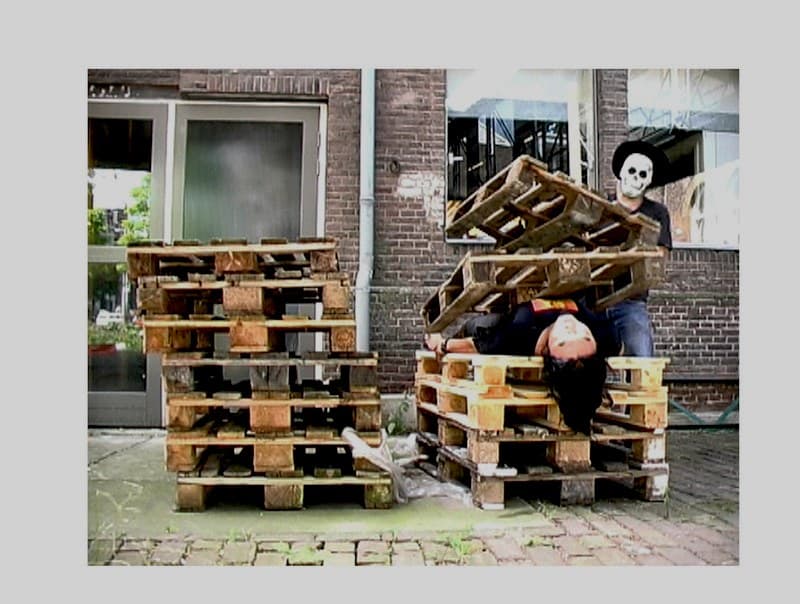
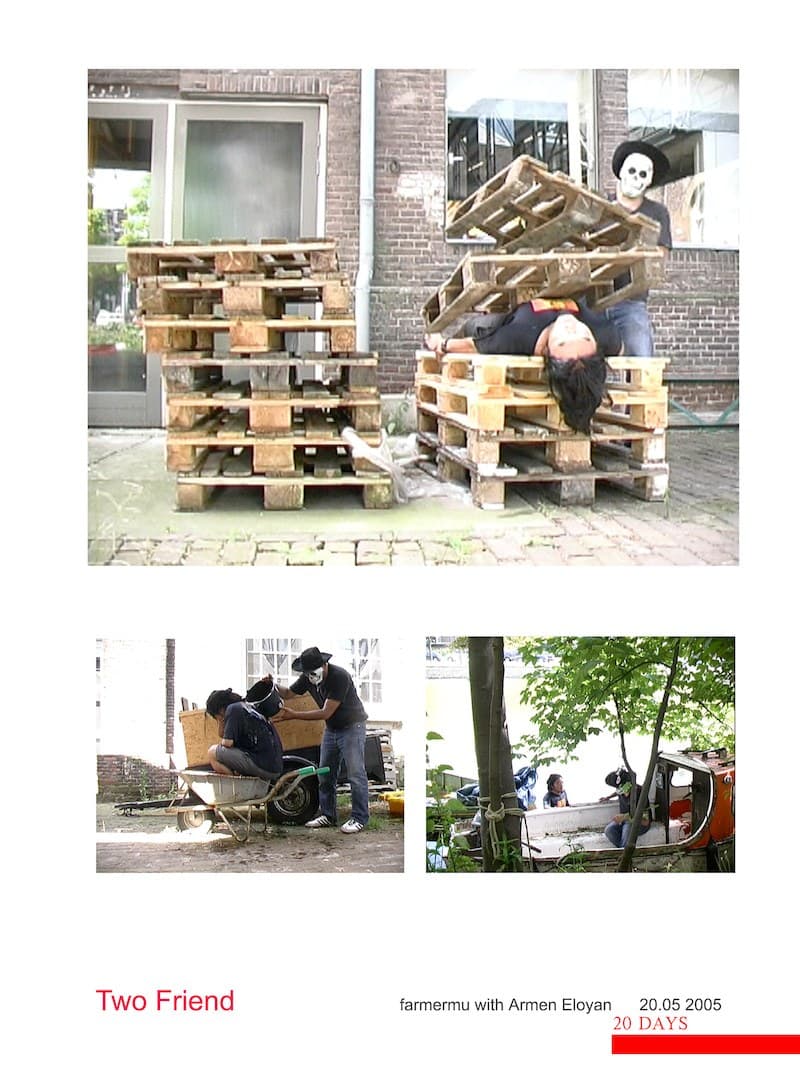
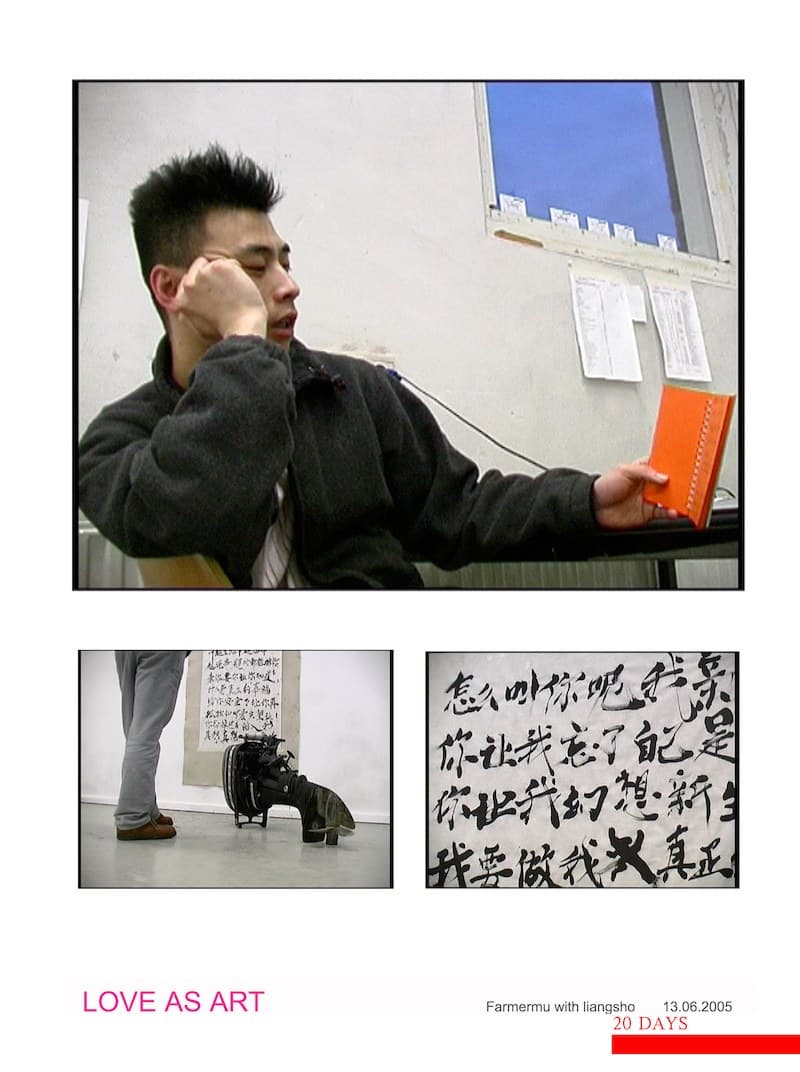
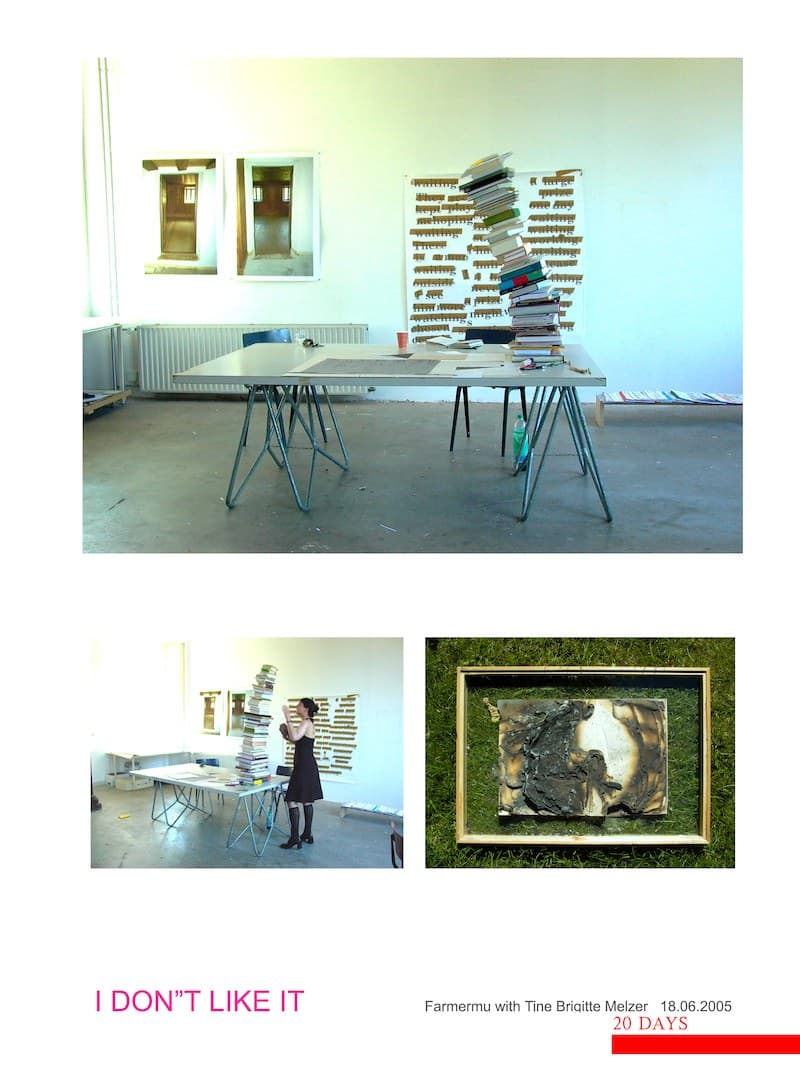
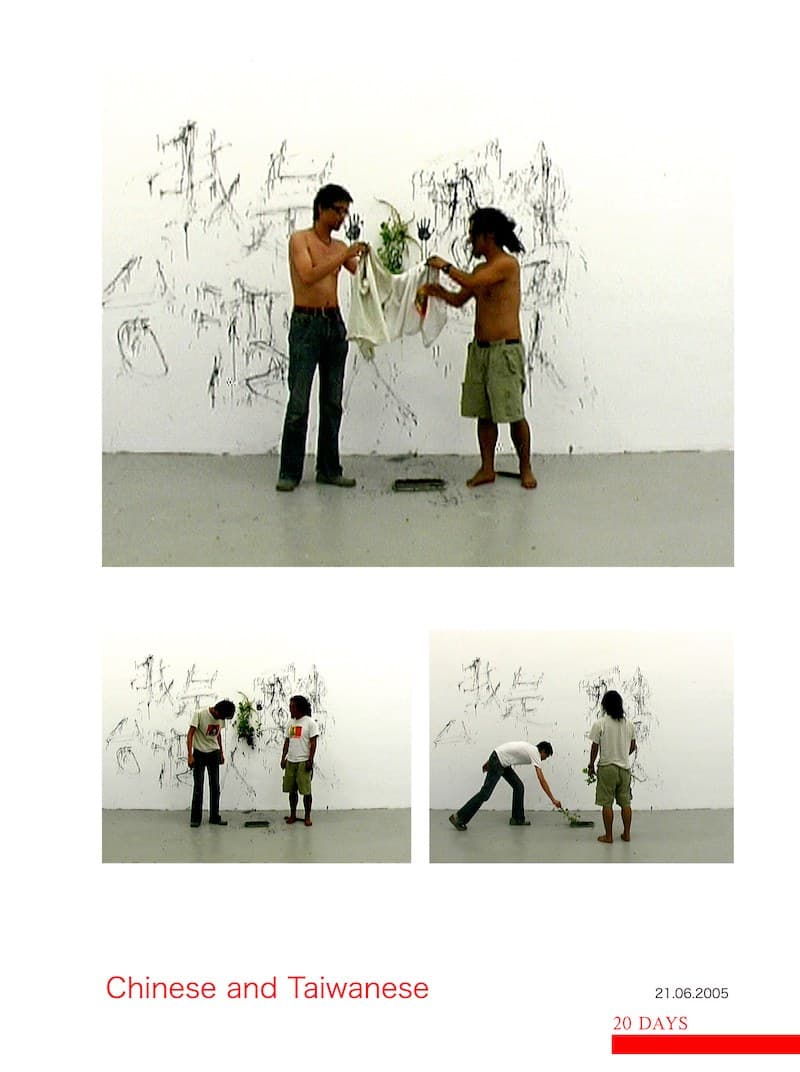
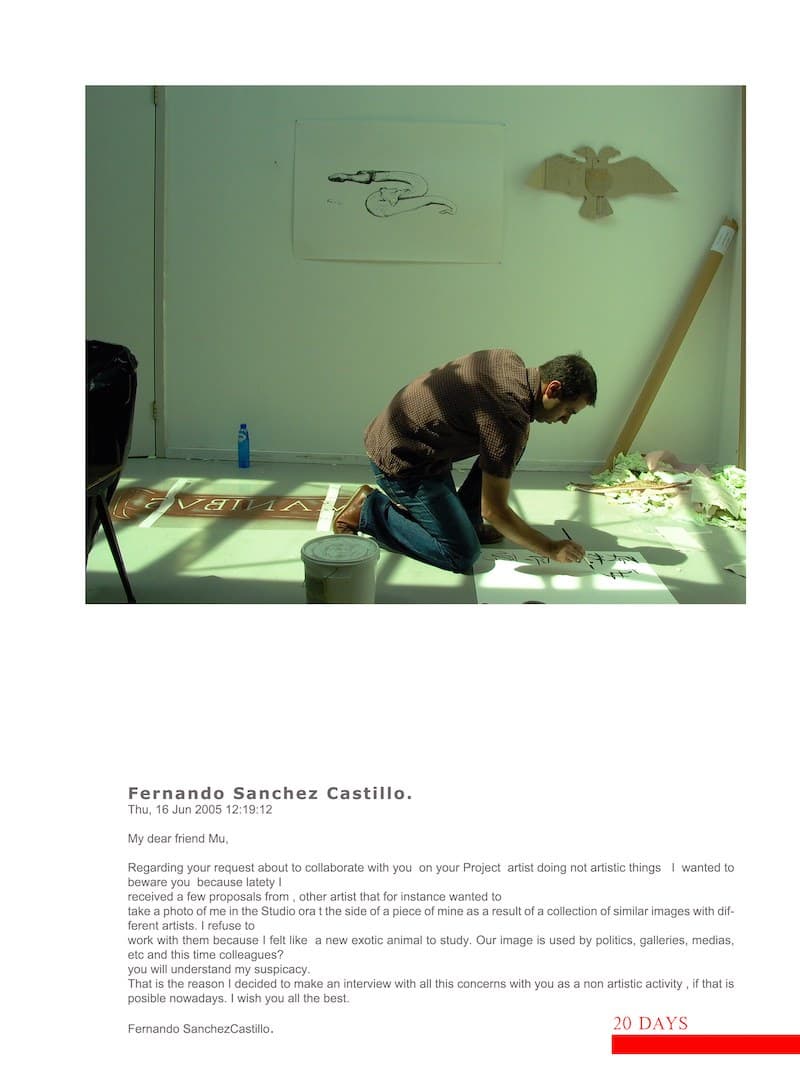
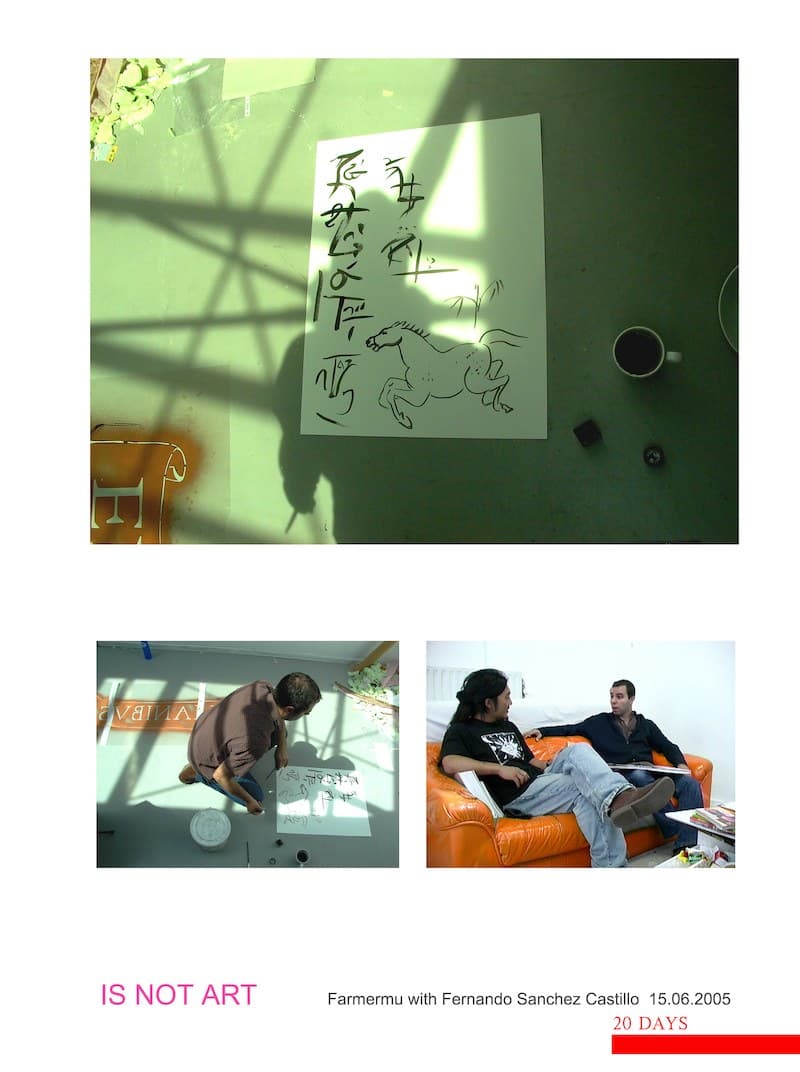
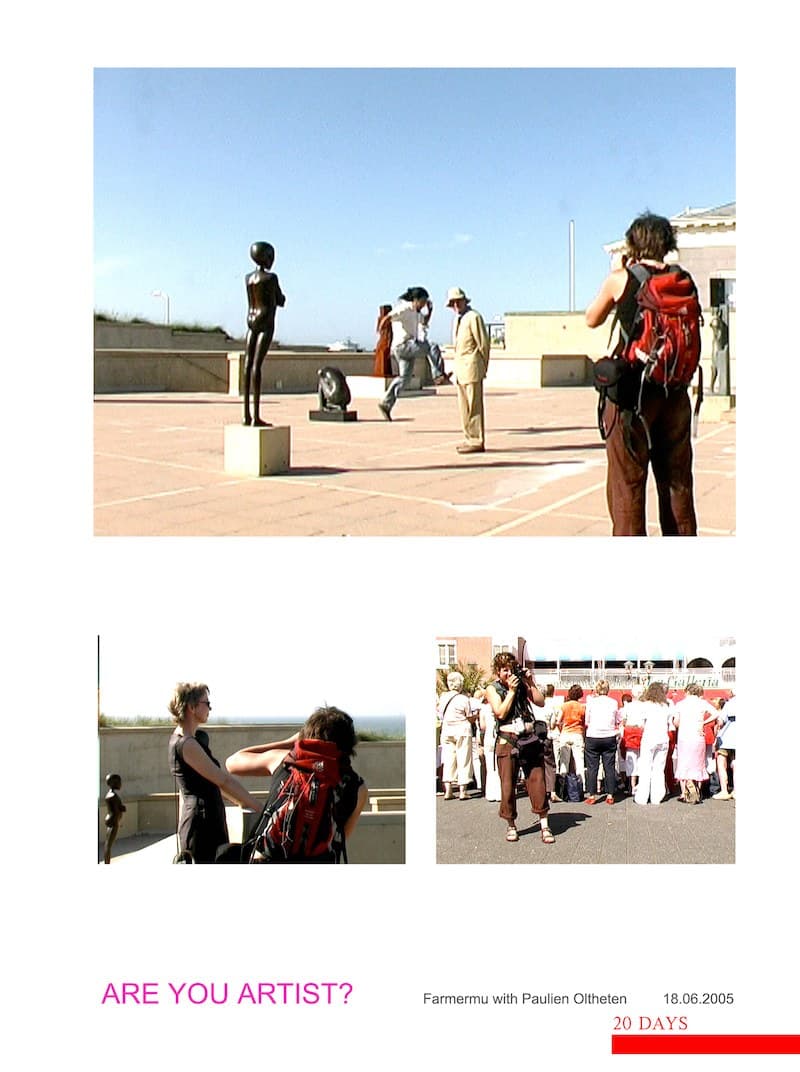
The level of the resident artists likewise constituted a key tension. Armen Eloyan's “Two Friend,” with an outdoor skull mask and a wooden-tray action, brought the street energy from outside the institution into the academy. Liang Shuo's “LOVE AS ART,” with a telephone action and calligraphy, injected the language of Chinese contemporary art. Fernando Sanchez Castillo's “IS NOT ART” juxtaposed calligraphy with a galloping-horse image; his correspondence refused the form of an “art activity,” wary of artists being studied as “new exotic animals,” and proposed changing it to an interview of a “non-art activity” — the resident artist's self-critique of the institution's interior. Tine Briagitte Melzer's “I DON'T LIKE IT,” with a book installation and a burned picture frame, presented a doubt about art production. Paulien Oltheten's “ARE YOU ARTIST?,” shot as an identity-exchange in front of the sculpture museum in The Hague, let the boundary between public and artist dissolve in the lens. Another unnamed resident artist took part in the two-person “Chinese and Taiwanese” action — bare-chested, dressing together, writing on the wall — responding to the question of identity with a body-politics.
The key correspondence revealed the depth of the project's deconstruction of power. Schrofer, as director, was compelled in his response to enter philosophical speculation, the equal tone itself clear proof that the institutional hierarchy had been suspended. Aarsman, as professor, confided his predicament to the artist, authoritative discourse reduced to personal experience. Sanchez Castillo, as resident artist, refused the “art” label from within, forming the middle layer of the institution's self-critique. These three layers of voices interwove to constitute a three-dimensional deconstruction of the Rijksakademie.
The Netherlands station's core strategy thereby became clear: not to criticize the art institution from outside but to let the director, guest professors, and resident artists mutually deconstruct one another in day-after-day equal collaboration. The Rijksakademie was no longer merely a venue, the three layers of power no longer merely a hierarchy, but were drawn into the equal framework of “daily collaboration,” their very identities becoming the material of the work. This is of one lineage with Beuys's idea of the “Free International University,” yet goes a step further — art not only dissolves the boundaries of the institution but lets the core power within the institution temporarily lapse in the encounter. When the twenty days ended, 20 artworks, 20 record videos, and a large number of process photographs together constituted an archival critique of art education. Thereby “20 Days” advanced from social intervention to the meta-art level of a critique of power, completing a key leap of methodology and laying a deep foundation for the fourth station.