The Full Essay
Full Essay
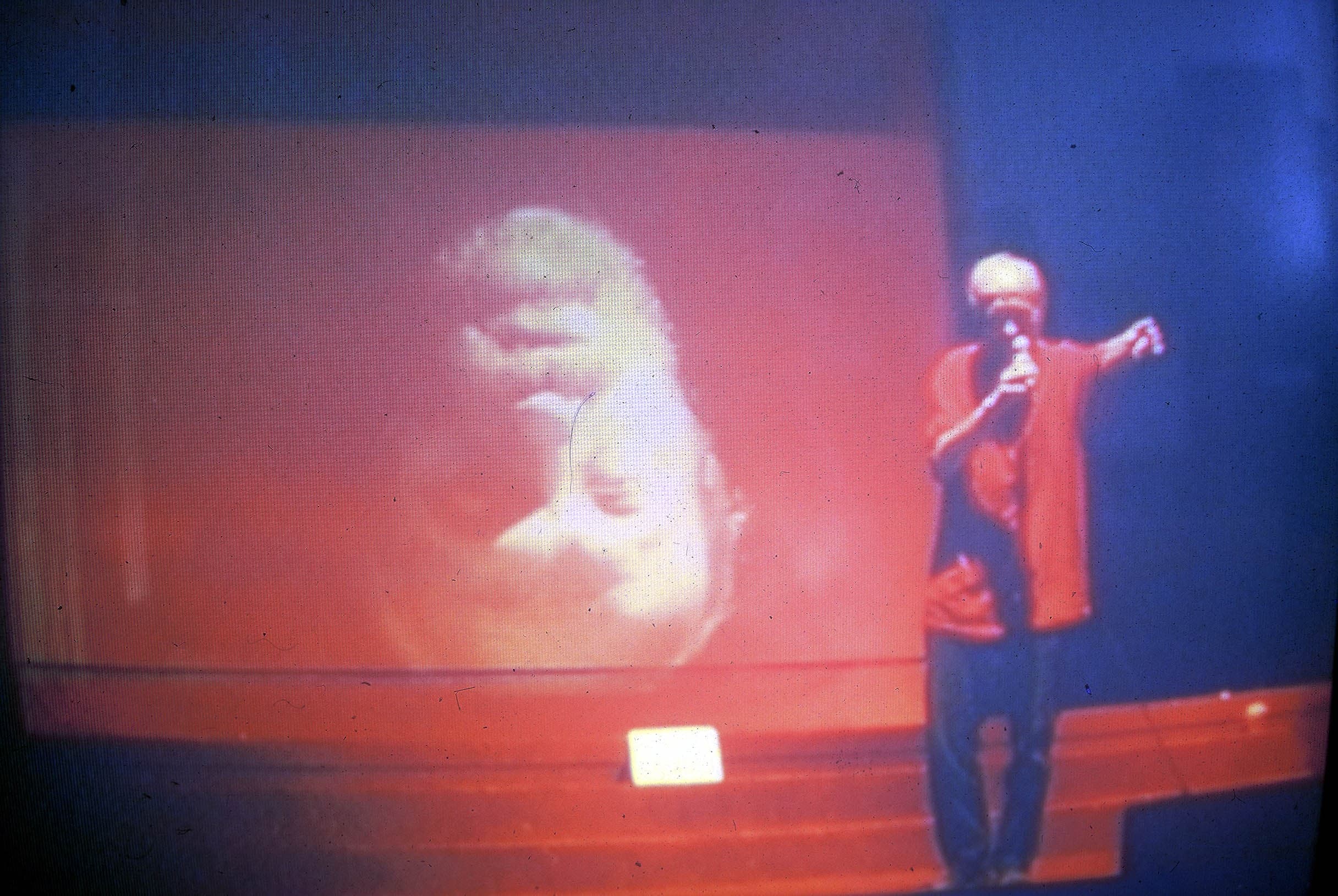
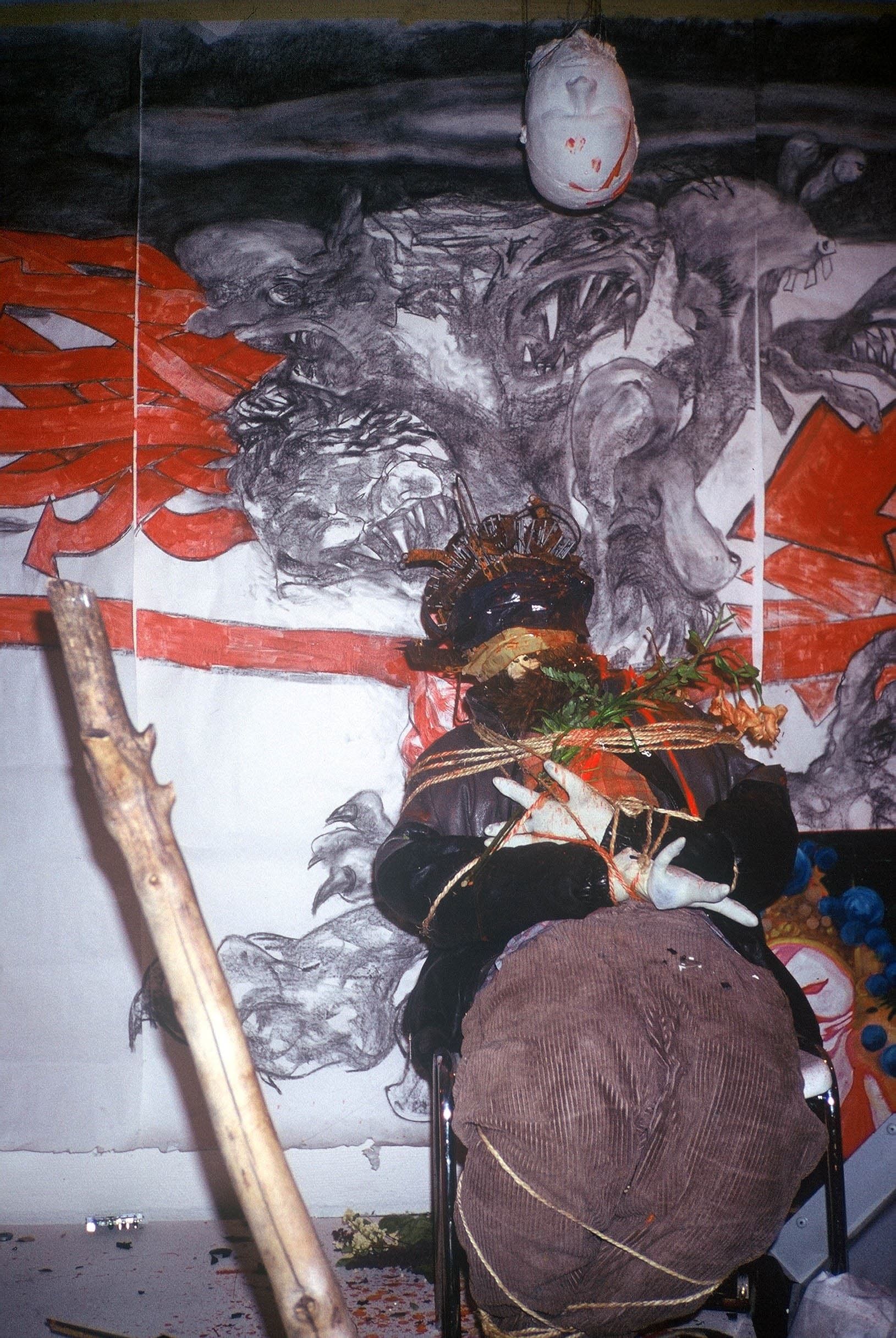
Winter 2000, Oslo Museum of Contemporary Art. The Naxi artist Mu Yuming's graduation exhibition “He-Me” (Ta Wo), with mixed-media installation, video, and giant painting, presented the extreme expression of four years of Nordic life.
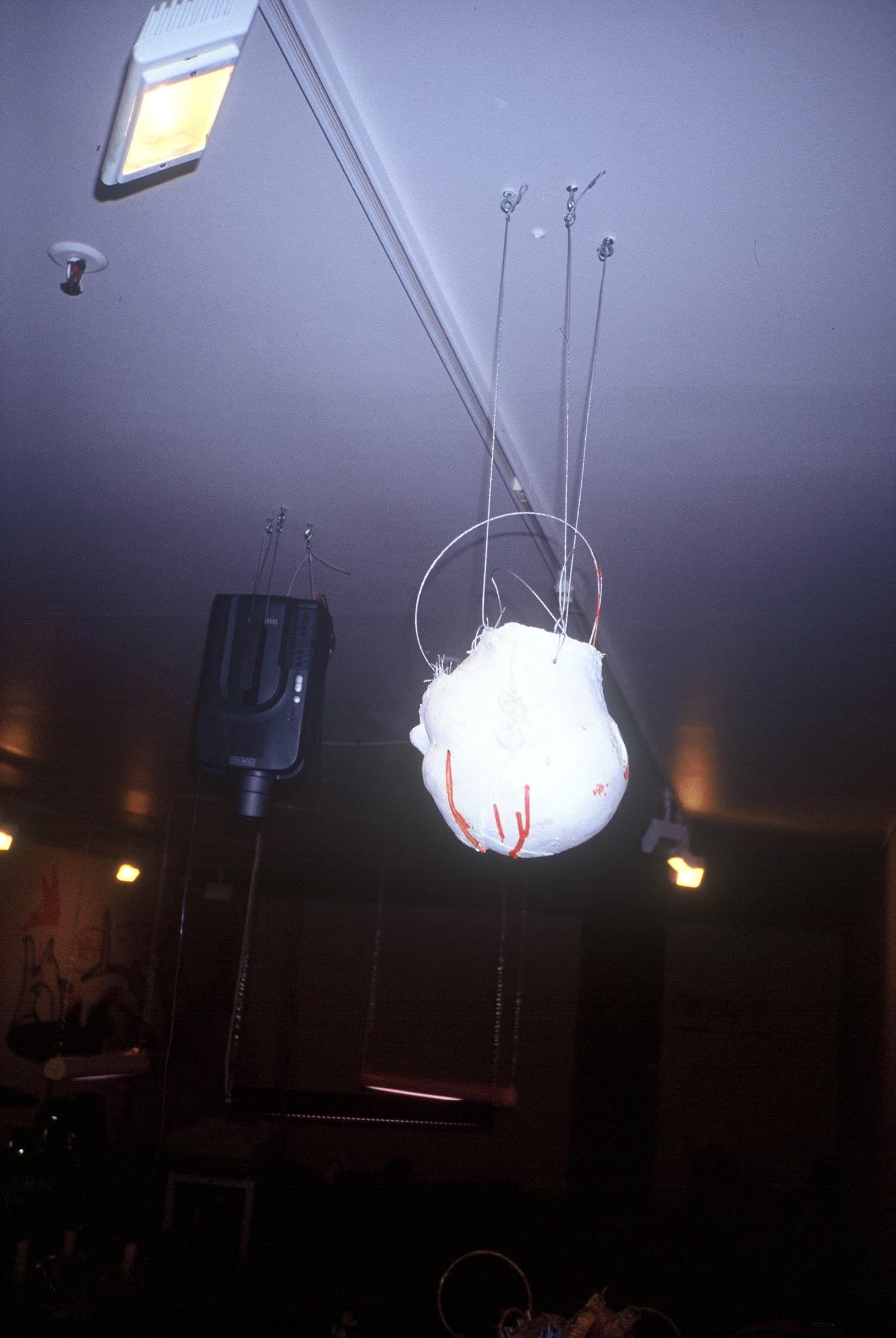
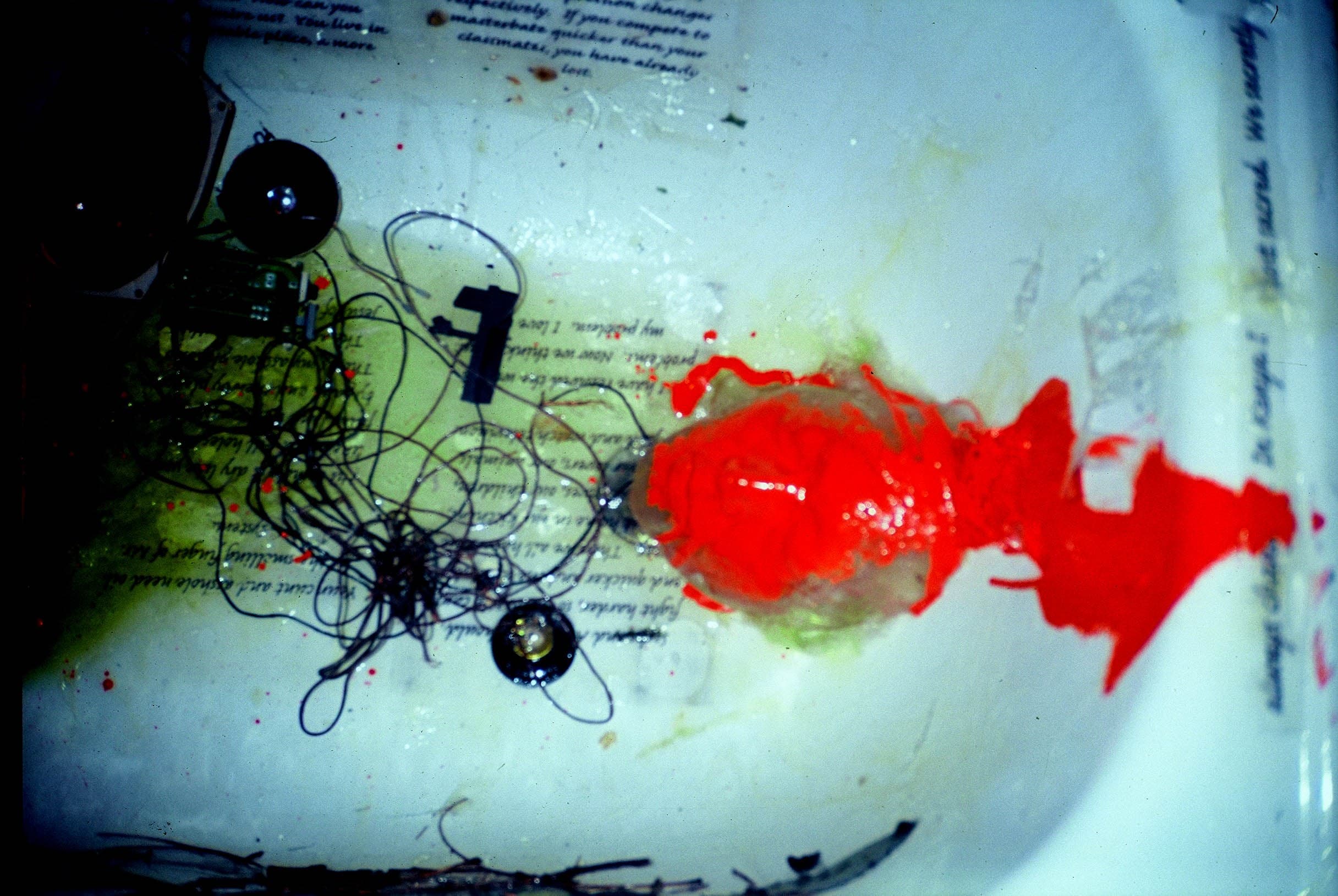
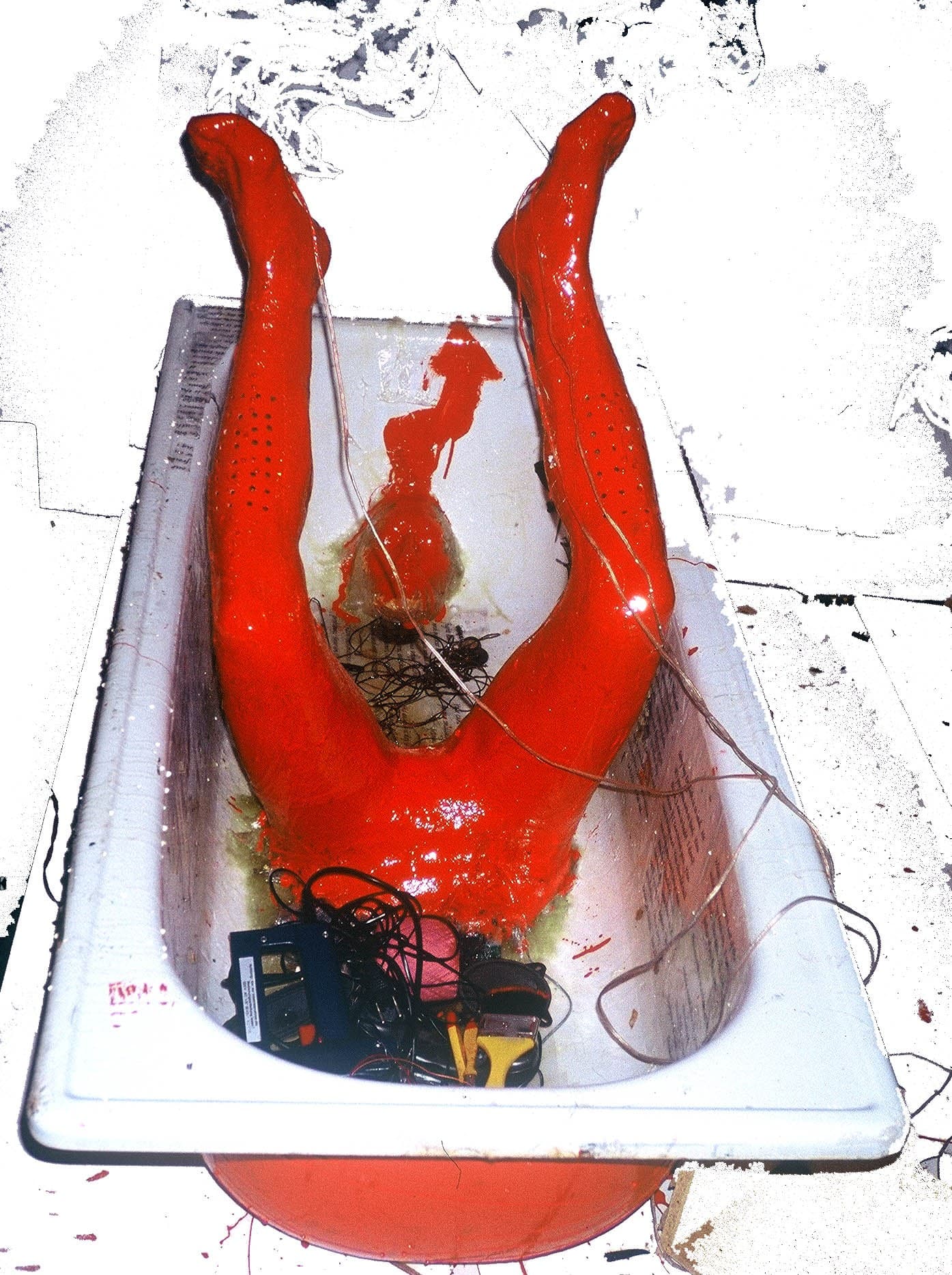
In the center of the hall, a plaster skull is suspended by steel wire, red marks congealed like bloodstains — this is the contemporary translation of the Dongba “na” effigy. The traditional “na,” modeled from buckwheat dough, dotted with cinnabar, and burned in flame, bears the calamity and then releases the true body; but this skull, in plaster, refuses cremation, replacing release with suspension, becoming the eternal effigy of the technological age. Below the skull, in a white bathtub, a red body is submerged amid tangled circuit boards and wires, an English monologue seeping from the gaps: “I am the na,” repeated three times, declaring with correct grammar the falsity of existence.
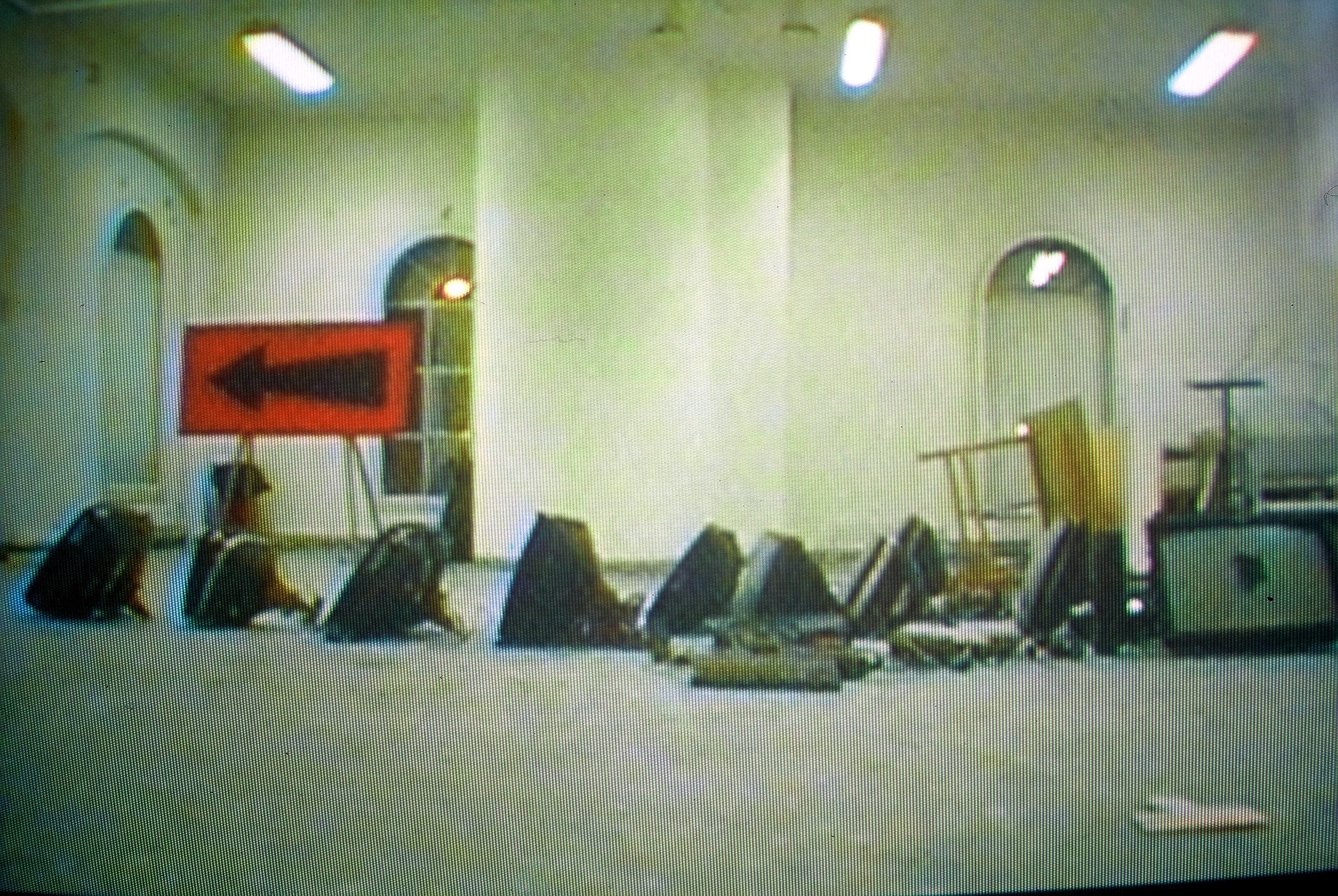
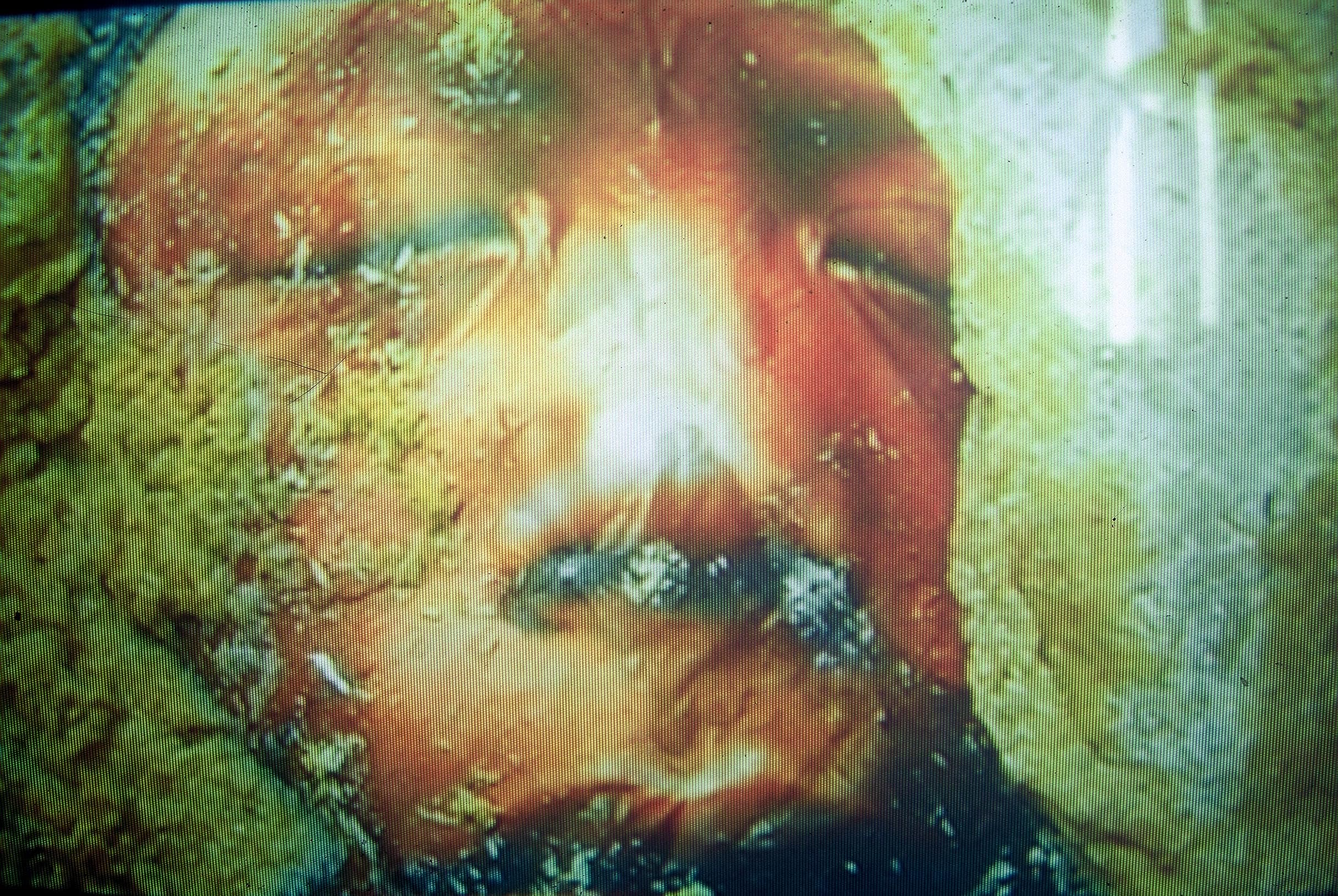
The video “Kill” projects the scene of chickens being slaughtered in a Kunming vegetable market: the flock coldly watches its companions killed, and hungrily pecks at the remains. From the market to the museum, killing is stripped of sanctity and becomes a universal metaphor for the human condition. Deep in the hall, a giant painting spreads out a dark soul with violent strokes, the Dongba characters “na,” “chong,” “kill,” “blood,” “chen,” “ming” faintly appearing and disappearing — the character “ming” (明), in the upper-right corner, illuminated by yellow strokes, marks the son born in Oslo in 1995, Mu Yuming, the blurred existence of a cross-cultural descendant.
This exhibition is deeply rooted in a double context: the 1990s European art-education reform (the experimental art department of the Norwegian National Academy of Fine Arts, established in 1996, emphasizing cross-media and on-site presence) and the reality of China's Reform and Opening (after the 1992 Southern Tour, the art market sprouted while performance-installation remained underground). The Dongba “Chongbantu” myth — in which Chongren-Li'en passes nine trials, is saved by the celestial maiden Chenhong-Baobai, and propagates humankind — here meets a contemporary variant: Chenhong-Baobai is absent, the saving function is stripped away, and only the eternal suspension of the “na” and the cross-cultural illumination of the “ming” remain.
The chanting of the “Chongbantu” recorded in 1983 by the scripture-master He Kaixiang (1908–1996) simulates the abyss with low-frequency overtones, marks salvation with a high falsetto, and separates death from rebirth with three seconds of silence. The artist's monologue replicates this acoustic structure, yet replaces the ancient Naxi language with broken English, the priest's breath with a short-circuiting circuit board, and prolongs the ritual silence with five seconds of blankness — not a homage but a mourning: mourning that the year of He Kaixiang's death was precisely the year the artist arrived in Oslo, mourning the inaudibility of the mother tongue within the museum.
From “My Grandfather” in 1988 to “He-Me” in 2000, from socialist-realist rural narrative to European post-media identity-torture, this path records the typical trajectory of a non-Western artist at the dawn of globalization. Mu Yuming's Eight Characters (yi-hai, geng-chen, gui-you, ren-zi) intimate the flow of “water” and the obstruction of “taboo,” while the coexistence of “Lu” and “Quan” in his Ziwei natal chart intimates the twofold fate of his descendants. The character “ming” (明) in the painting is both sunlight and moonlight, both clarity and blur — this is the contemporary marker of the descendant of Chongren-Li'en: not an ethnic ancestor but a cross-cultural orphan; not cultural inheritance but a genetic code.
This exhibition therefore transcends personal autobiography and becomes a cross-cultural allegory of the effigy, sacrifice, gender, and descendants: in the technological ruins, who bears it in our stead? In the white box of the museum, who releases our calamity? In the cross-cultural marriage, who saves our loneliness? In the illumination of the character “ming,” who confirms our inheritance? The answer is suspended upon steel wire, submerged within the bathtub, broken within the monologue, illuminated at the corner of the painting — the eternal “He-Me,” the eternal “na,” the eternal “ming.”