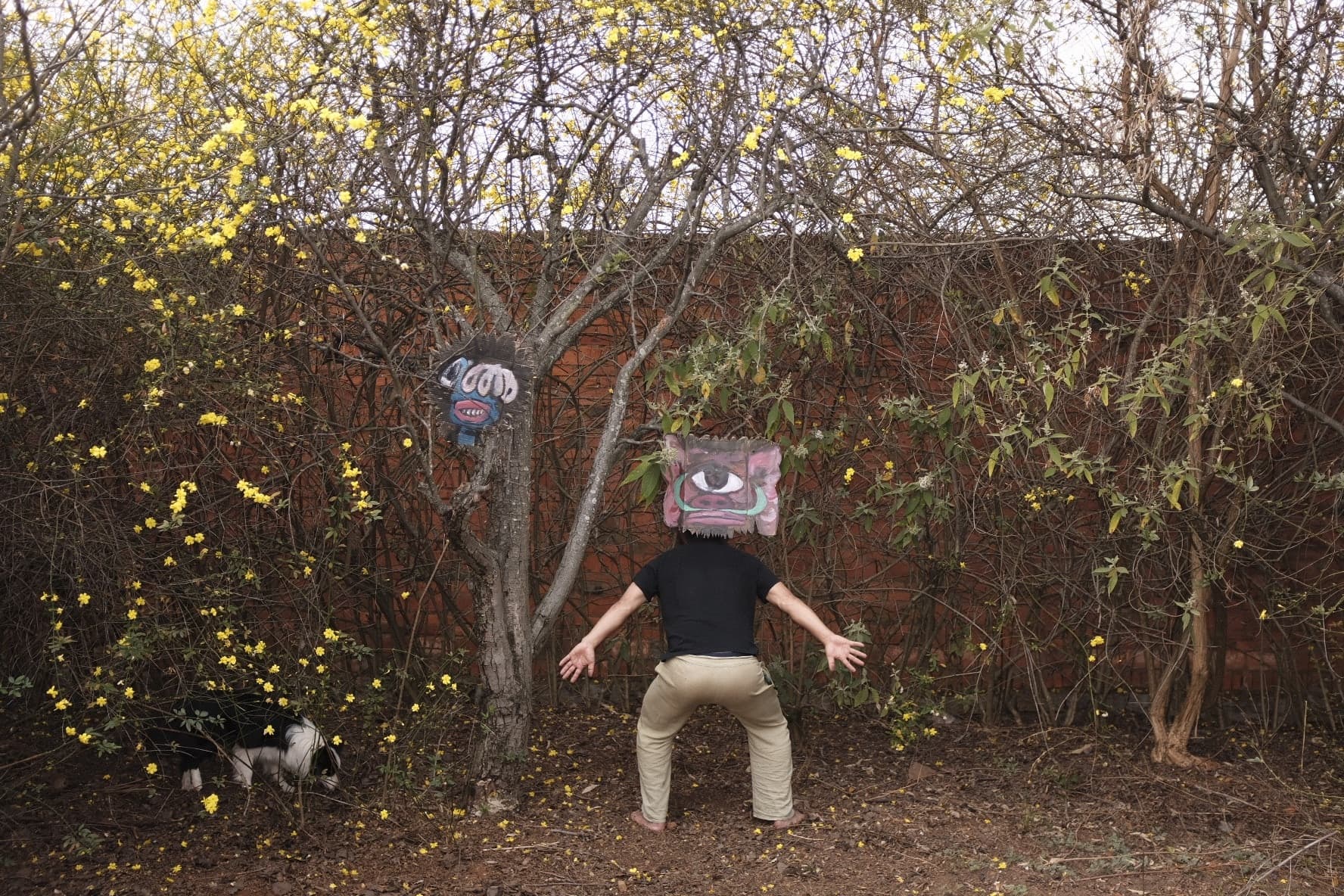
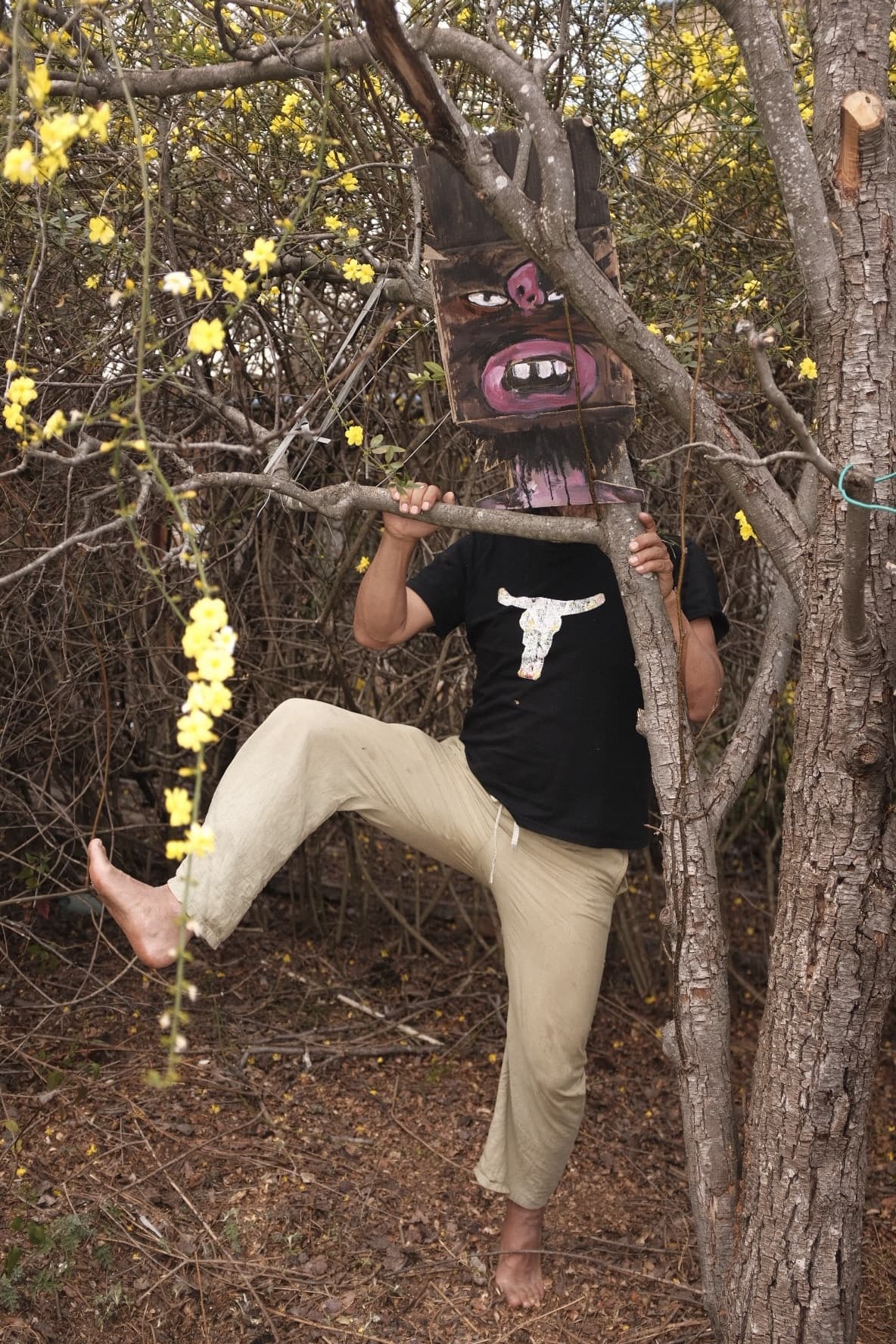
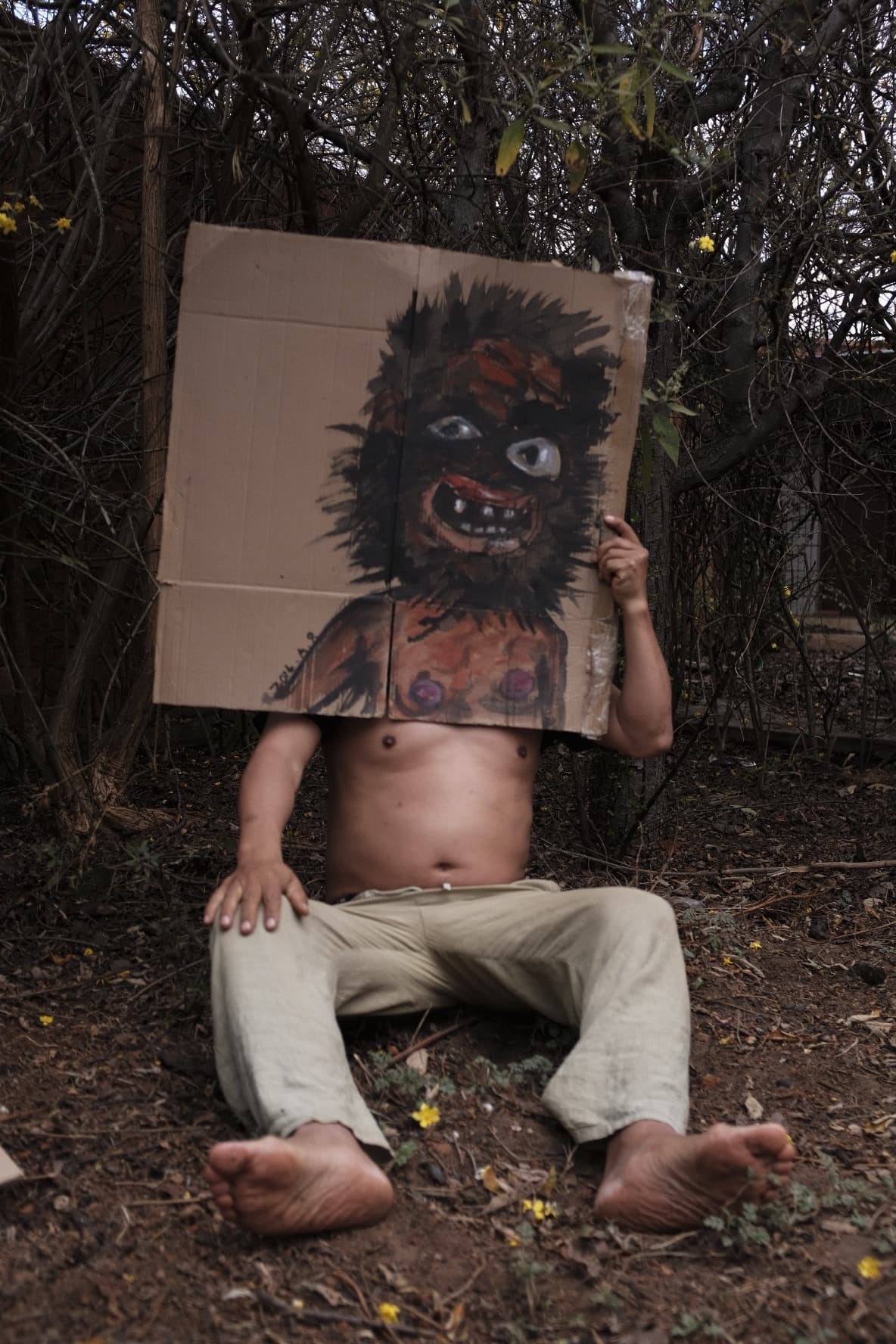
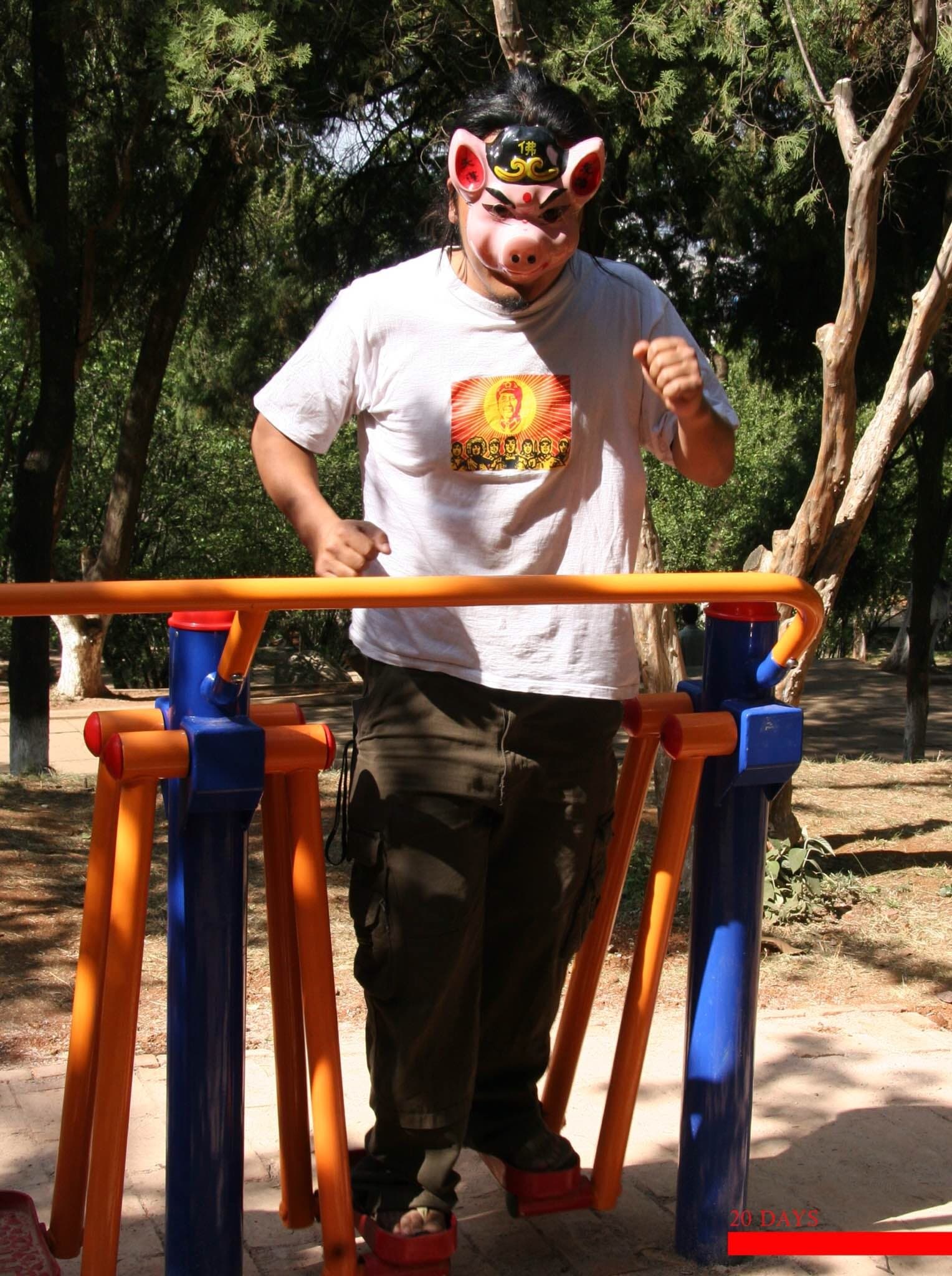
The Full Essay
Genesis & Methodology
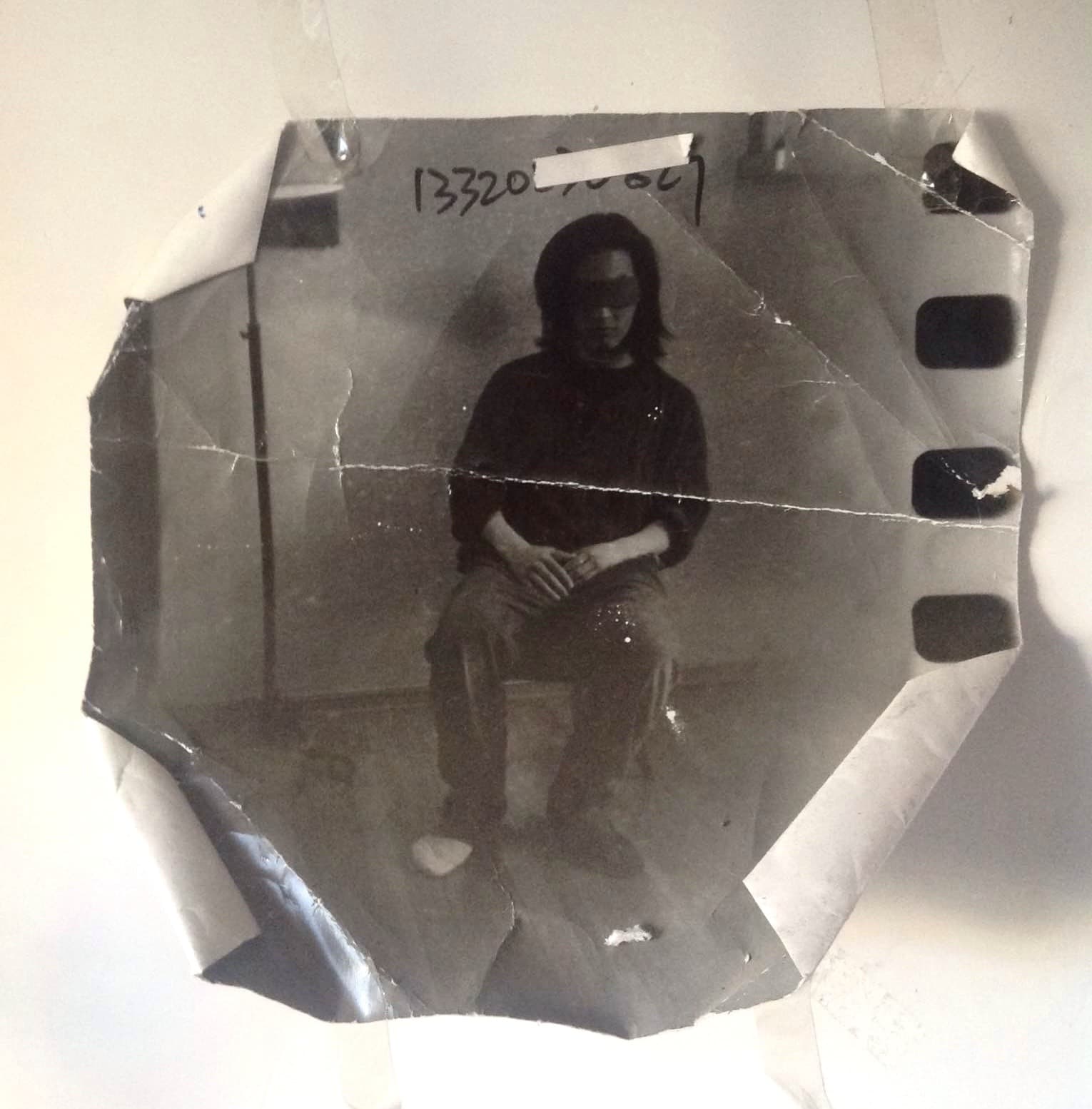
“My very first mask in life must have been made when I was playing games with other children; what it looked like exactly, I no longer remember… After I grew up, I kept playing with masks; the masks of each period were mostly made in an unconscious state, with no specific purpose, just for fun…”
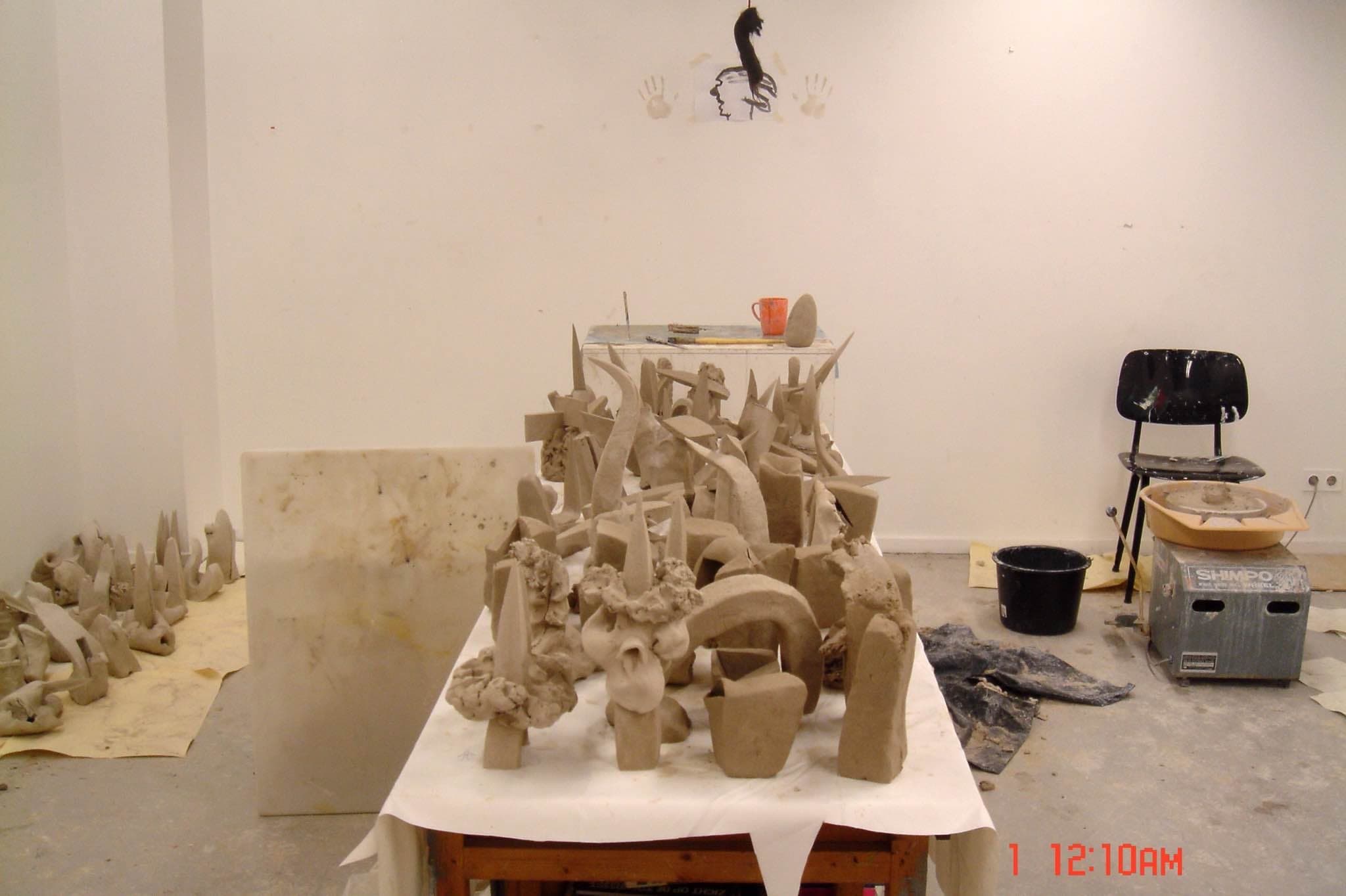
This self-account reveals the core methodology of “Mask Archaeology”: unconscious creation. But the 2014 Jingdezhen practice injected a new dimension into this methodology — moving from “unconsciousness” toward “conscious self-naming”, expanding from “personal game” into “identity archaeology”.
Node One: 26 April 2014 · “Alchemy” and the “Madman Mask”
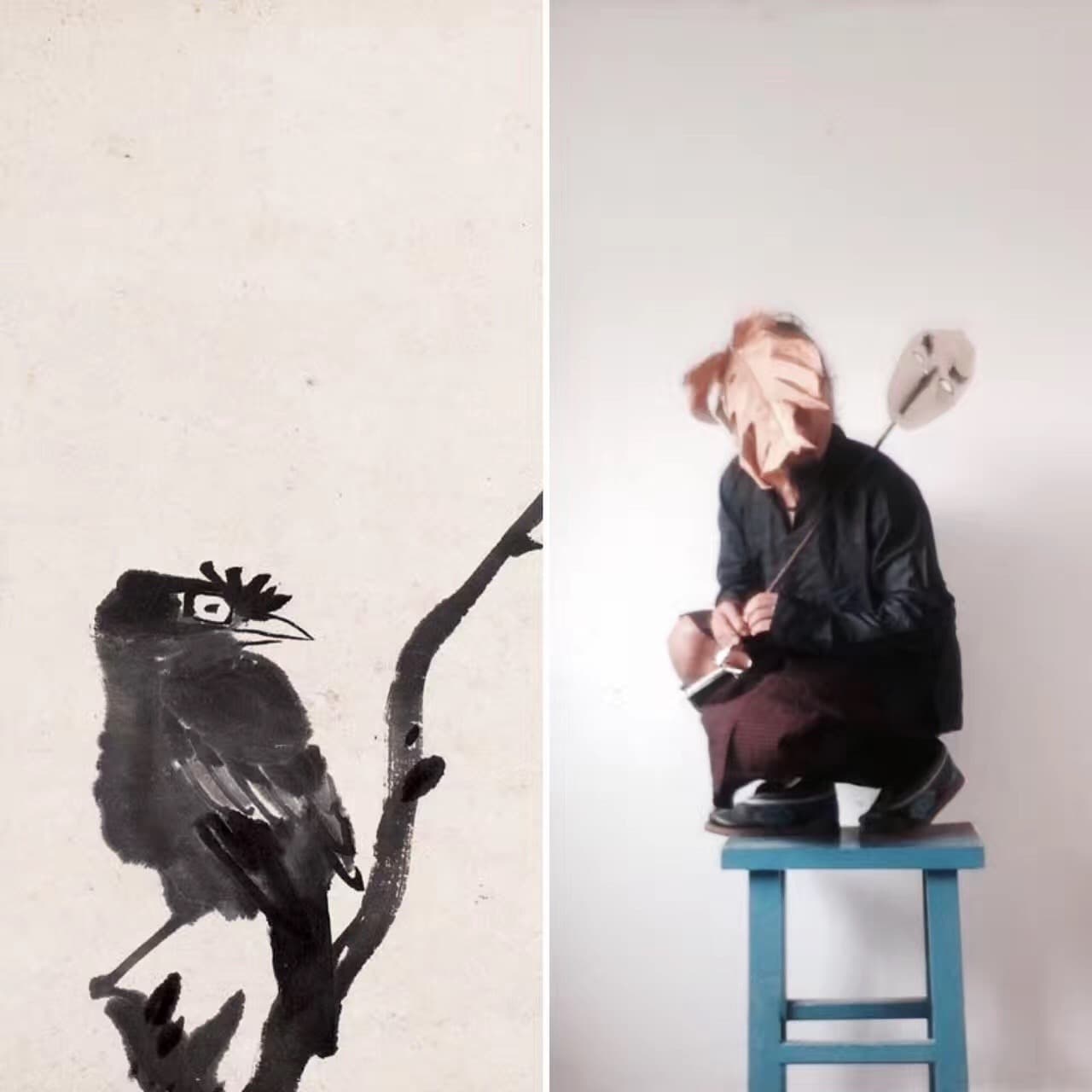
On 26 April 2014, the artist posted on his Jingdezhen WeChat moments: “I love the madman, because I am myself a madman.” The accompanying images included the woodcut illustration of Lu Xun's Diary of a Madman and Zhang Xu's wild-cursive calligraphy. This self-naming marks the subject-turn of Mask Archaeology — the mask is no longer an external screen but the externalization of an inner identity.
The “madman” as mask carries a double reference within the context of Chinese modernity: at once the critic of Lu Xun's “man-eating” society and the liberator of Zhang Xu's “removing his cap to bare his head before the lords”. Through this borrowing of a historical mask, the artist plugs the personal question of identity into the collective unconscious of Chinese modernity.
The same day's “alchemy” practice (begun 24 April) and the “madman mask” form a mutual intertext: alchemy is the Daoist technique of bodily transformation, wild cursive is the calligraphic technique of bodily liberation; the two share the same logic of reaching the real through extreme states. Mask here becomes the visual equivalent of alchemy — through concealment of the everyday face, the elixir of the “true self” is refined.
Node Two: May 2014 · “Boredom” Series and the “Food Mask”
In May 2014, the artist entered a “super-bored state” (2 May) in Jingdezhen, and developed a series of “boredom masks”:
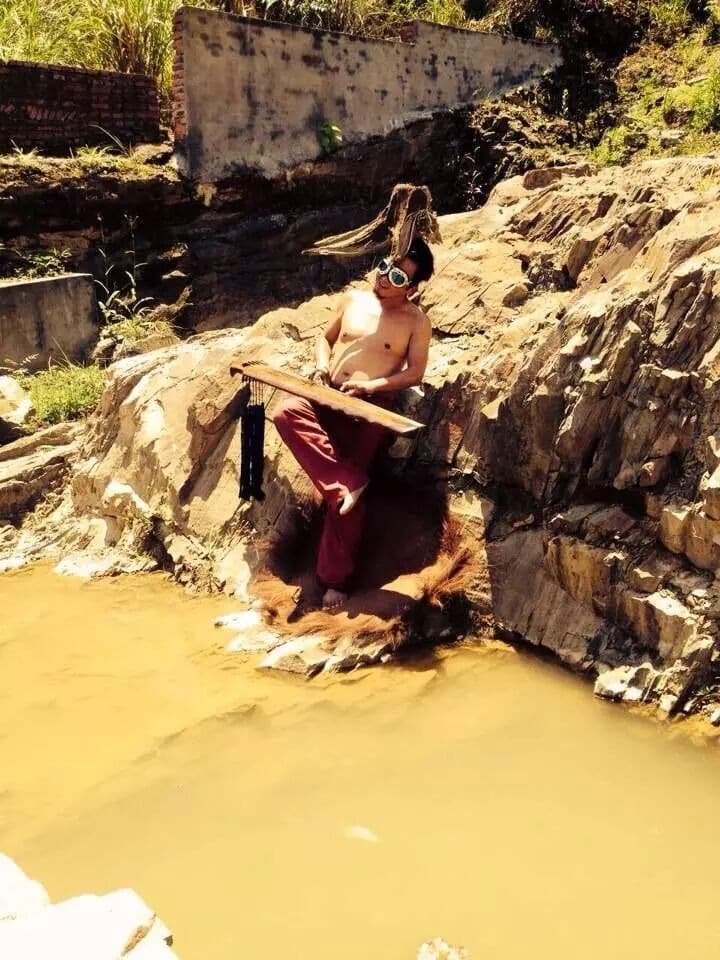
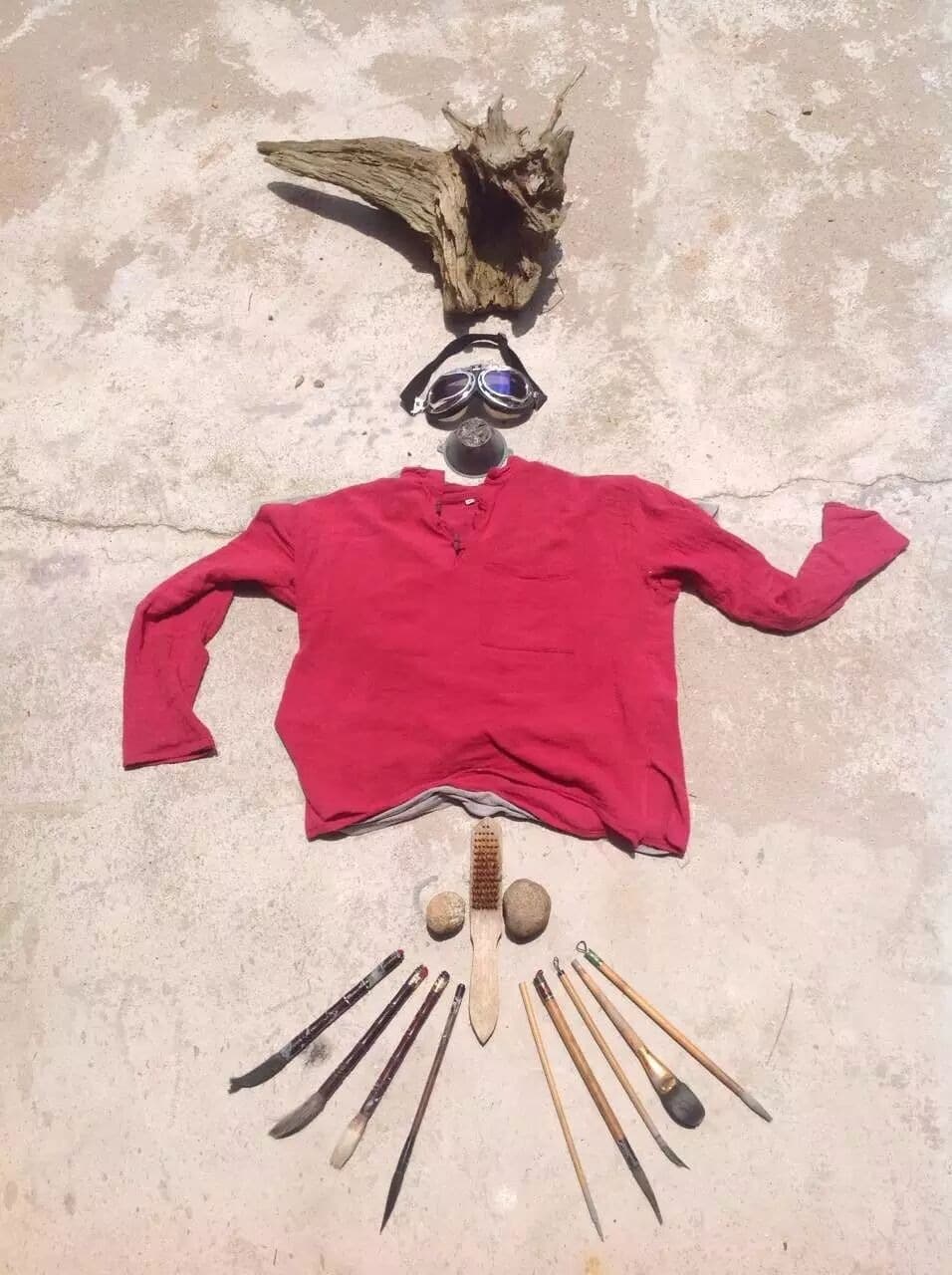
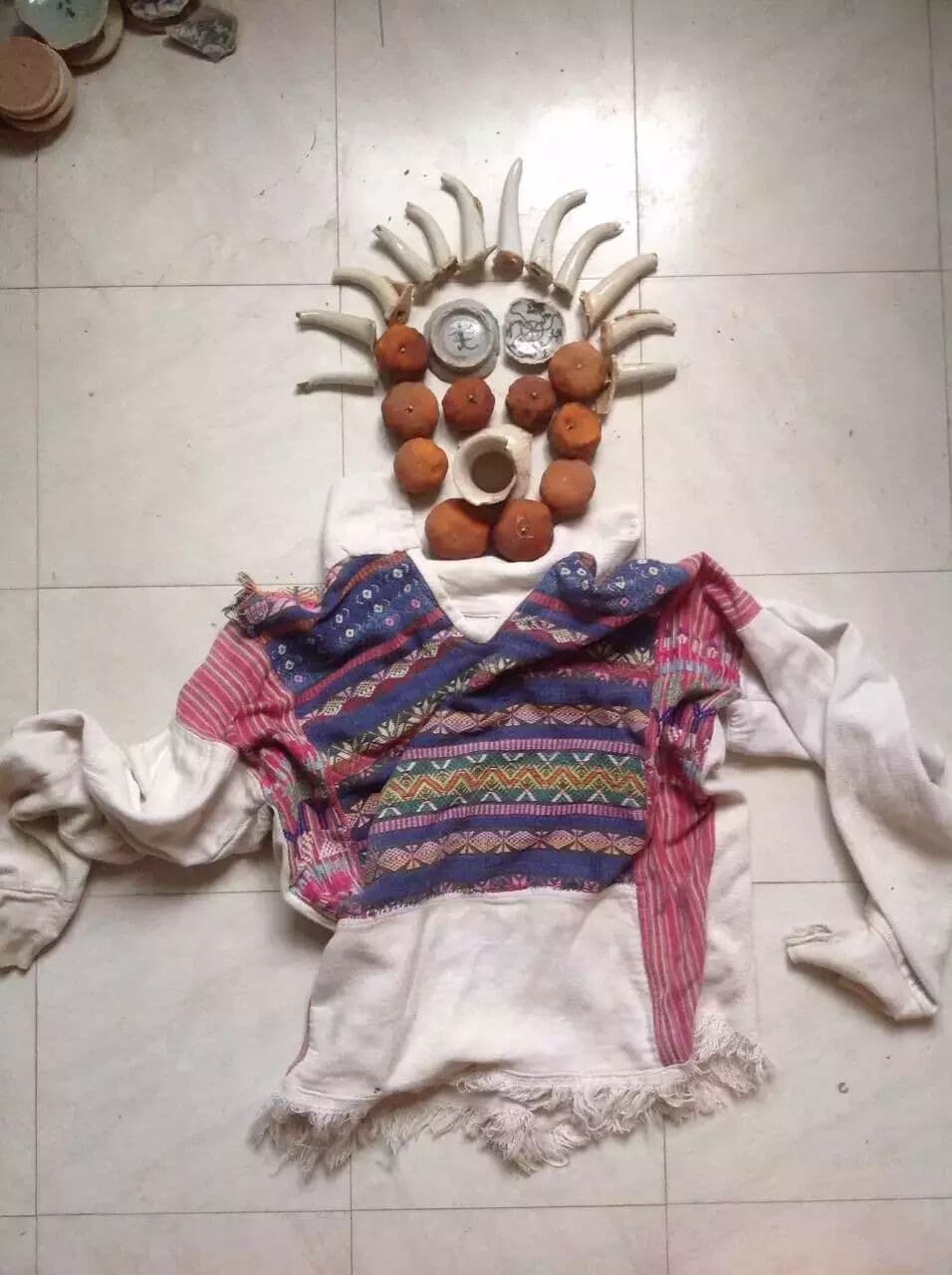
• 4 May “Apollo Lunar Project”: a motorcycle-riding goggle-mask, mask installations collaged from ceramic shards, classical mask imagery referencing Medusa / Apollo;
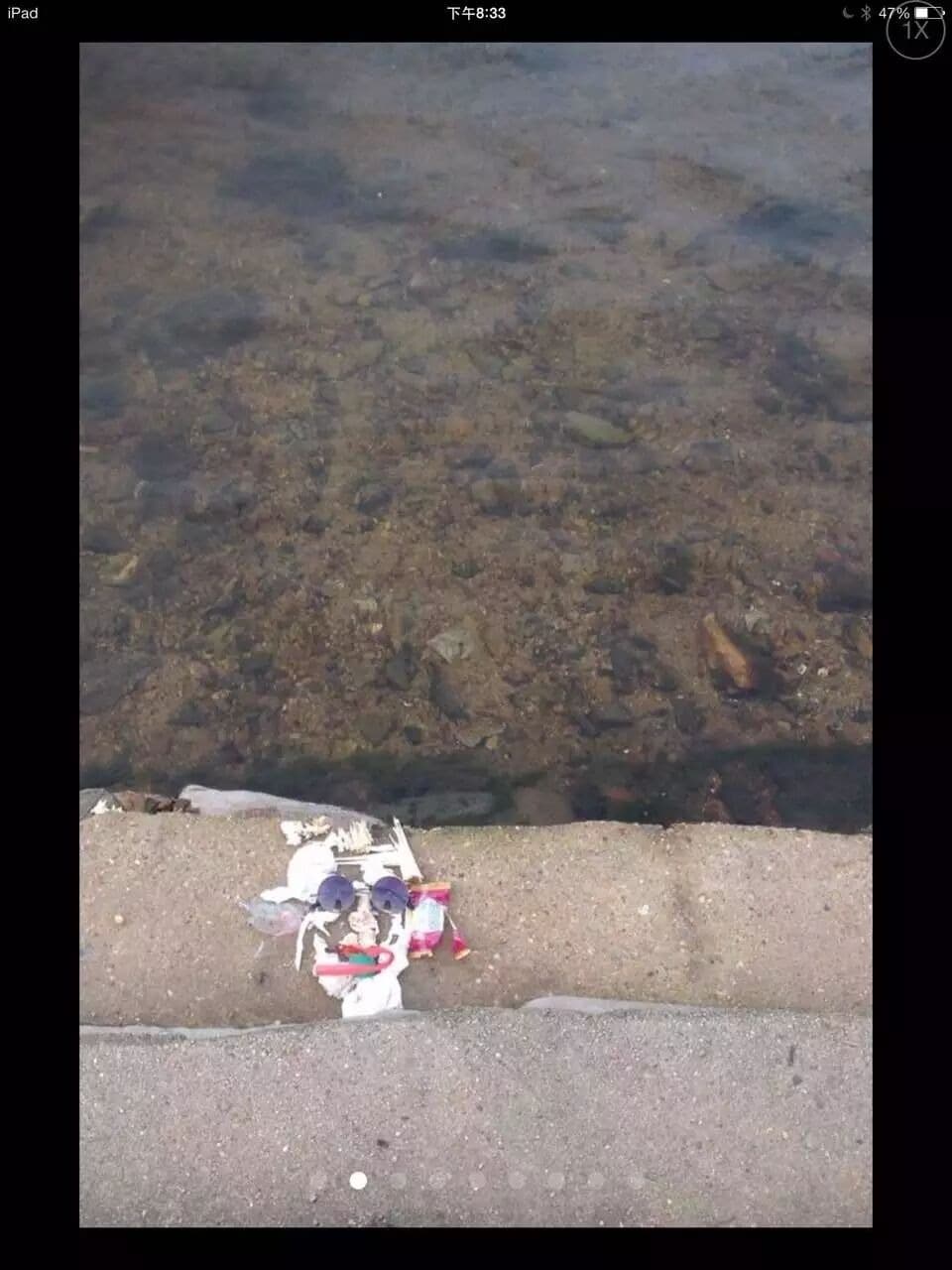
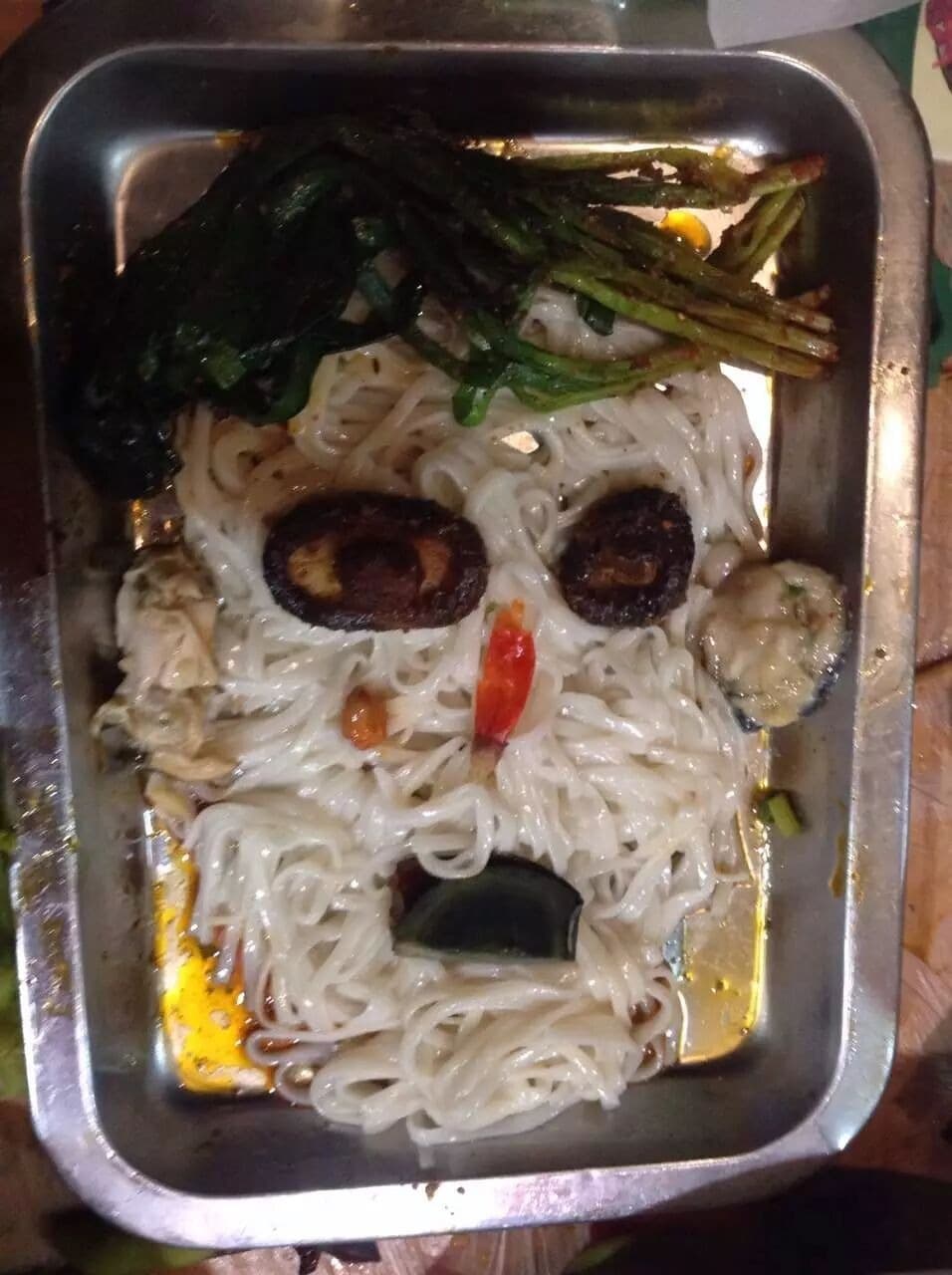
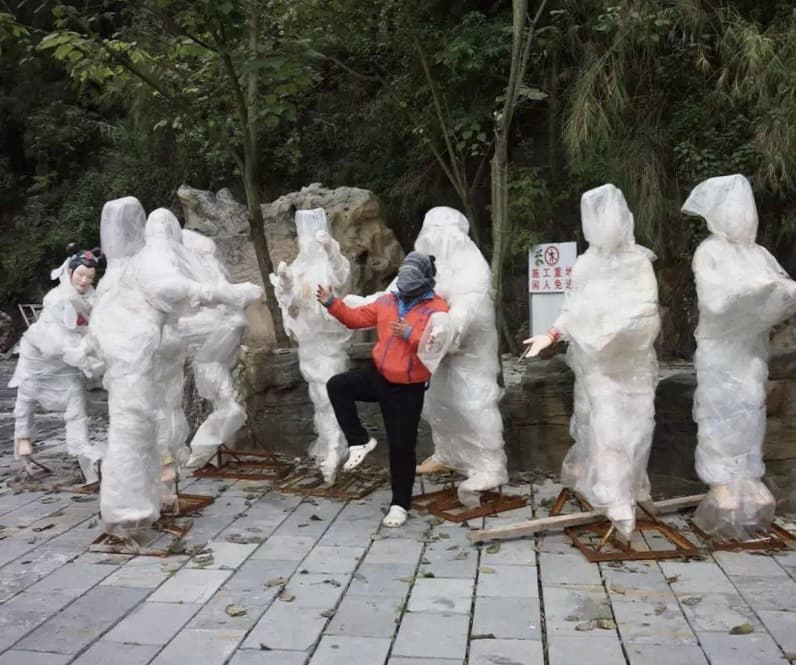
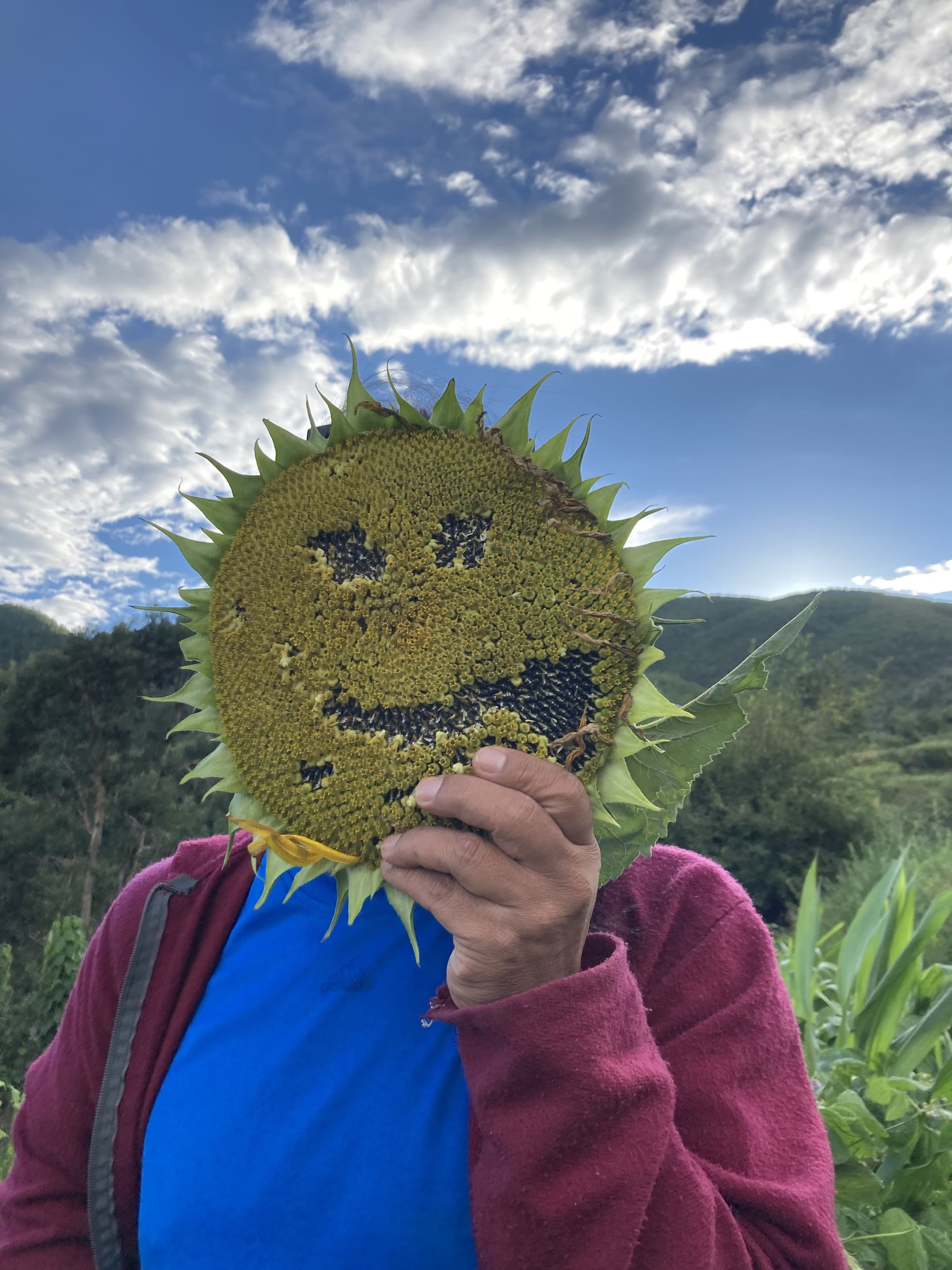
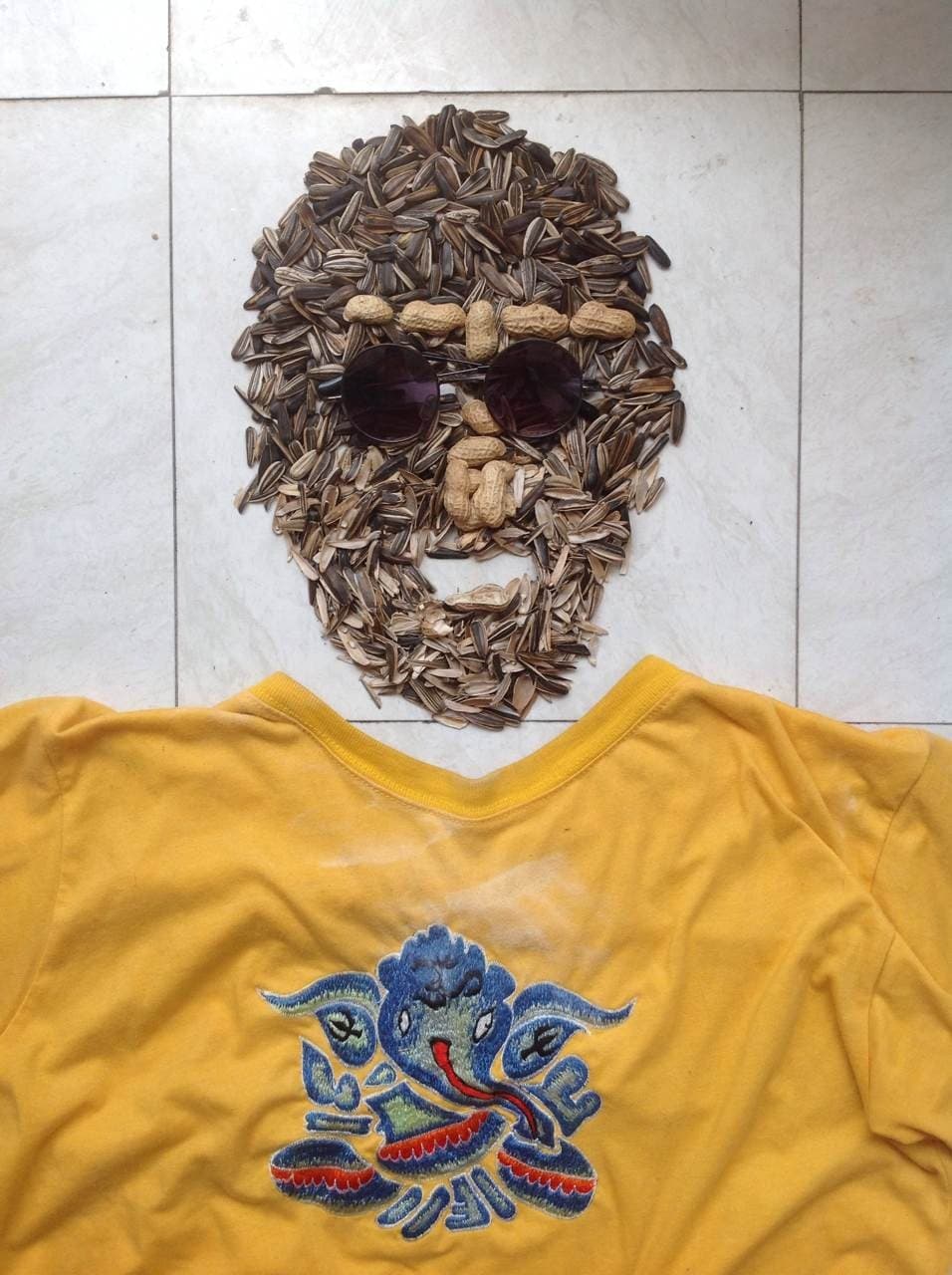
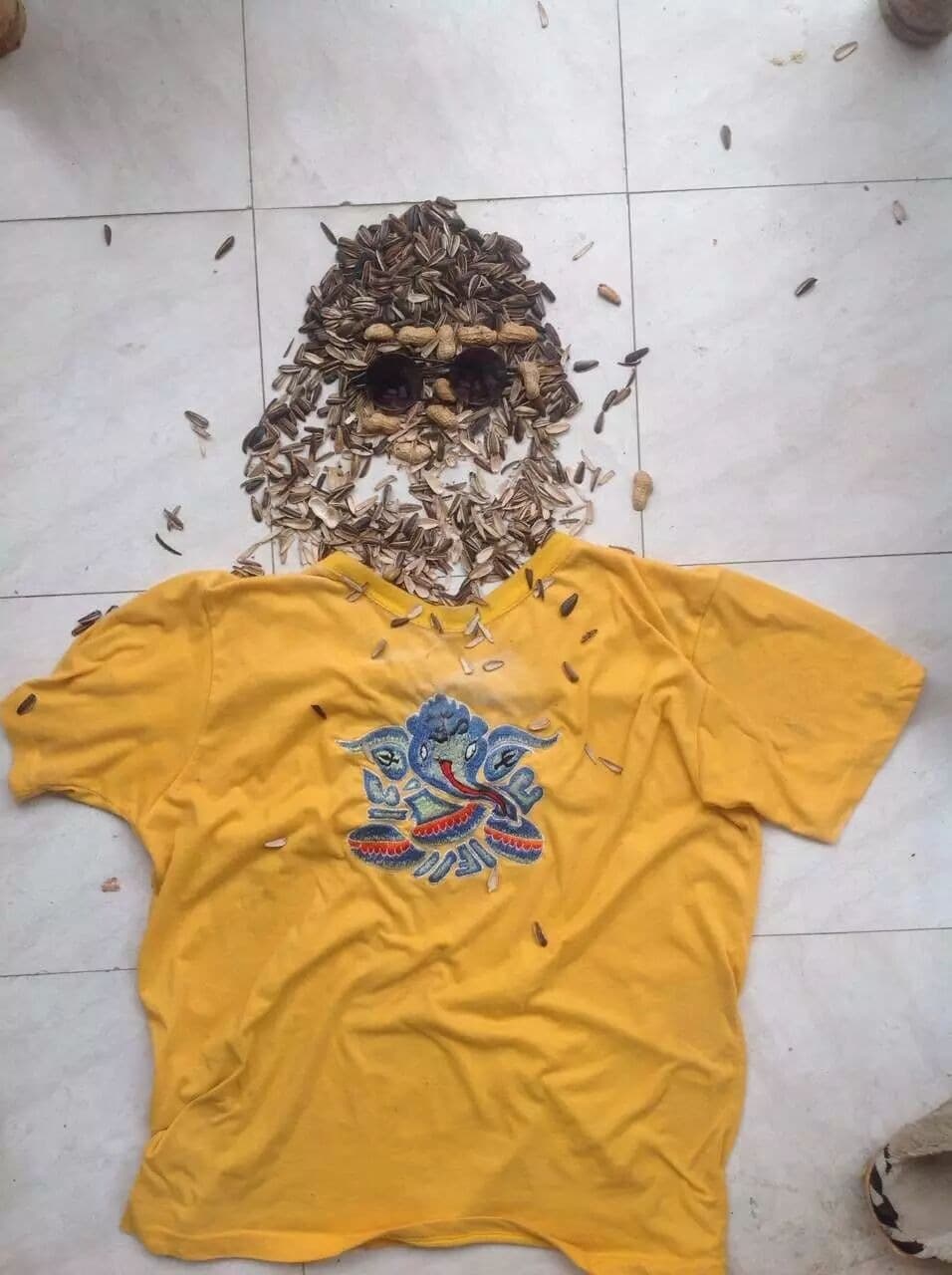
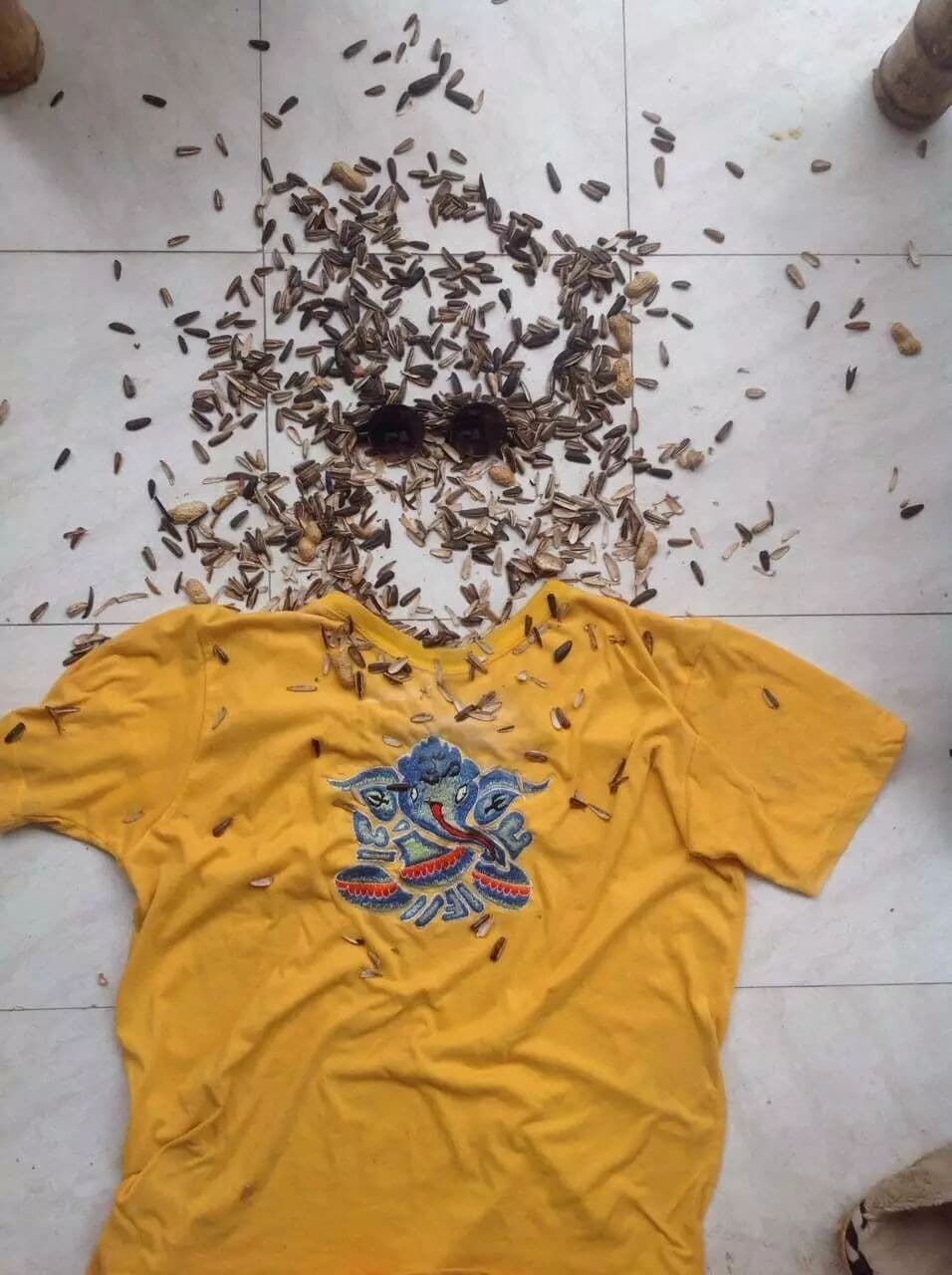
• 6 May “The result is not important”: dining-table “food faces” — noodles as hair, century egg as eyes, shiitake as nose, red pepper as tongue; a red plastic-bag mask; a “portrait” composed of melon-seed shells + peanuts + sunglasses;
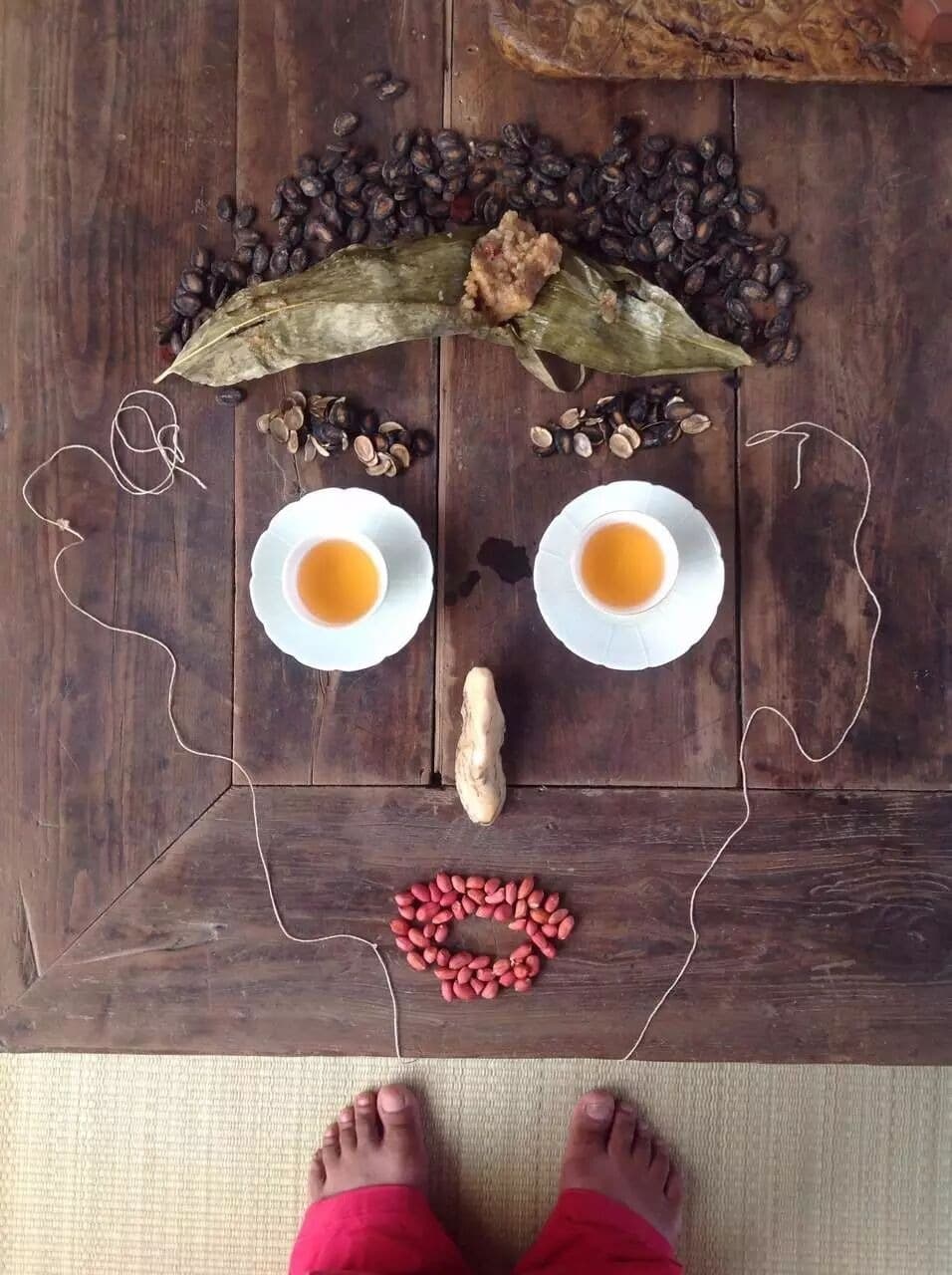
• 8 May “Three points one line”: a “tea-mat face” composed of zongzi leaves + watermelon seeds + tea cup + ginger + peanuts; a foot-painted face on a porcelain panel;
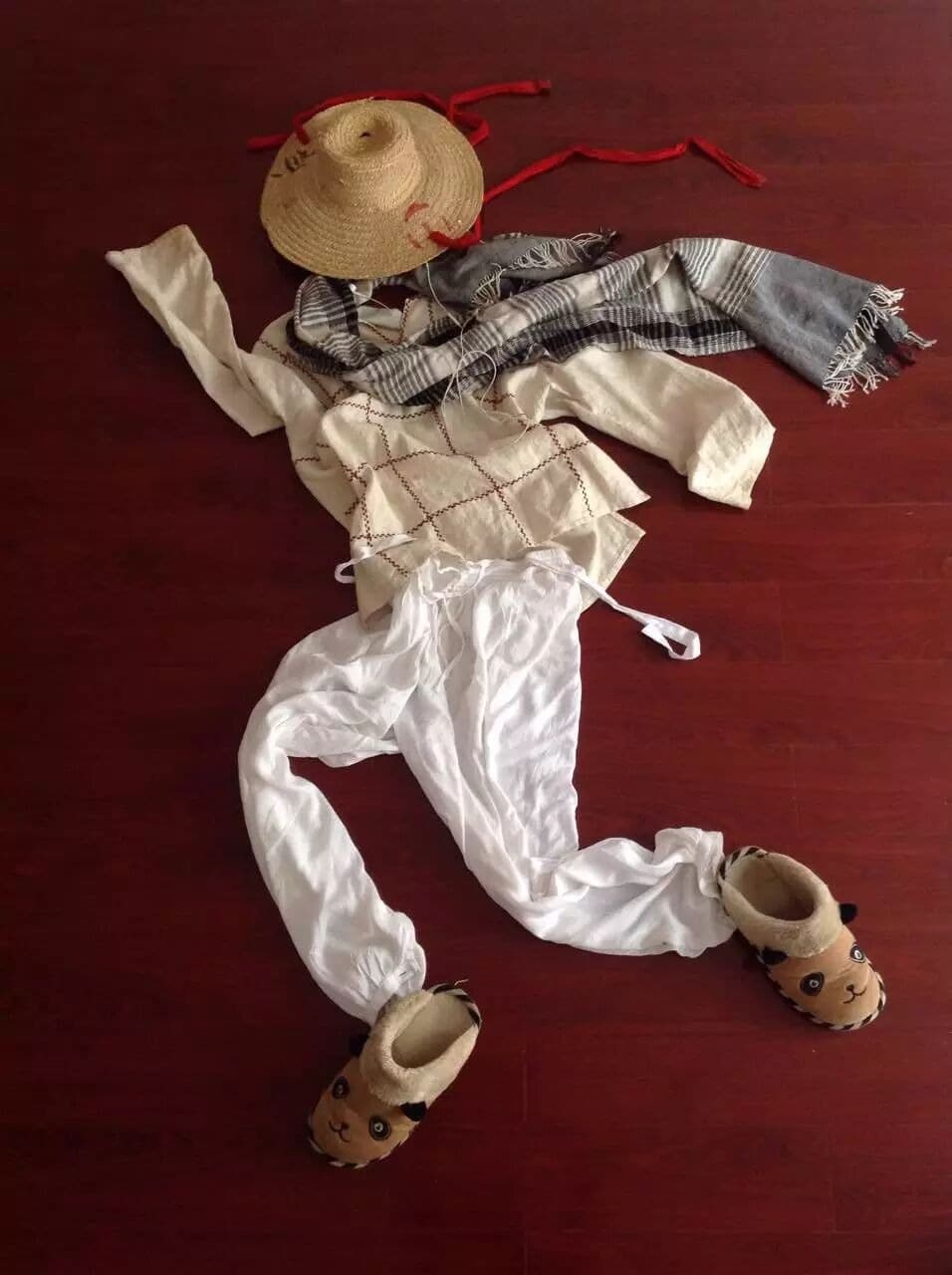
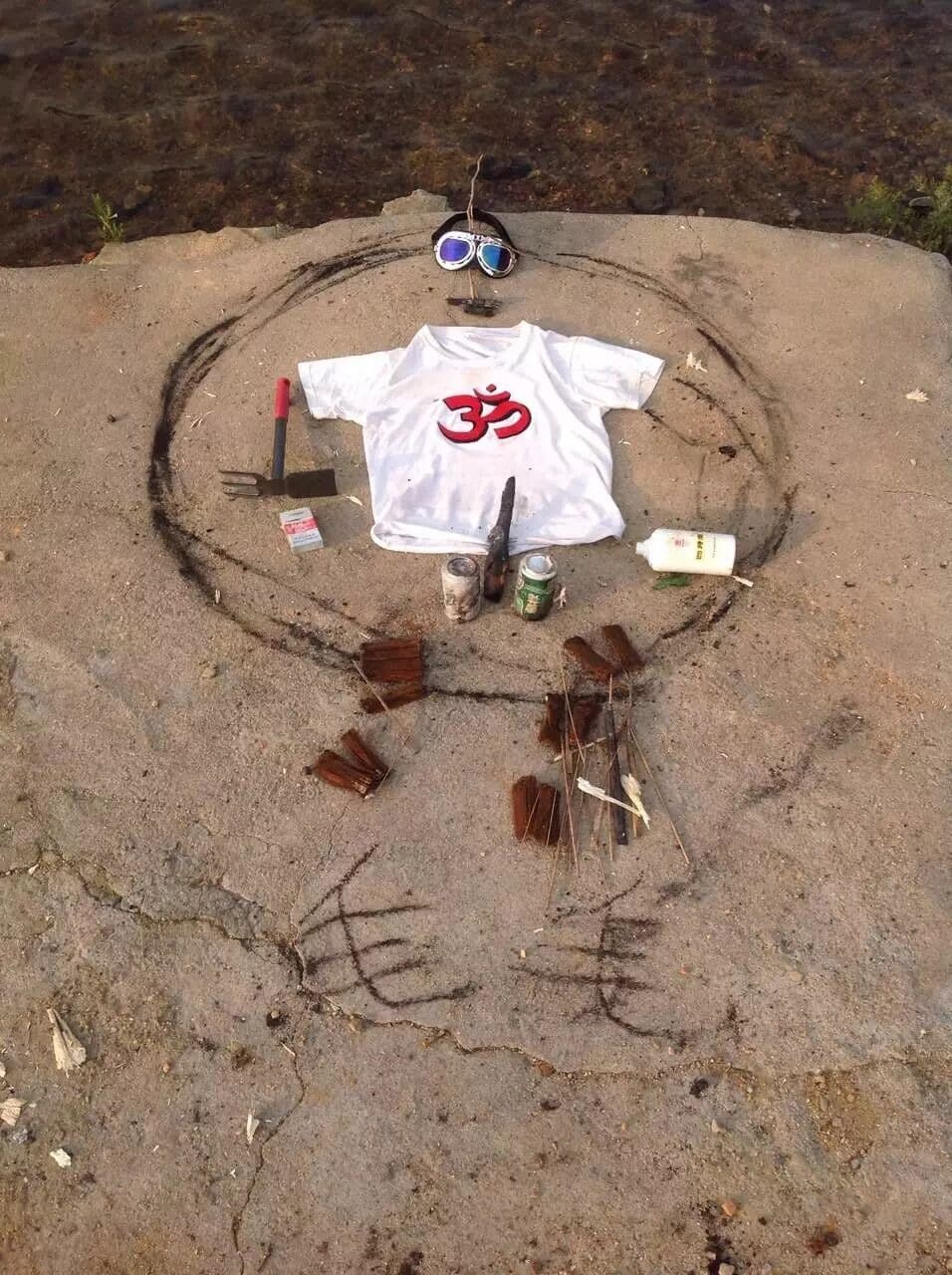
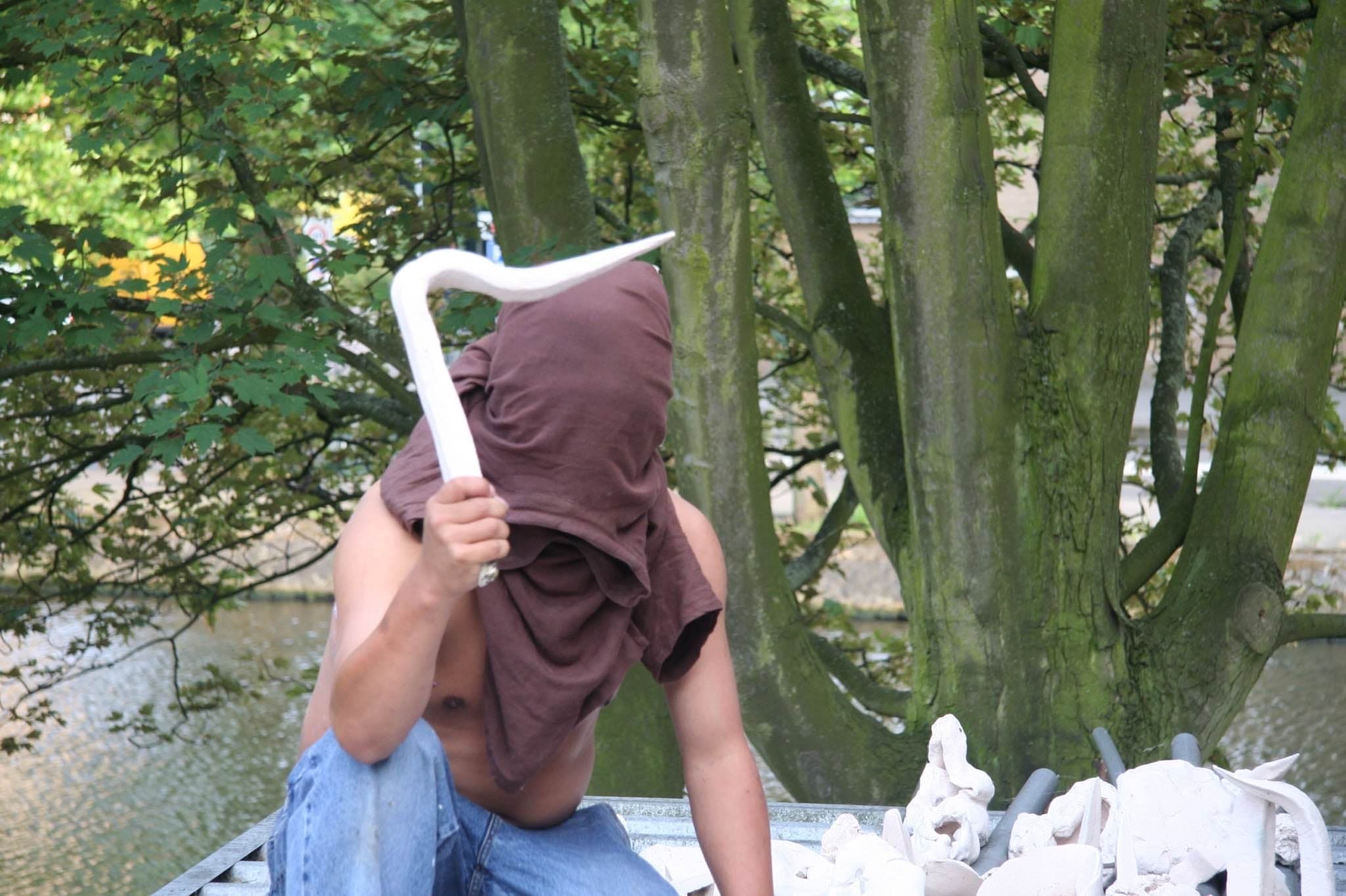
• 13 May “My skin, my fur, my shadow”: a body-mask collaged from clothes (“this is my skin”), goggles + yellow cloth mask in performance art (“this is my fur”), ink rubbings (“this is my shadow”).
This series marks the material revolution of Mask Archaeology — a turn from traditional sculptural materials (cardboard, clay) toward everyday residues (food remnants, clothes, garbage). This turn resonates with the Arte Povera tradition, but more strongly emphasizes impermanence and consumption: food masks are eaten, plastic-bag masks are thrown away, clothing masks are unstitched. The mask's brief existence reverse-proves the fluid nature of identity.
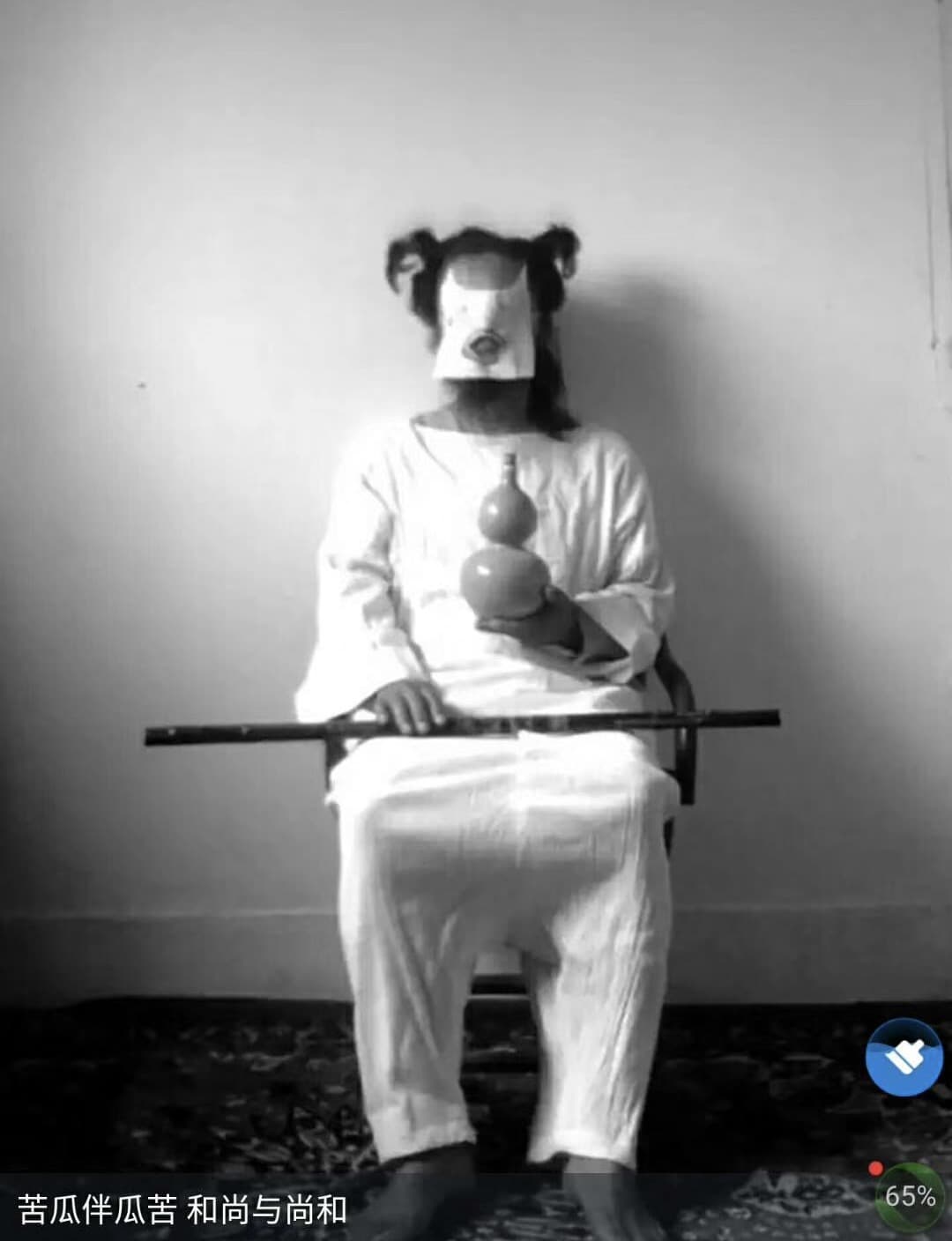
Node Three: 2015 · “Bitter melon accompanies melon bitter, monk and venerable”
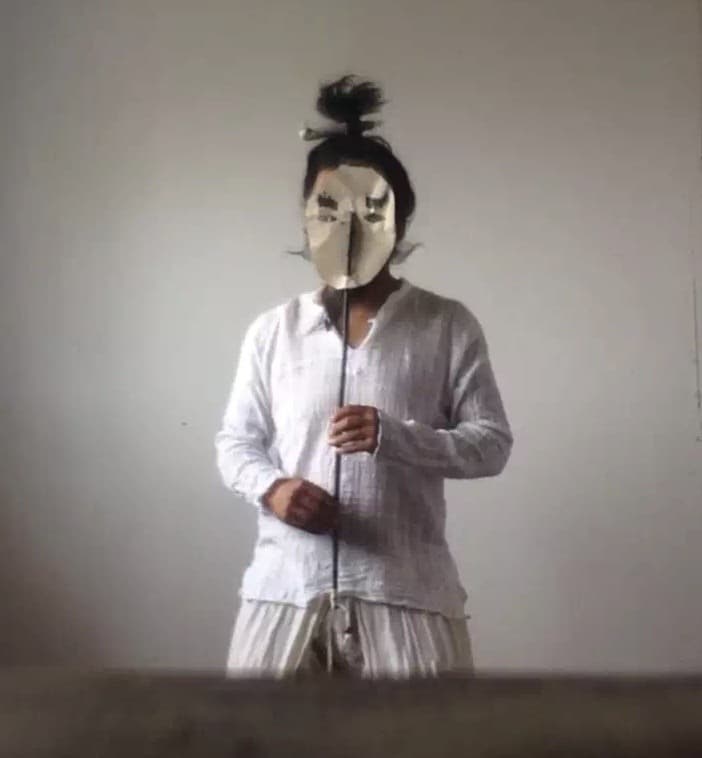
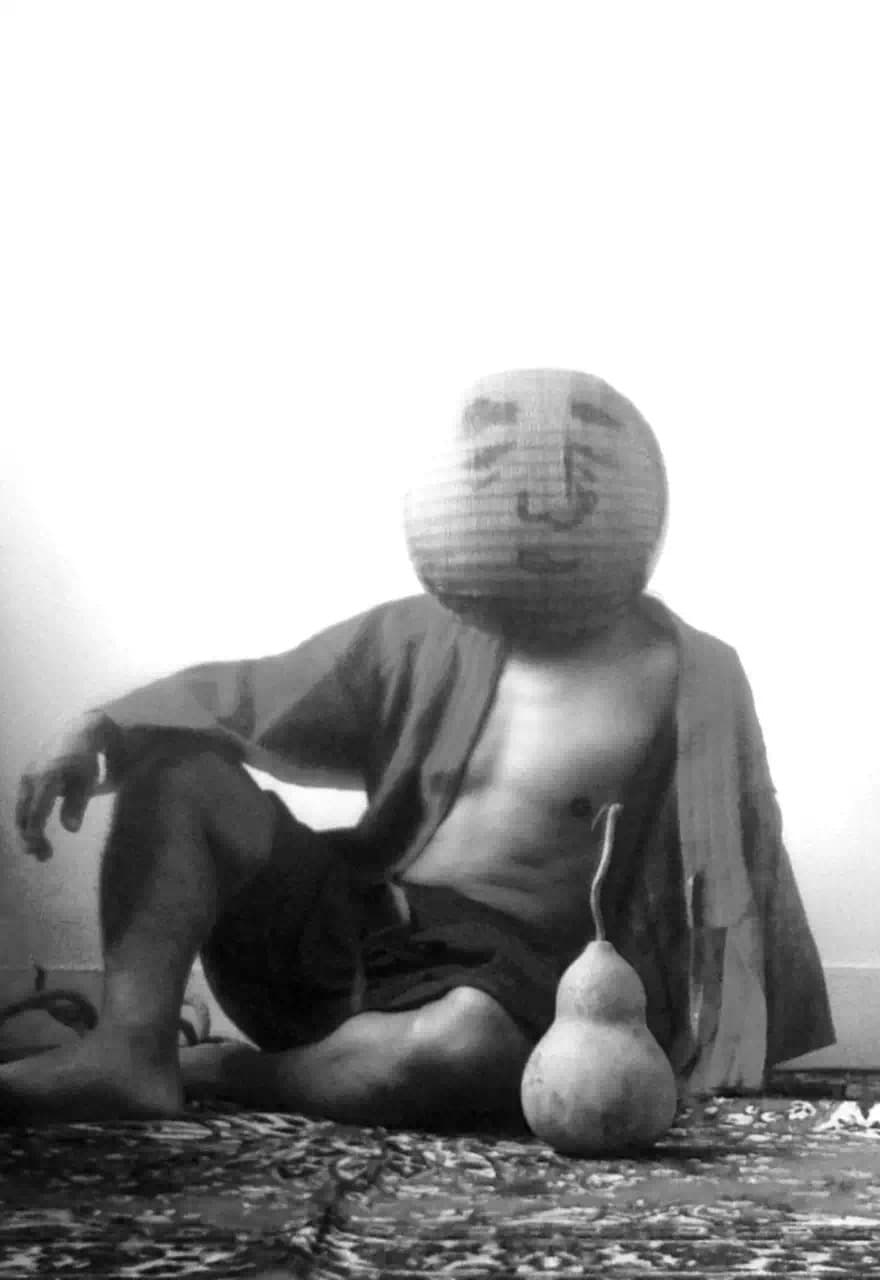
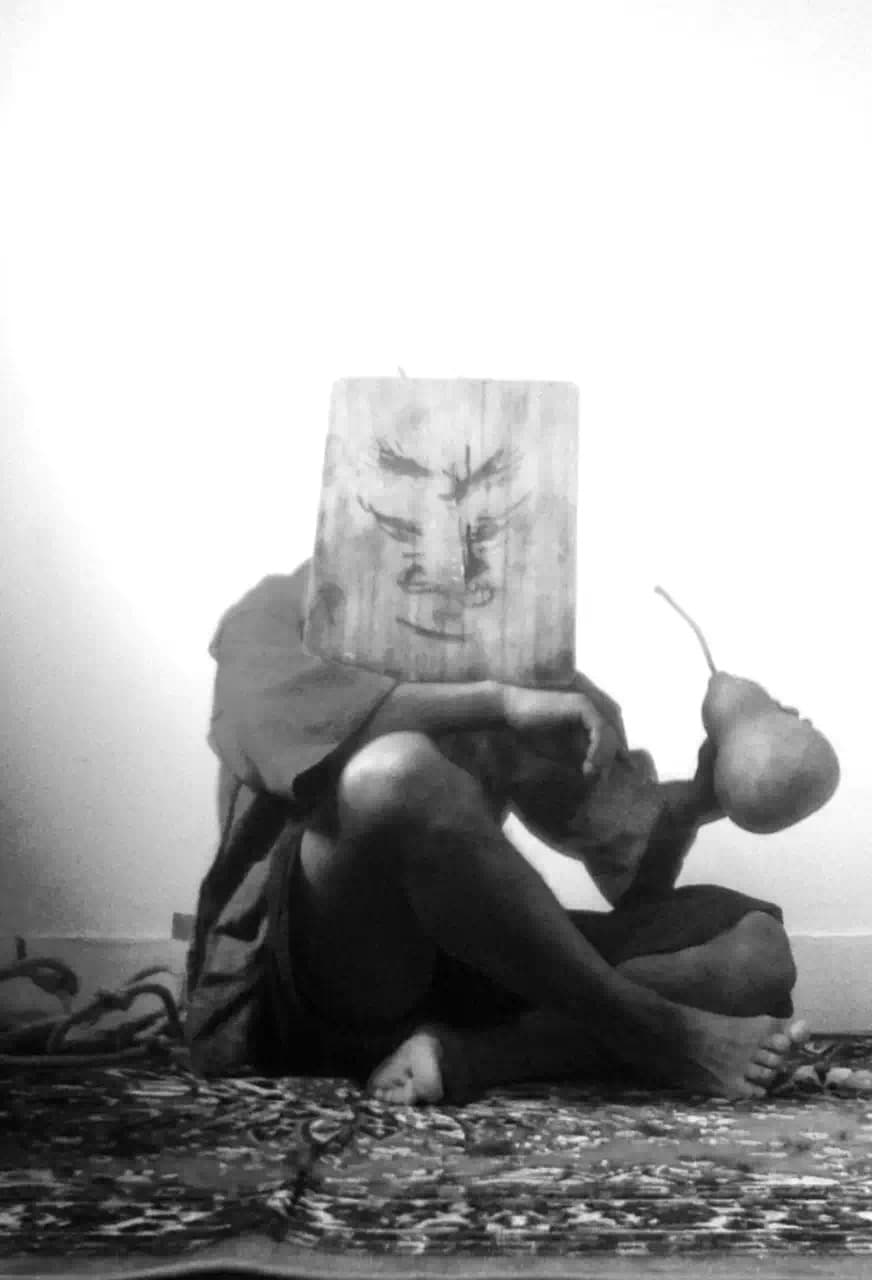
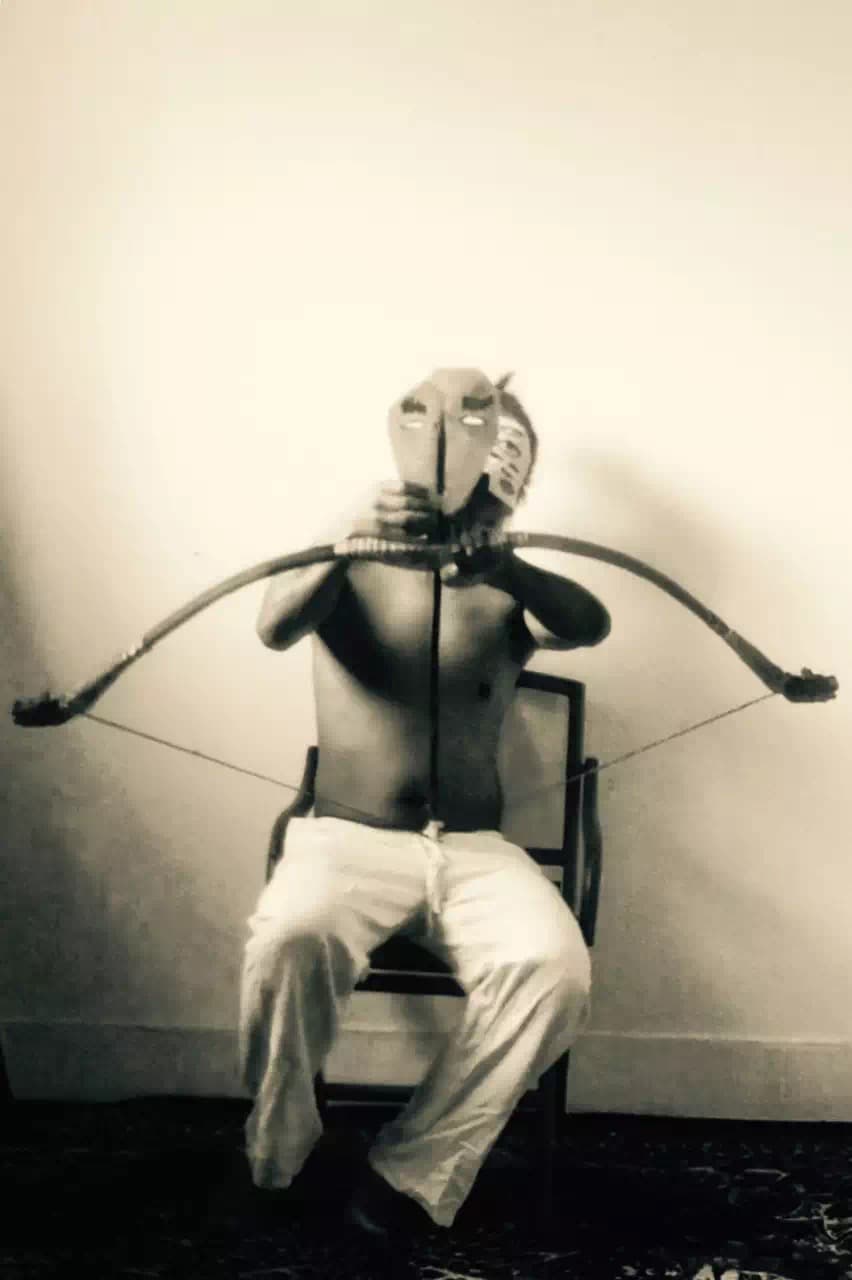
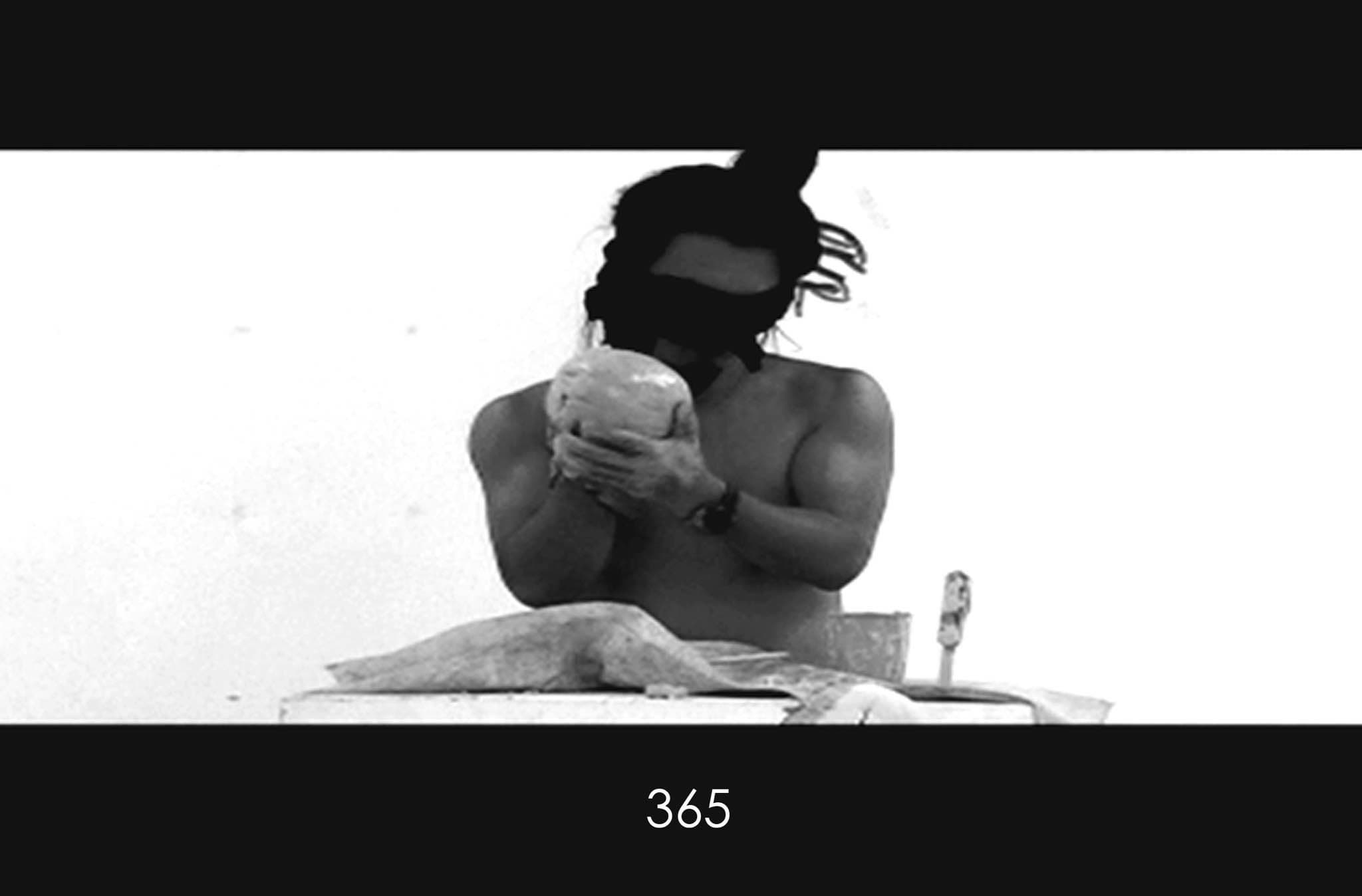
The series of black-and-white performance photographs in 2015 marks the maturity of Mask Archaeology. The artist wears white robes, dons self-made masks, holds gourds, flutes and other props, facing the camera in an almost meditative posture. The palindromic structure of the title dissolves the fixity of meaning, just as the mask dissolves the fixity of the face.
The gourd, as a Daoist instrument and as a symbol of Ji Gong, forms an intertext with the “monk” identity; while “bitter melon” both refers to the Buddhist “eight sufferings of life” and obliquely figures the spiritual trajectory of the artist after his 2013 Myanmar ordination (dharma-name “Chun Mengsheng”). The mask here becomes a field of superimposed identities: artist / monk / madman / sage, simultaneously present and simultaneously absent.
Core Proposition: “These are my skin, my fur, my shadow”
The series of 13 May 2014 provides an ontological framework for Mask Archaeology:
• Skin: the human body composed of clothing — the outermost wrapping of identity, removable and exchangeable;
• Fur: the dynamic mask in performance art — the fluid expression of identity, moving with the wind;
• Shadow: the ink rubbing — the projection of identity into the void, form without substance.
These three dimensions compose the complete methodology of Mask Archaeology: from matter (skin) to action (fur) to image (shadow), identity is progressively revealed through layer-by-layer stripping, and continuously escapes within the very revelation.
Relation to the Overall Body of Work
Mask Archaeology forms an intertextual network with the artist's core projects:
• With “Three Years Retreat” (2014—2017): the retreat began on 24 April 2014; the mask's concealment / revelation mechanism toward desire is structurally homologous to the retreat's practices of abstinence and observance of precepts;
• With “Jingdezhen Social Sculpture” (2014): Mask Archaeology is the personal dimension of social sculpture — while social sculpture concerns the collective “craft, ecology, history”, Mask Archaeology asks: within this collective, who am I?
• With “Five Hundred Arhats” (2022): the arhat as collective image of the “awakened” stands in counterpoint to the mask as individual image of the “anonymous”;
• With the “Meng Chunsheng” identity (2014—Present): the Myanmar dharma-name “Chun Mengsheng” and the subsequent evolution of identity are themselves an ongoing theatre of masks.
Coda
“Mask Archaeology” is not a historical study of masks, but a self-archaeology conducted through masks. Every time the mask is donned is a small death and rebirth; every time the mask is removed is a redefinition of the “real”. From the unconscious games of Norway in 1995, through the 2014 Jingdezhen self-naming as “madman” and the “Boredom” material revolution, to the mature expression of 2015 — Lao Mu's thirty years of mask-practice constitute a visualized archive of psychoanalysis — not Freud's couch-narrative, but Foucault's exercise of technologies of the self, and even more so, a Beuysian field of social sculpture.
As that WeChat moment of 4 May 2014 said: “I never know what tomorrow is, what the next step should be! I am the stupidest person in the world, thinking that I have wisdom and freedom.” — this is perhaps Mask Archaeology's most honest meta-mask: in admitting ignorance and stupidity, the mask becomes, on the contrary, the only path toward the real.
Biographical Note
This person: born in the year of the pig, Aries by zodiac, blood type AB, ethnicity Naxi, profession wandering the rivers and lakes.