The Full Essay
Full Essay
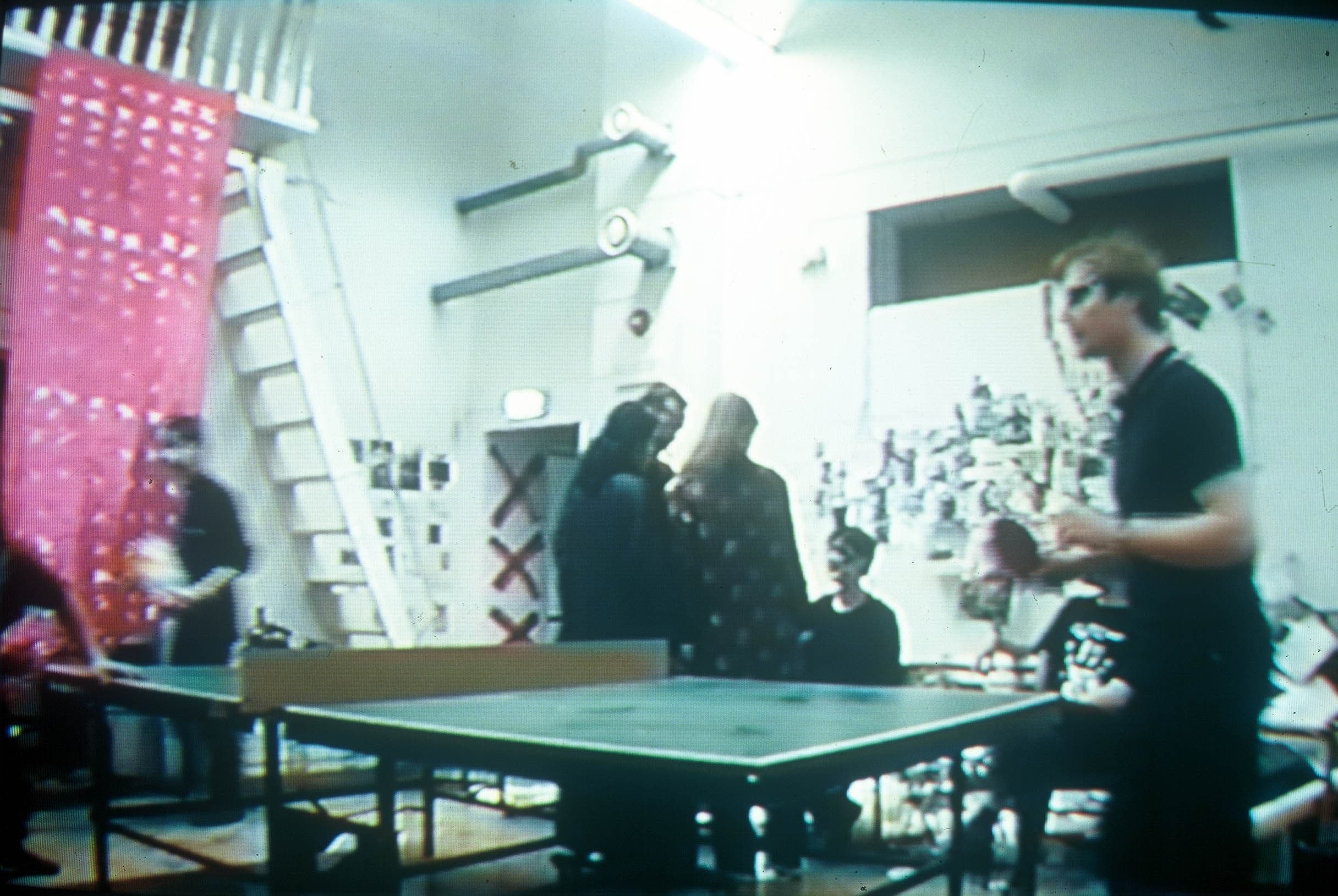
“Masquerade” (1996, Oslo National Academy of Fine Arts).
“Masquerade” is a cross-media live work completed by the artist while studying in the experimental art department of the Oslo National Academy of Fine Arts (Statens Kunstakademi, 1996—2000). Founded in 1909, the academy is Norway's first national academy of visual art, and its experimental art department was among the first in Europe to undertake art-institutional reform — breaking traditional disciplinary boundaries and actively embracing emerging media and cross-cultural practice.
Core Mechanisms of the Work
1. Self-chosen substitution of identity — on-site Peking-opera face-painting. The artist provided traditional Peking-opera greasepaint, and the participants (including the academy's professors and fellow students) freely chose Peking-opera character roles, painted on their faces on the spot by the artist and participants together. Rather than wearing prefabricated masks, traditional Peking-opera painting was applied directly on the skin — the direct contact of greasepaint and flesh making the transformation of identity more thorough. The characters the participants freely chose automatically formed an uncanny yet ordered network of relations, generating a spontaneous order within chaos.
2. A sensory feast made by the artist himself — garlic Eastern delicacies. The artist personally prepared Chinese garlic dishes of marvelous character, breaking the reserve of Western social etiquette with intense gustatory stimulation. On site there were things to eat and to drink — food became a direct exchange of bodily experience, and the scent of garlic became the most primordial medium connecting heterogeneous cultures.
3. Multidimensional ritual competition — acting, moving, competing. After the dinner, all the face-painted participants started a table-tennis match in the center of the exhibition hall. Everyday competition was given a ritual frame: the Peking-opera facial patterns dissolved individual identity, the table became an arena of equal contest, and the exhibition hall was transformed into a temporary theater. Movement, dining, face-painting, and socializing interwove in the space, blurring the boundary between performance and the everyday.
On the technical dimension, the project was recorded throughout on DV digital video. 1996 was the year after the birth of the DV format — Sony released the world's first DV camcorder, the DCR-VX1000, in July 1995. As a pioneering institution of Norwegian art education, the academy was equipped with the first three DV devices in step with Norwegian National Television (NRK), and the artist was able to use this cutting-edge technology directly. “Masquerade” is therefore not only a live event but one of the earliest DV conceptual-moving-image practices in the world — the portability and immediacy of DV made the recording itself a parallel dimension of creation, laying the methodological foundation for the later “Mask Archaeology” series.
This work embodies the artist's core concern during the Norwegian period: using traditional Chinese symbols as a tool to produce cultural collision within the context of Nordic avant-garde art education, and, through ritualized social structures, to explore the tension between identity, mask, and the real.