The Full Essay
Full Essay
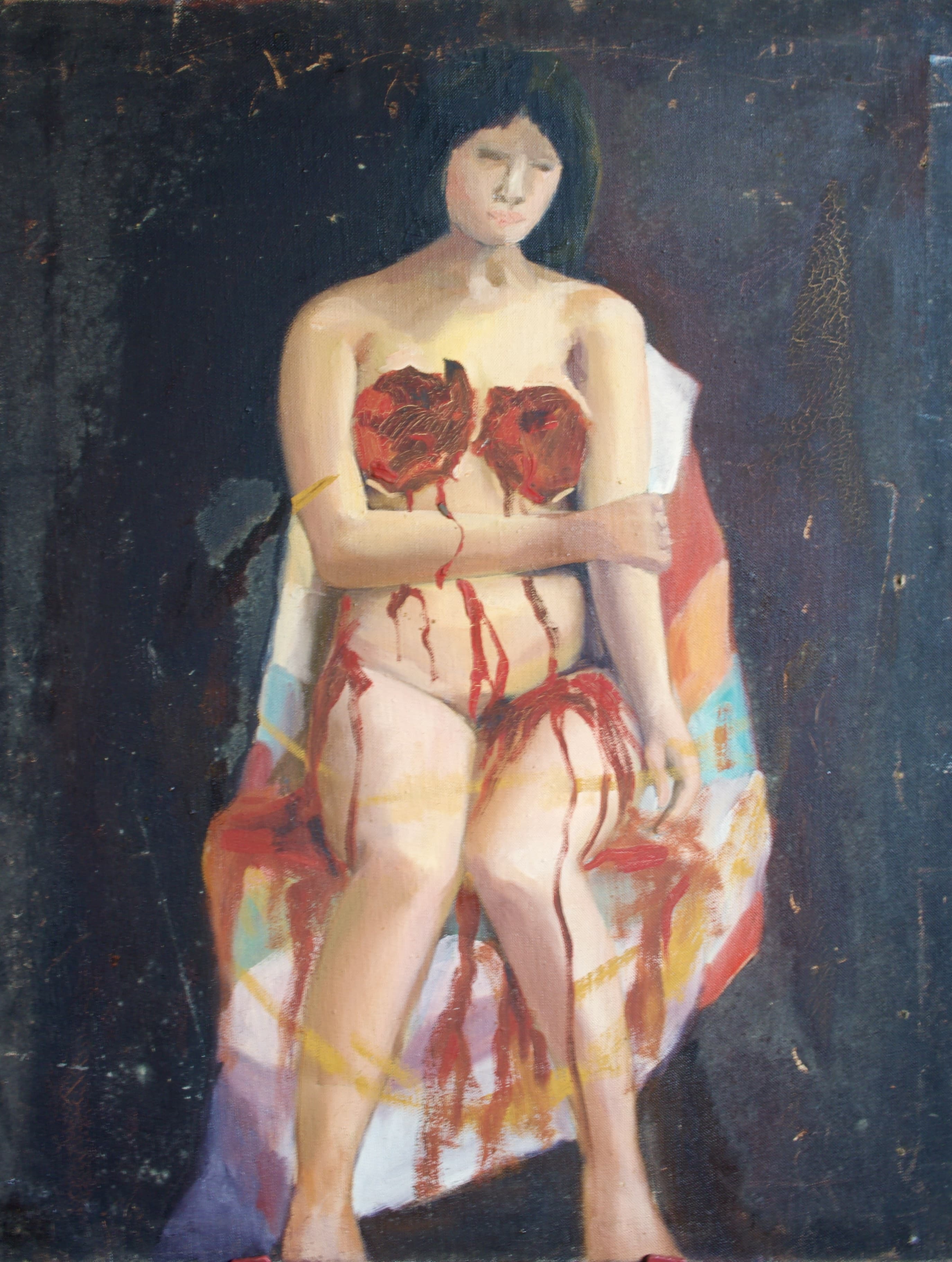
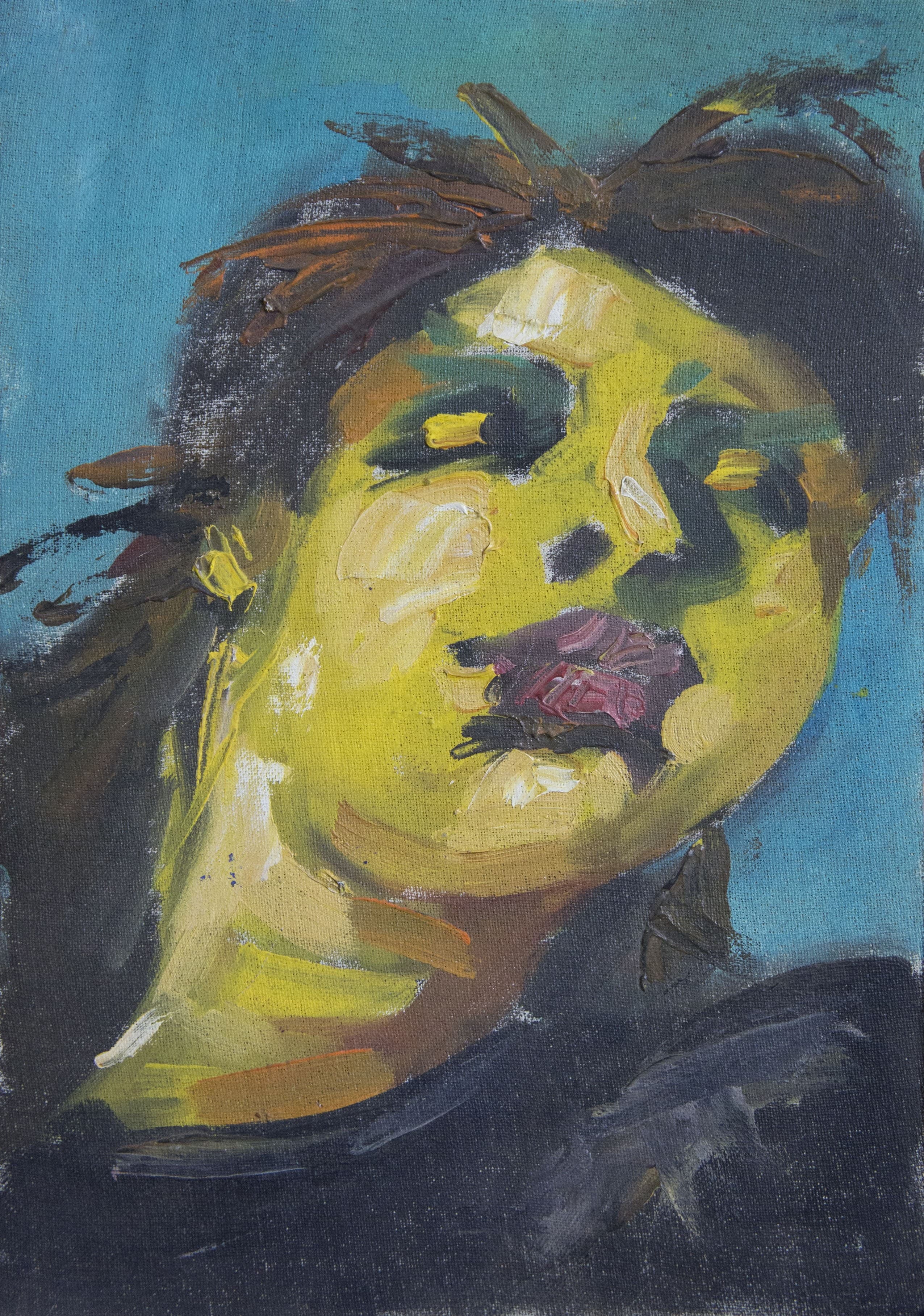
“She · First Love,” 1993.
In 1993, China was at a crucial turning point of Reform and Opening. The aftershocks of Deng Xiaoping's Southern Tour speeches still reverberated, the socialist market-economy system was established, and “going into business” (xiahai) became a buzzword of the era. Yet the economic surge did not cover society homogeneously — the chasm inside and outside the system, the collision of idealism and materialism, constituted the spiritual topography peculiar to the early 1990s.
The “work-unit system” had not yet collapsed but had already loosened; the leadership stratum still held the power to allocate scarce resources, and “a leader's child” became a symbol of privilege. The artist refused to enter the system, placing himself outside mainstream society through the extreme poverty of “one meal a day” — this choice was itself a twofold refusal of collectivist discipline and the emerging market logic. His studio was the last enclave of a former socialist idealism.
In the early 1990s the inflation rate stayed high (the 1993 CPI reached 24%), and the “mental-manual inversion” was severe — intellectuals' incomes were far lower than those of private entrepreneurs and officials. The artist's poverty was not a personal failure but an epitome of the structural marginalization of the intellectual stratum. The girlfriend's betrayal therefore had a social typicality: when survival pressure and consumer temptation intensified, emotional relationships were forced into economic-rational calculation.
The Artistic-Philosophical Dimension: The Turn from Imitation to Expression
From the perspective of Hegelian aesthetics, these two portraits mark the artist's leap from “symbolic art” to “romantic art.” The first breast-image is no longer an imitation of classical beauty but the direct externalization of the subject's inner conflict — the distortion of color and form becomes the obverse of the “sensuous manifestation of the Idea,” reaching a higher truth through the form of the ugly. The second sickbed portrait, with expressionist strokes, transforms love's “aura” into material traces of paint, completing the philosophical crossing from the “art of beauty” to the “art of truth.”
Heidegger's theory of the “world-picture” reveals a deeper ontological turn. The girlfriend's betrayal made the artist realize that he had previously regarded love as the “ready-to-hand” support of his “Dasein,” while the betrayal knocked it down into a reified object of the “present-at-hand.” The two portraits thus become an act of constructing the “world-picture” — the artist no longer depicts the object itself but the object's “mode of being” in the subject's world. The violent image of the breasts and the tender image of the sickbed constitute two modes of “unconcealment” of the same being: the former, with the violence of “disclosure,” reveals the falsity of society; the latter, with the tenderness of “concealment,” preserves the truth of memory.
Adorno's “negative dialectics” provides a framework of critical aesthetics for this. In 1993, when commodity logic was thoroughly colonizing life, the artist resisted the homogenizing violence of the “principle of exchange” with images of “non-identity.” The “non-exchangeability” of the breast-image — it is neither a pornographic consumer commodity nor a classical nude, but the irreducible thing of trauma — is precisely the extreme form of what Adorno called the “autonomy of art.” Art here becomes the “antithesis of society,” preserving, through its own negativity, the truth-content that reality has negated.
The feminist perspective reveals the gendered power structure: in the 1990s, Chinese women were in a zone torn between the traditional role of dependence and the emerging economic subject. The girlfriend's “betrayal” should not be read merely as moral degeneration — within a male-dominated system of resource allocation, she too is an object deprived of economic autonomy, and her “choosing the son of a leader” is in fact a limited survival strategy within structural inequality. The artist's “revenge” through the breast-image, ostensibly deconstructing the sanctifying coding of women, in fact translates structural social violence into the bodily humiliation of an individual woman; this image-violence is itself a second requisition of the female body.
“She · First Love” therefore transcends personal biography and becomes a visual archive interweaving the spiritual history of China's intellectual stratum in the 1990s, the turn of the philosophy of art, and gender politics: how a marginal artist who refused institutional co-optation and refused market assimilation completed, within emotional trauma, the ontological leap from the “art of beauty” to the “art of truth,” transforming private pain into an image-politics of universal critical force.