木玉明
Projects
Social Practice·2024

She Nian Fo

《舍念佛》 · Pa Pae Meditation Centre, Chiang Mai, Thailand

What we sculpt is not only our own hearts, but also the soul of an entire era.

01

The Birth

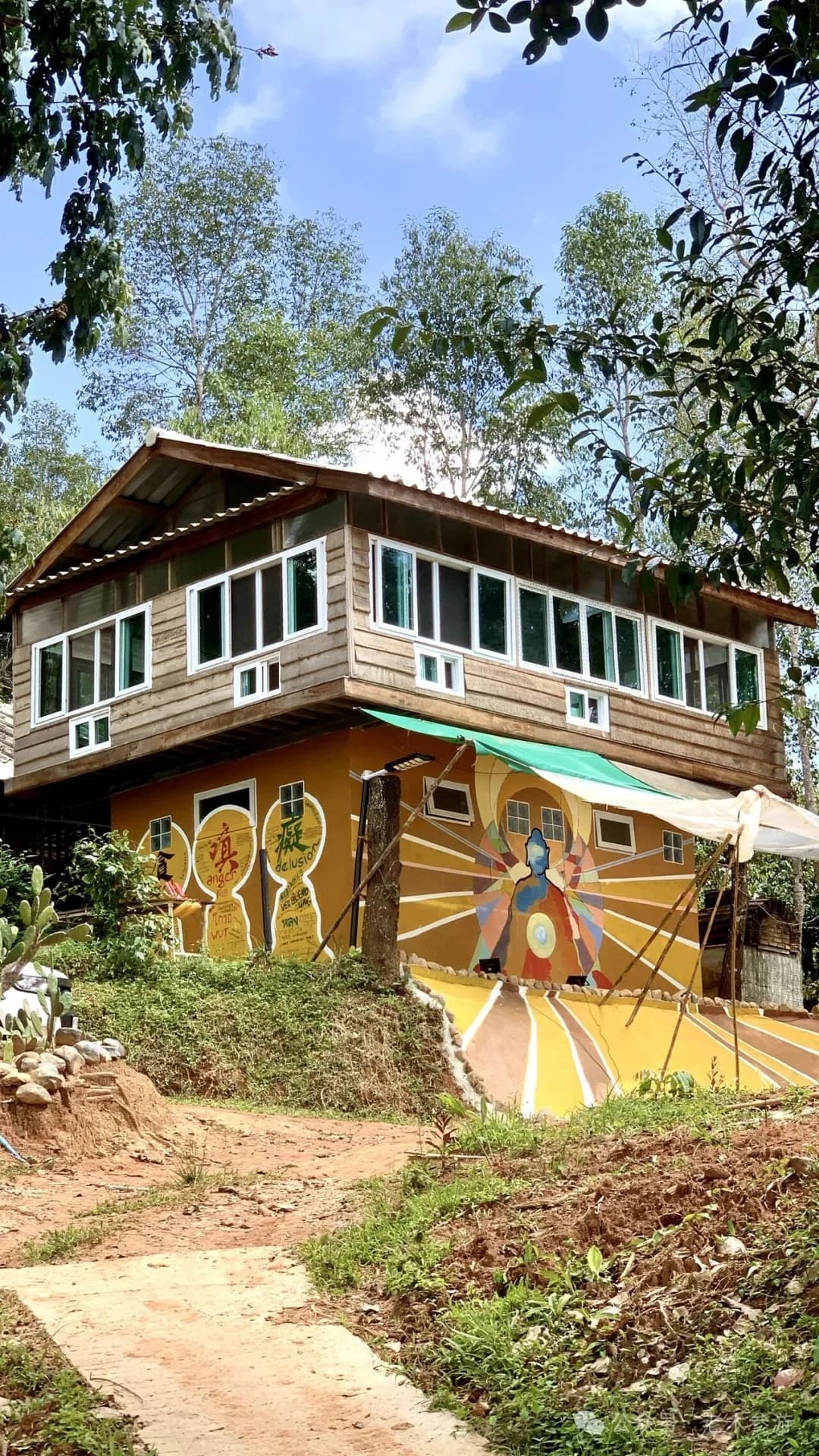
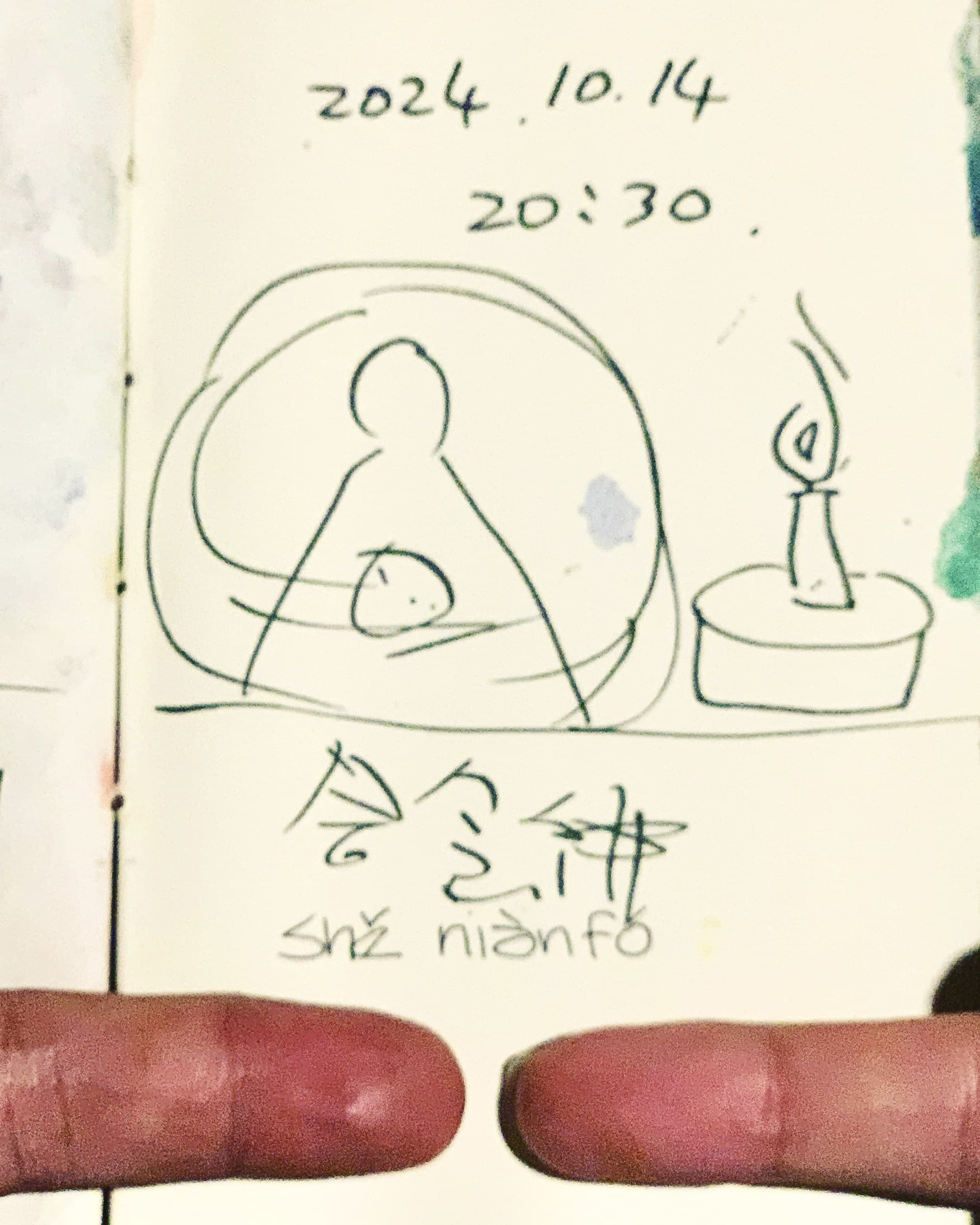
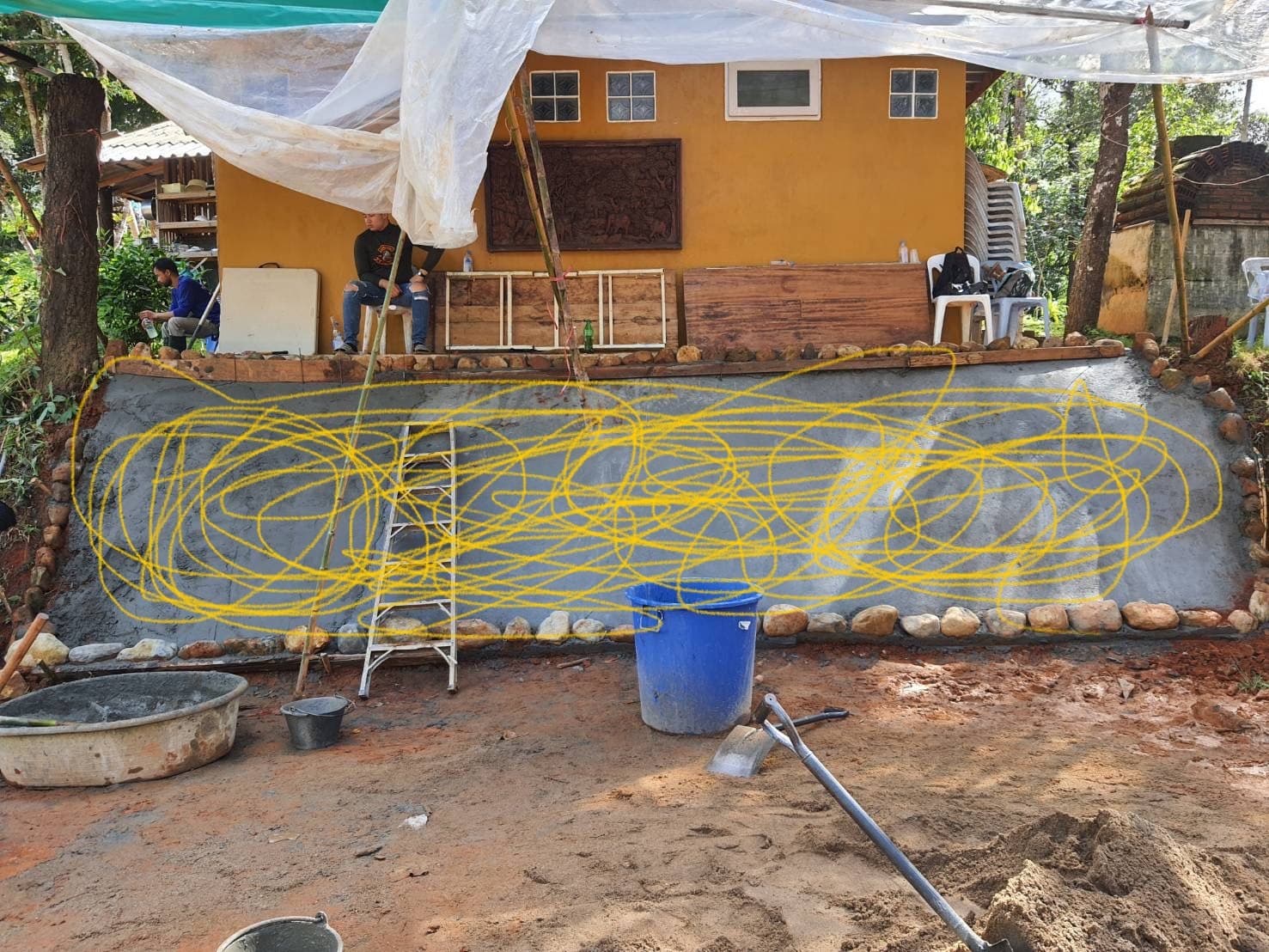
The original sketch of She Nian Fo, October 14, 2024, 20:30 — "The birth of Shenian Buddha. A conceptual artwork for Papae Meditation Centre is in progress."

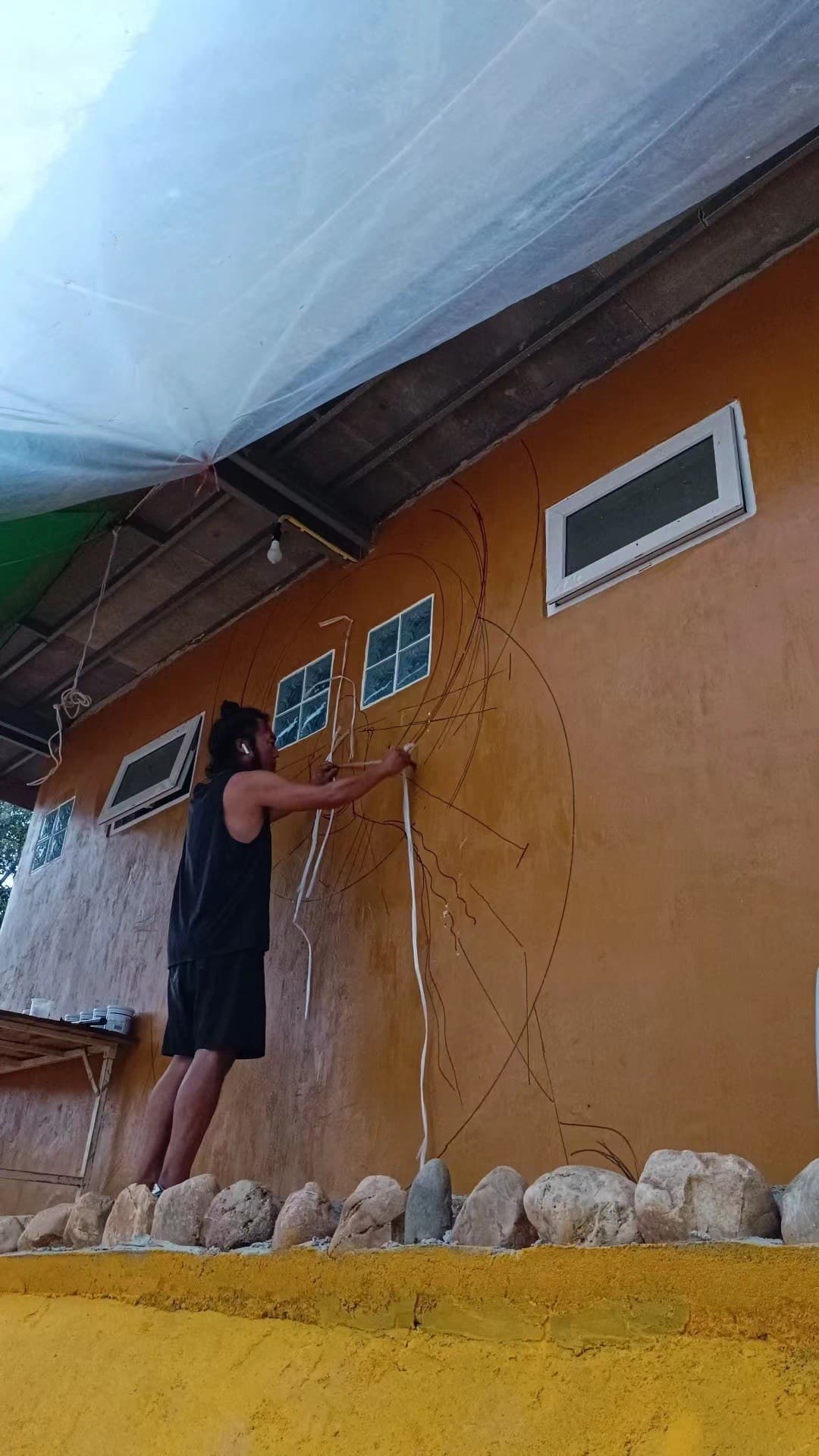
On the morning of October 14, 2024, at 6:24 AM, at Pa Pae Meditation Centre in the mountains between Chiang Mai and Pai, Thailand, an artwork came into being.

The artist, Lao Mu, had been in extended meditation at Pa Pae — a centre dedicated to 'World Peace through Inner Peace' — when a conception formed. Not a deity inherited from ancient texts. Not a figure transmitted from a classical canon. Something new: a conceptual Buddha born from deep observation of the human inner life.

He called it 舍念佛 — She Nian Fo: the Buddha of Letting Go. It had never existed before.

The action on that October morning was not merely the creation of a visual image of a Buddha. It was, as Lao Mu described it, the laying of a foundation stone for a social sculpture. The material was not clay or stone — it was the collective afflictions of human beings, and their potential for awakening.

02

The Concept

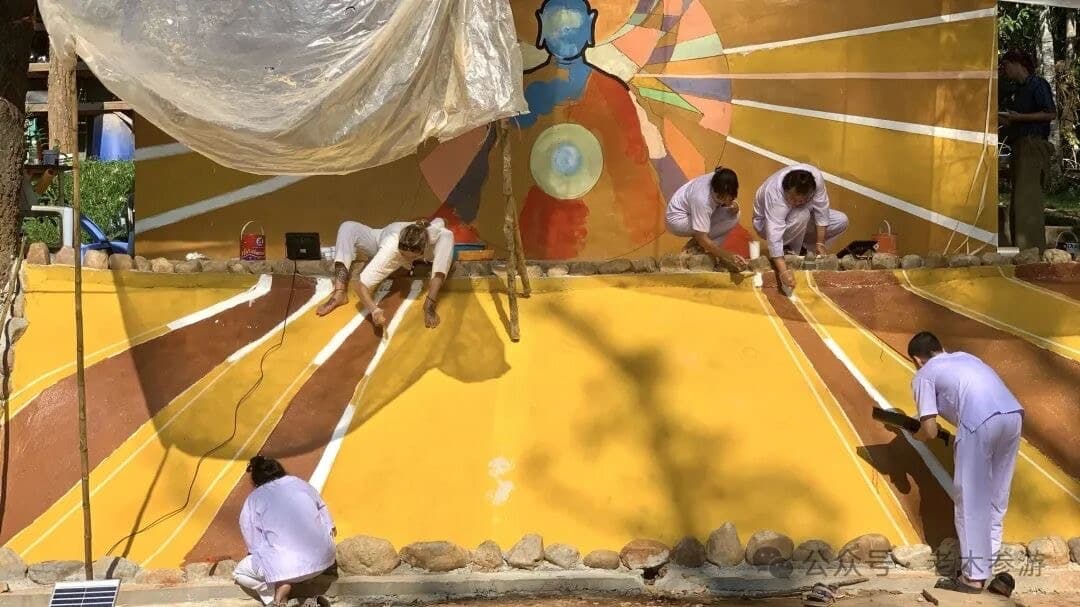
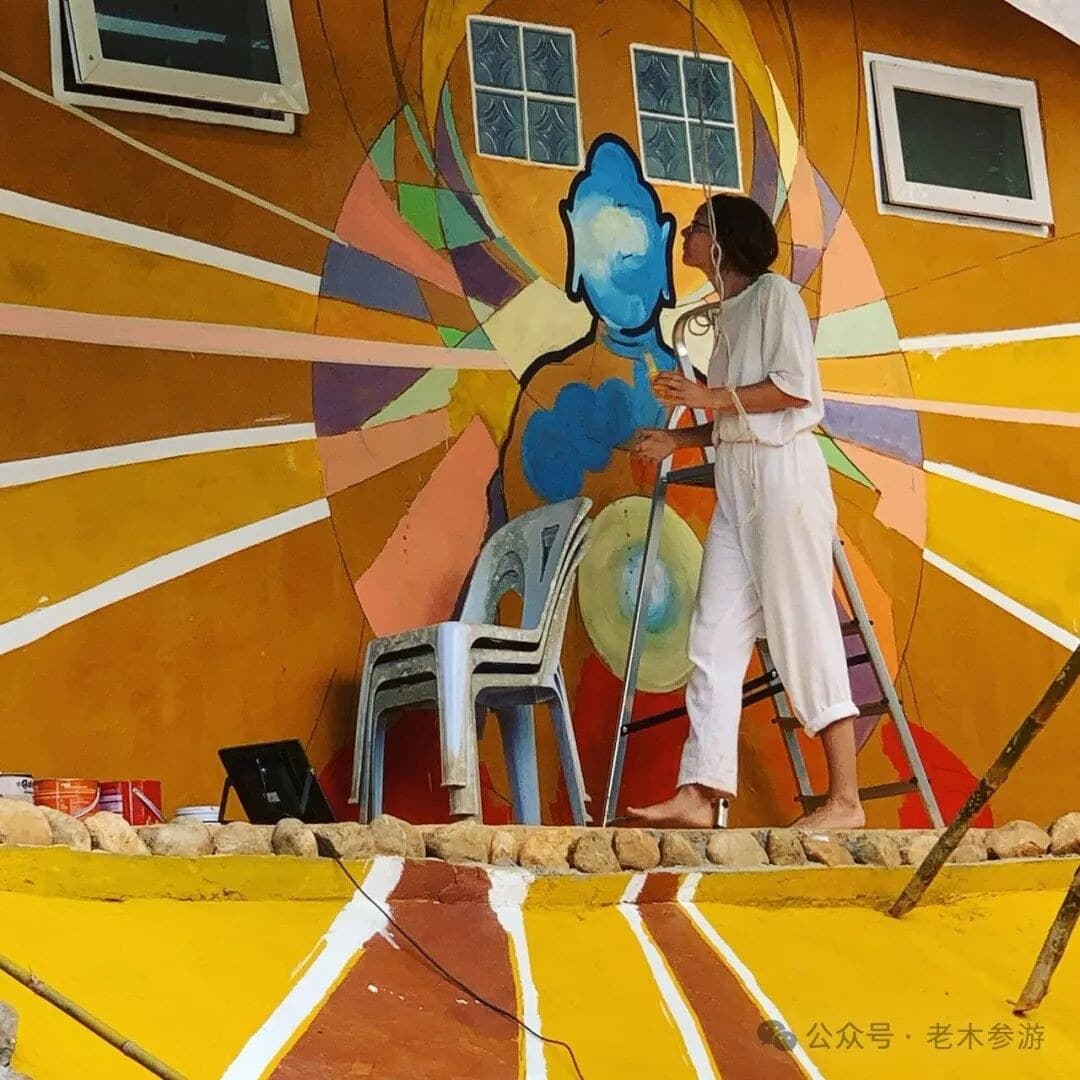
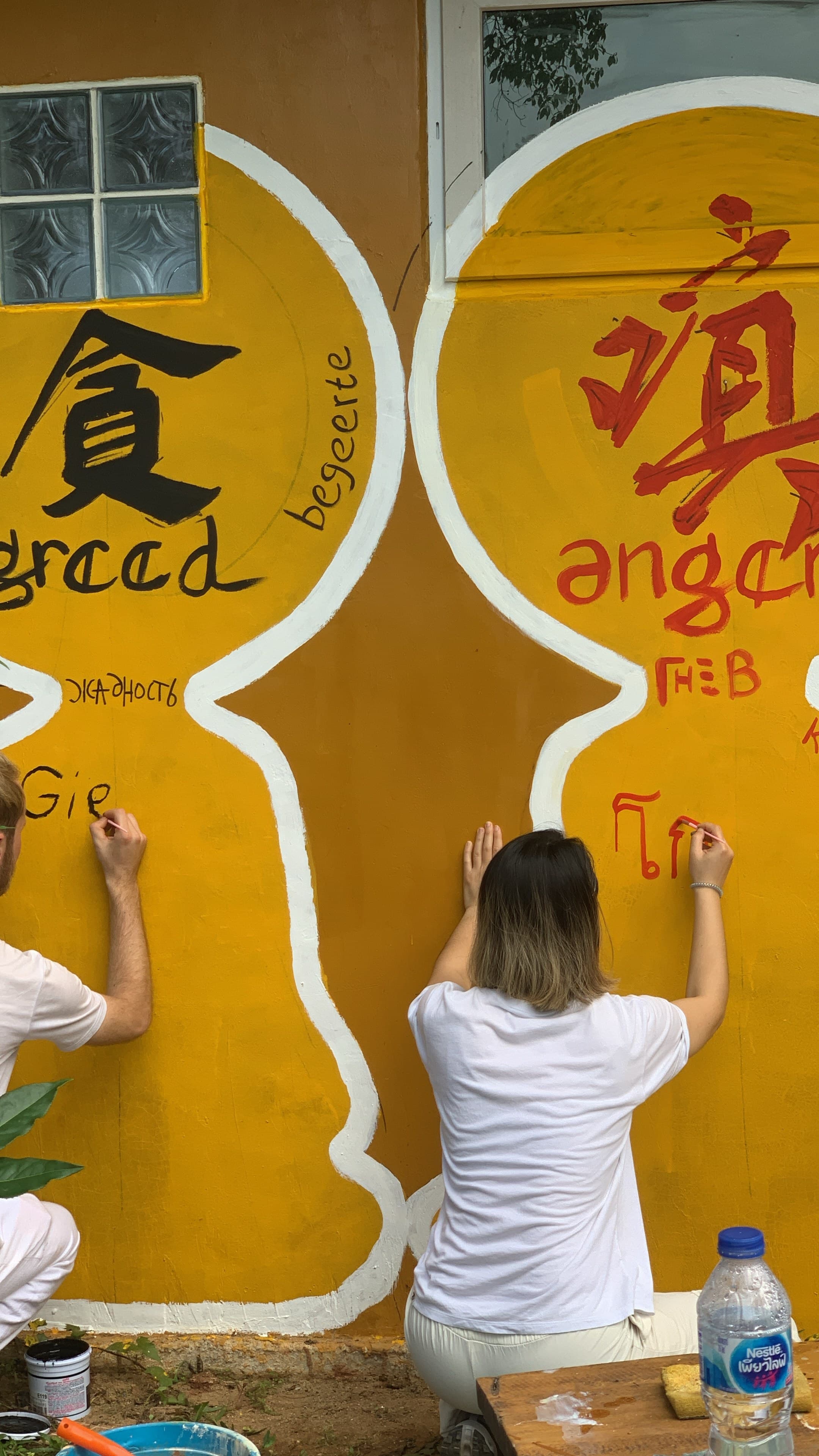
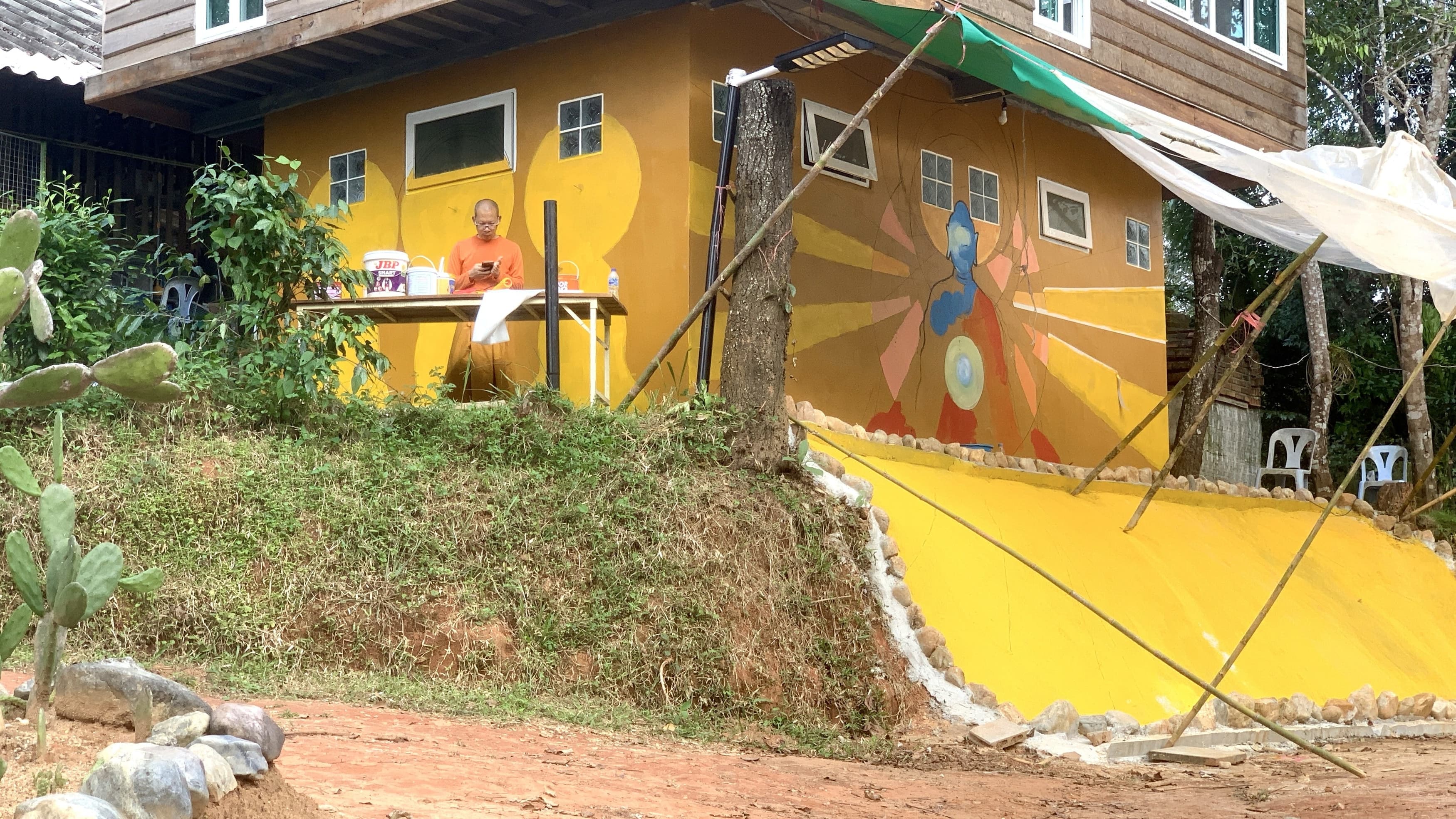
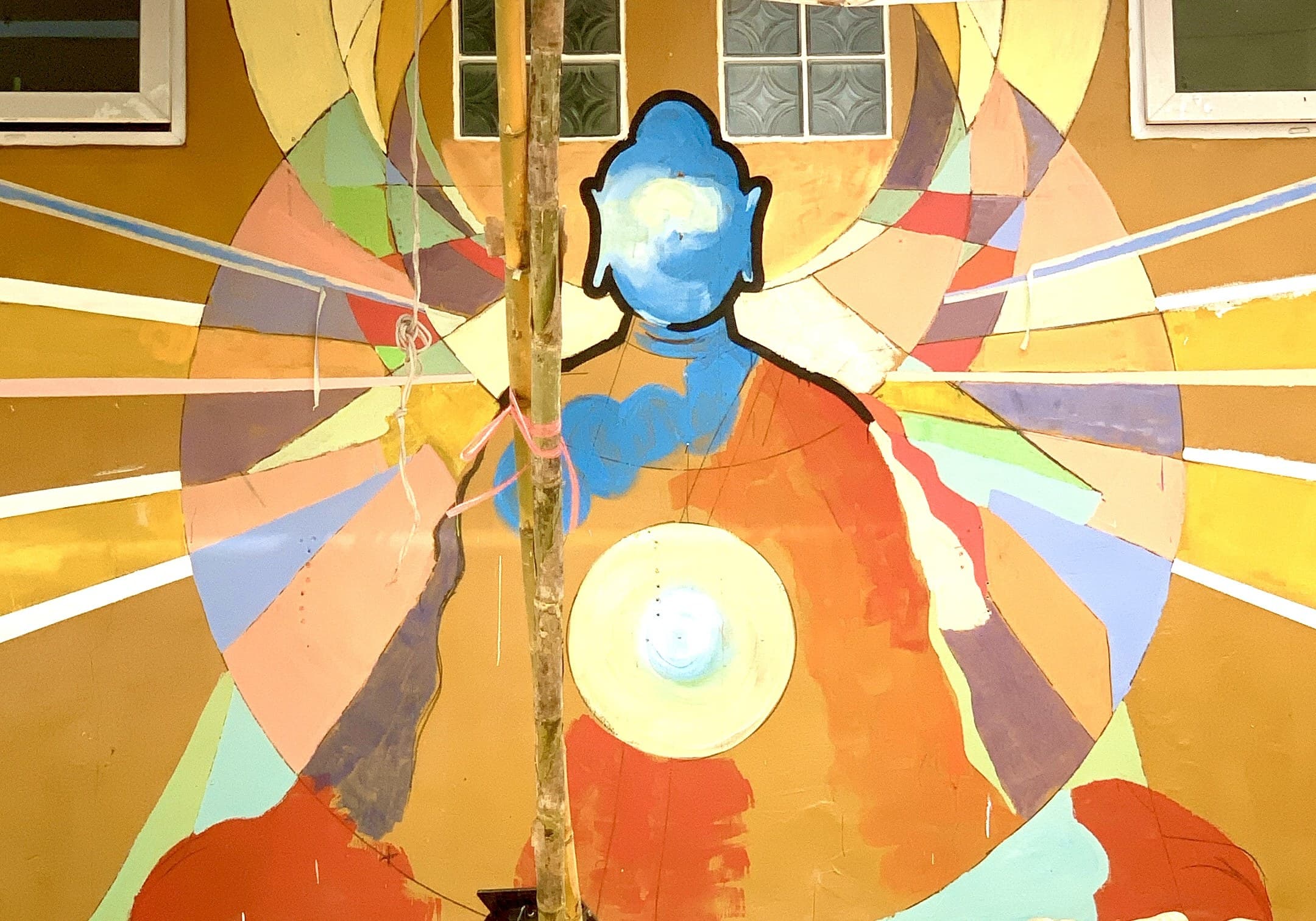
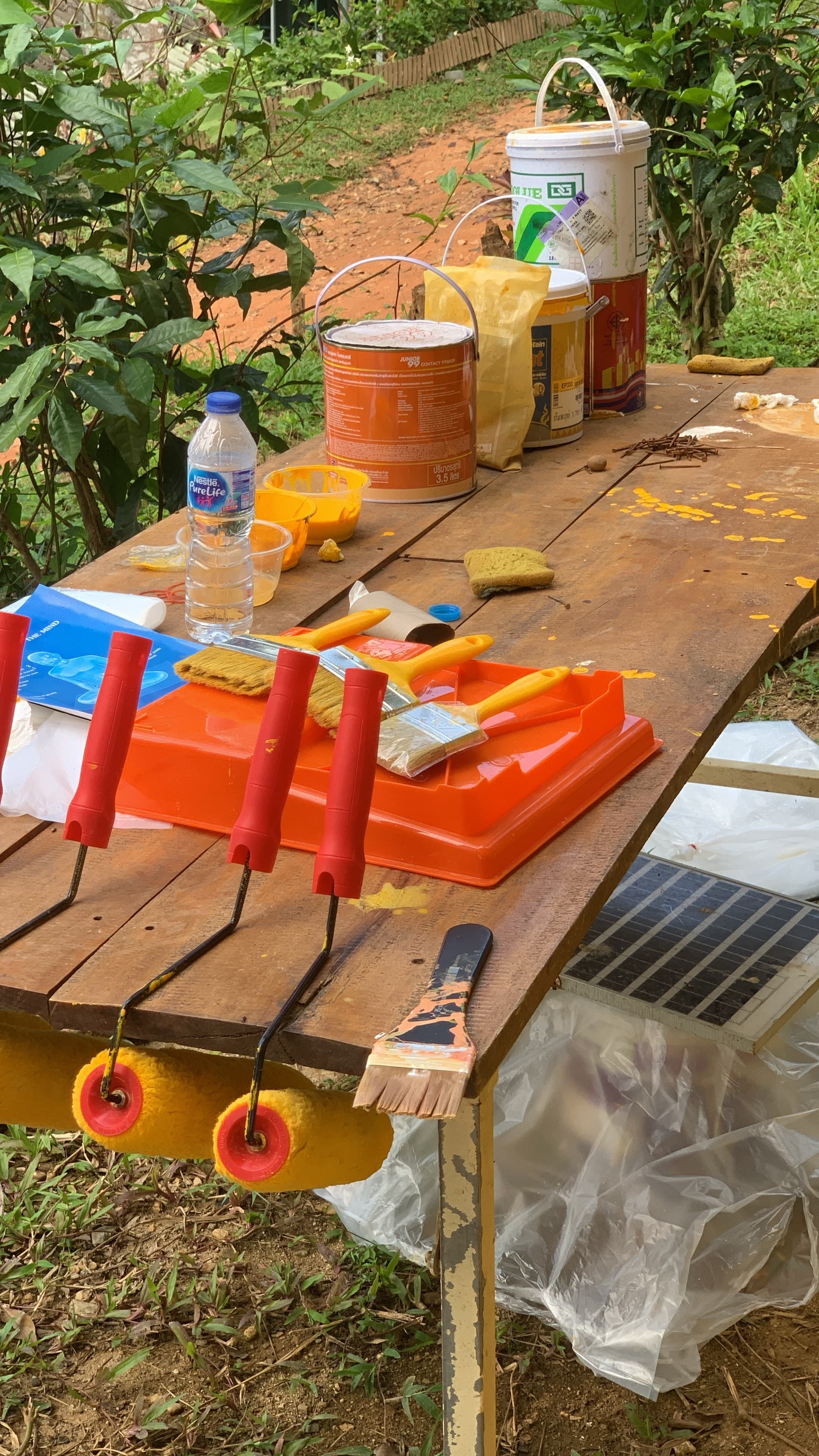
The She Nian Fo mural taking shape on the walls of Pa Pae Meditation Centre

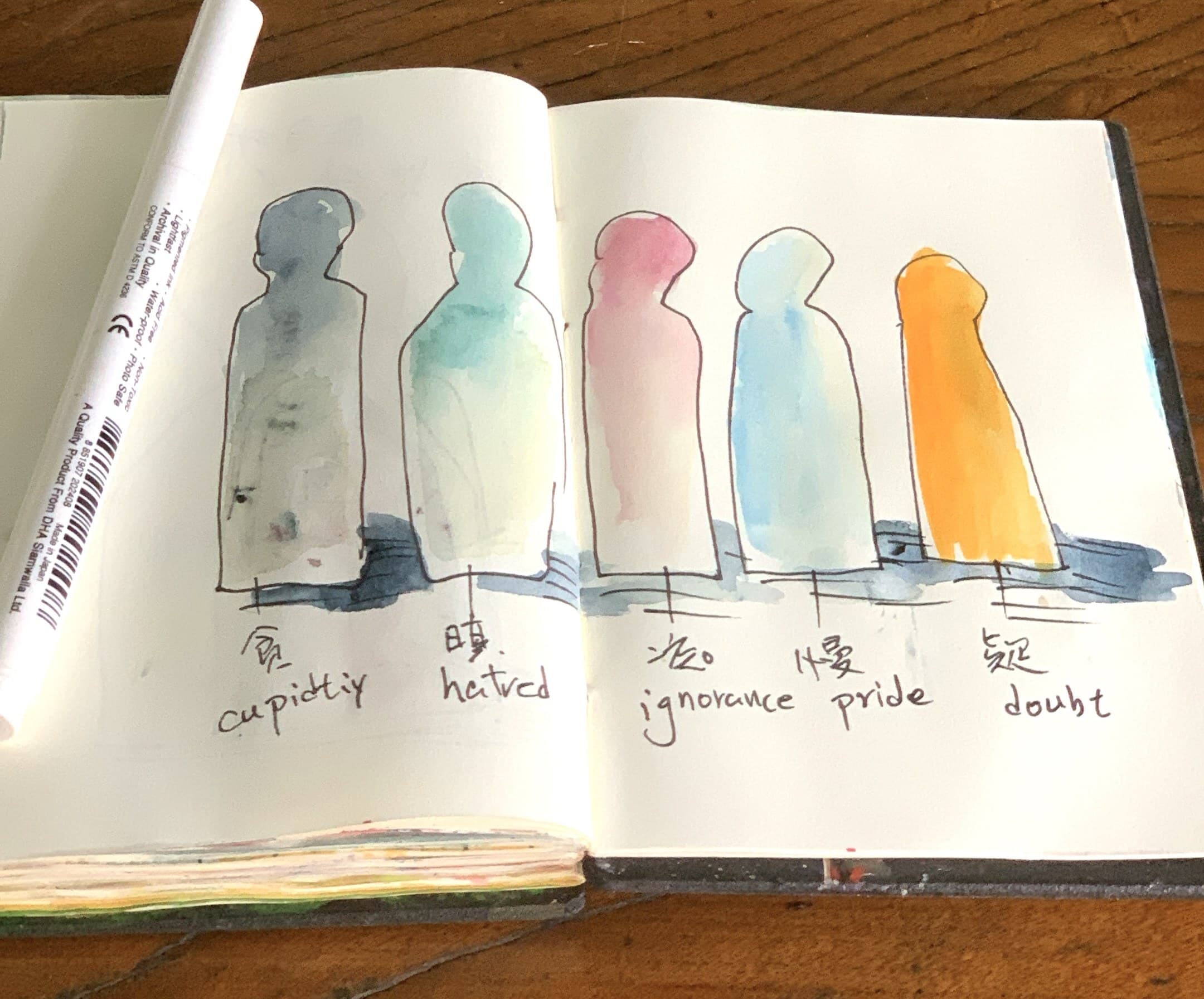
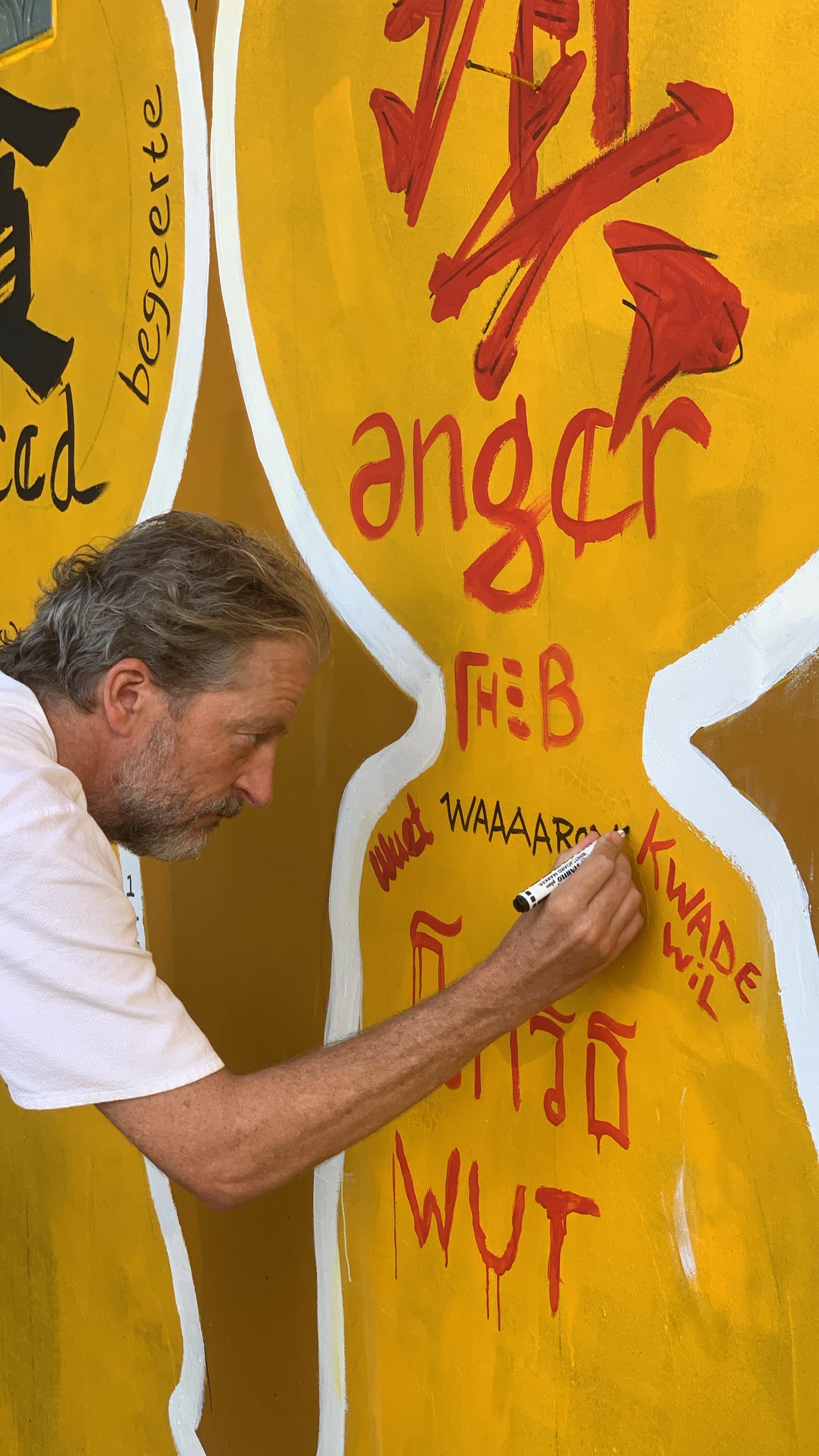
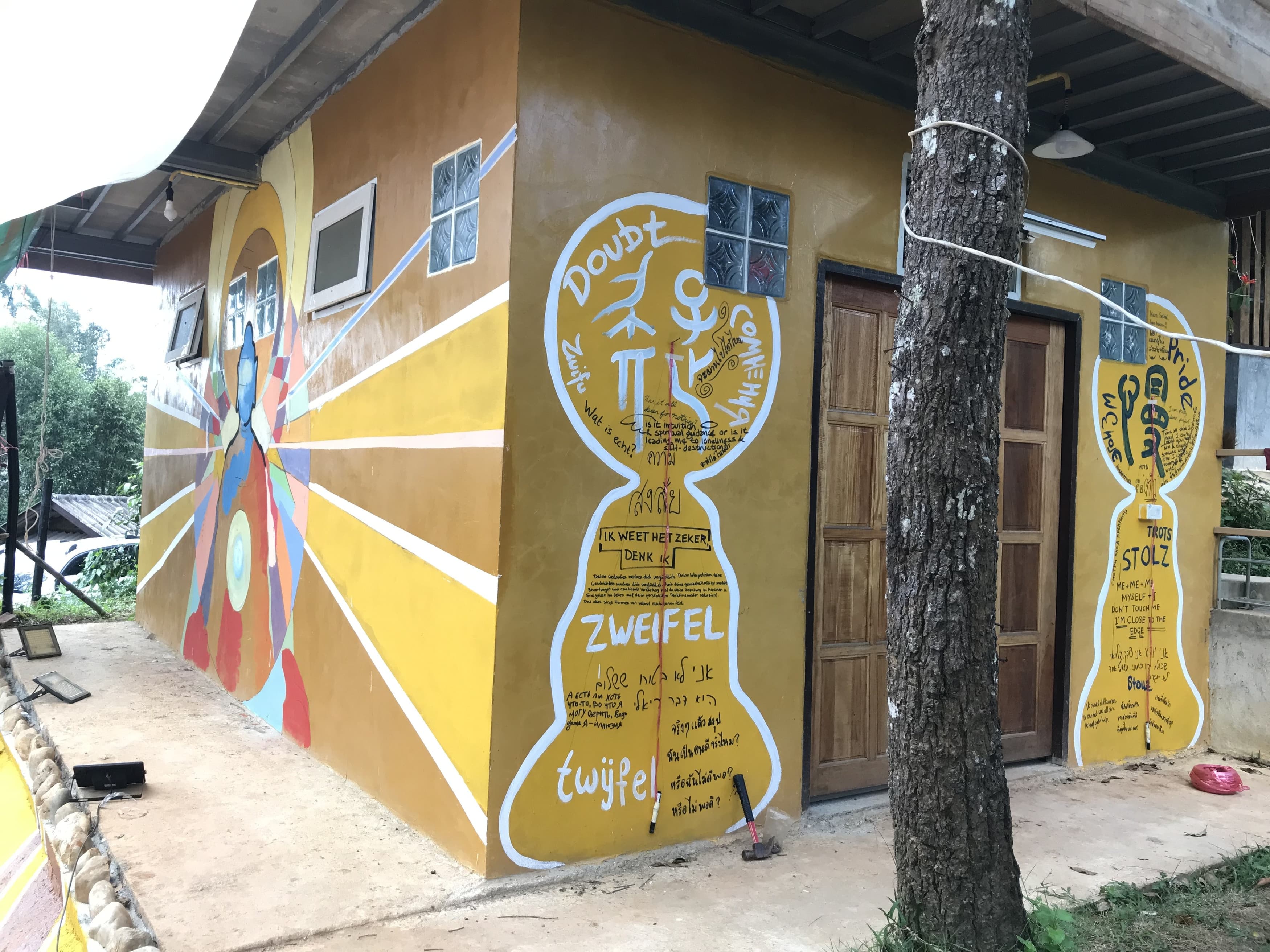
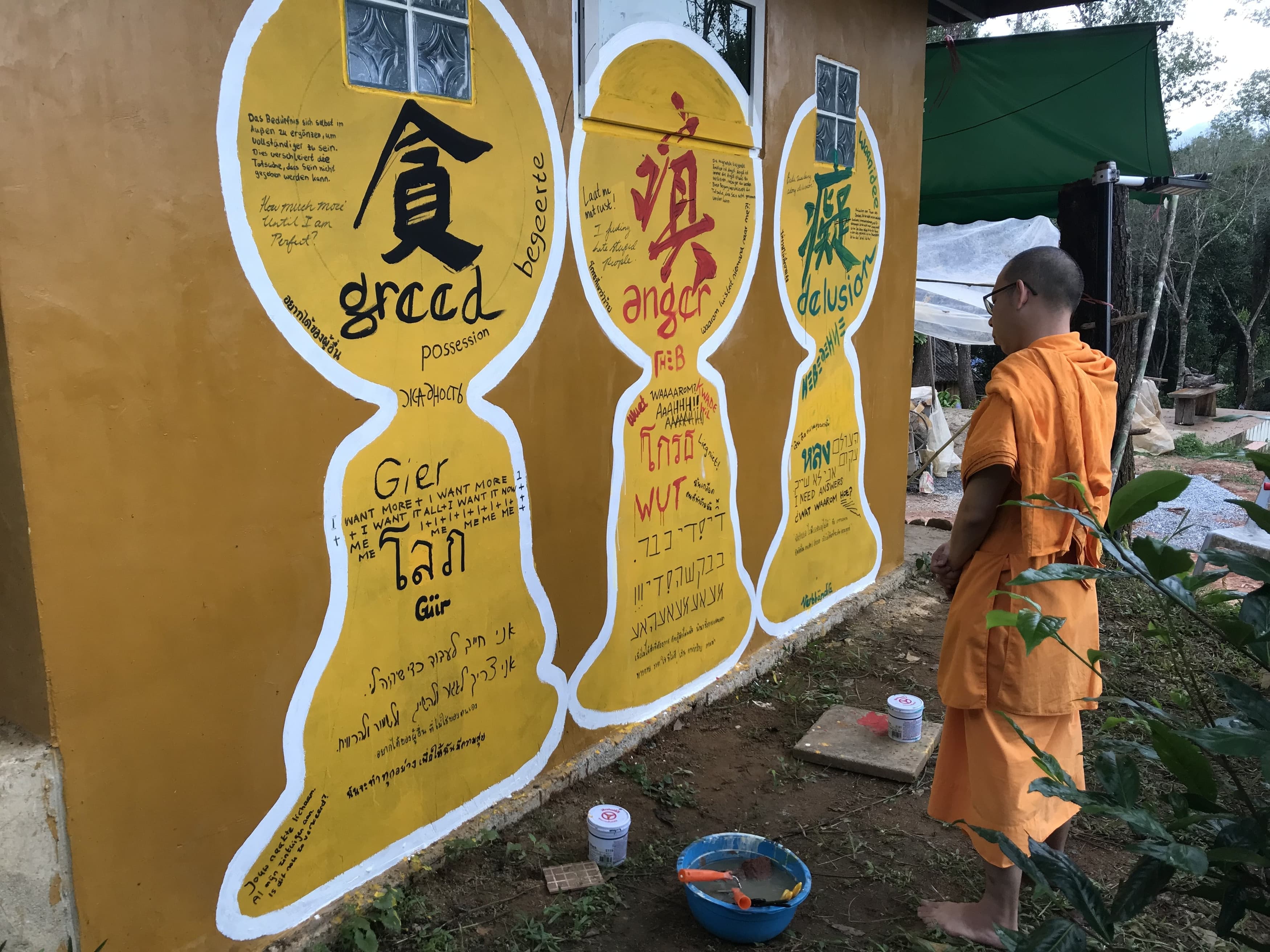
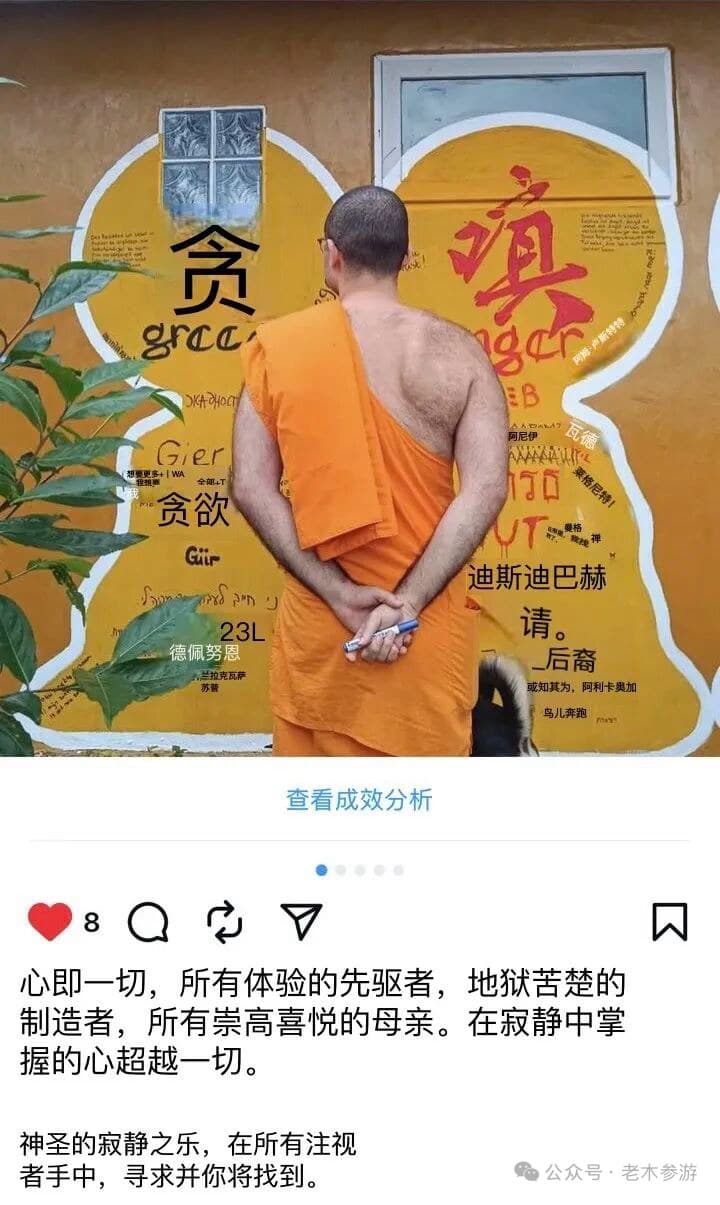
She Nian Fo is not made of clay or stone. Its material is the collective afflictions of human beings — the five inner poisons that drive suffering: greed (贪), anger (嗔), delusion (痴), pride (慢), and doubt (疑). Its tool is 舍念 — the practice of recognising, confronting, and releasing these poisons. Its goal: a more conscious, more compassionate social and cultural mentality.

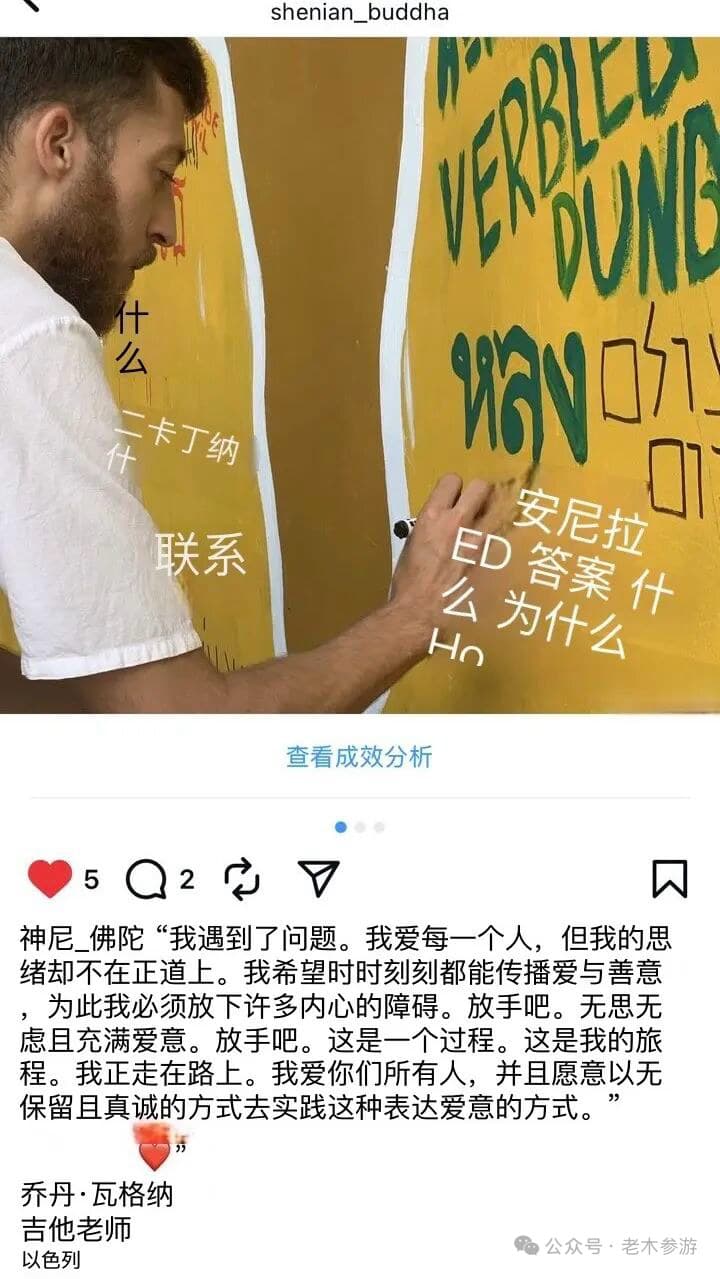
Following Joseph Beuys' theory of social sculpture — that art's core task is to shape a healthy social organism — the project proposes that every person is already a sculptor. When a participant writes a poison onto the work, faces it openly, and releases it, they are both the material and the maker.

By creating She Nian Fo, Lao Mu has provided the public with a universal social sculpture tool. It invites everyone to become a 'social artist': to take up 'She Nian' as a chisel, first sculpting one's own inner world, and then collectively shaping our social relationships and environment.

The goal is not an art object. It is a transformation in the social and cultural consciousness of an era — a sculpture of collective awareness.

03

Voices from the Centre

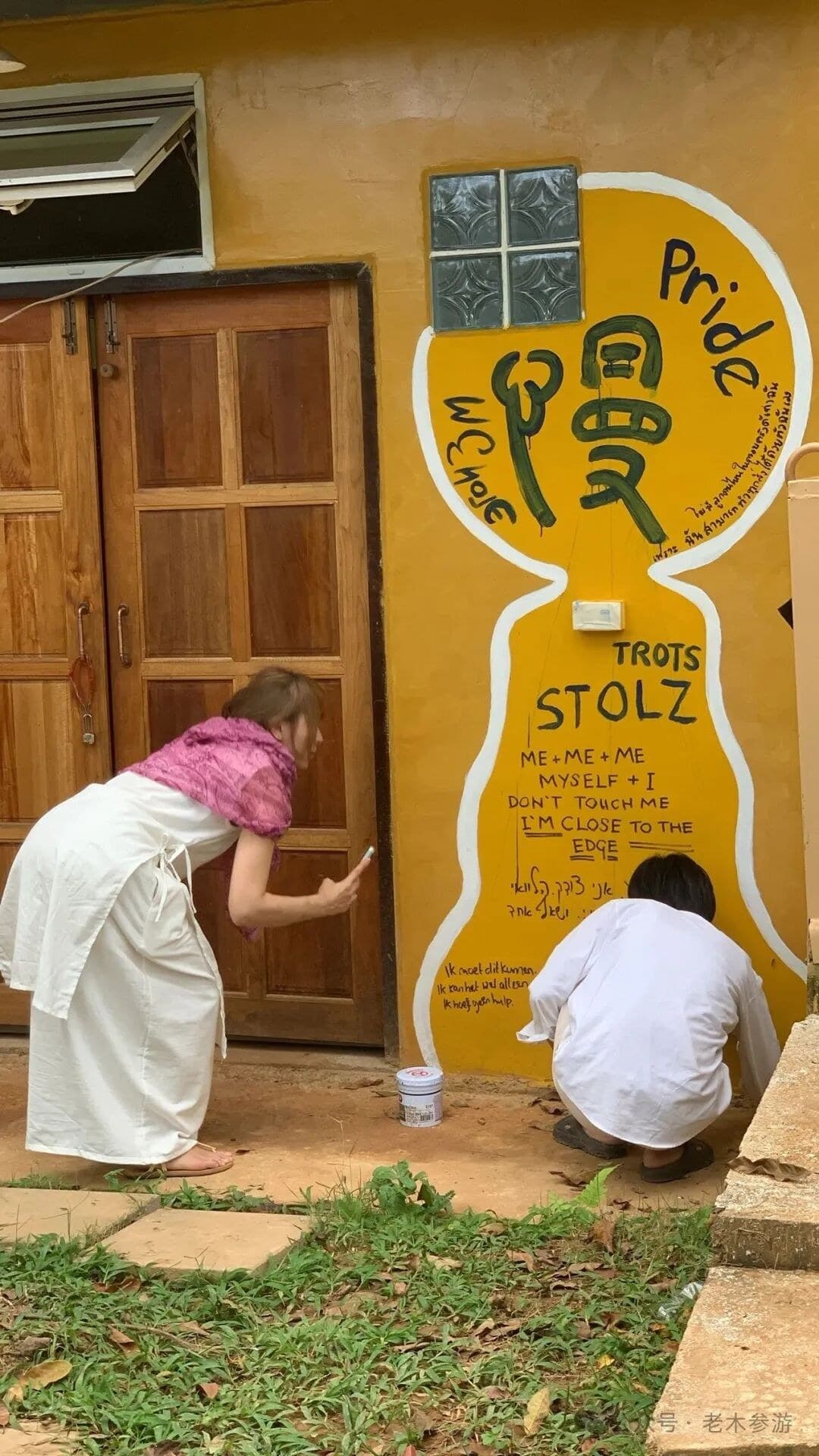
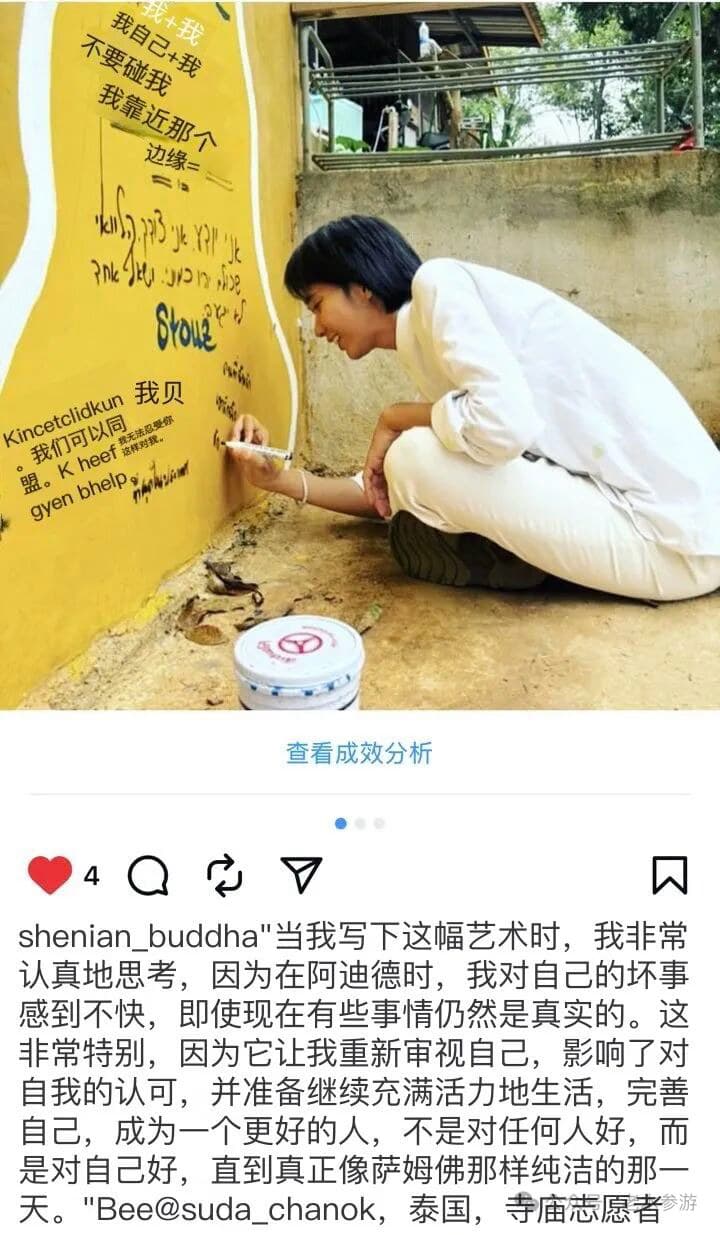
A participant writing their inner 'five poisons' onto the She Nian Fo sculpture

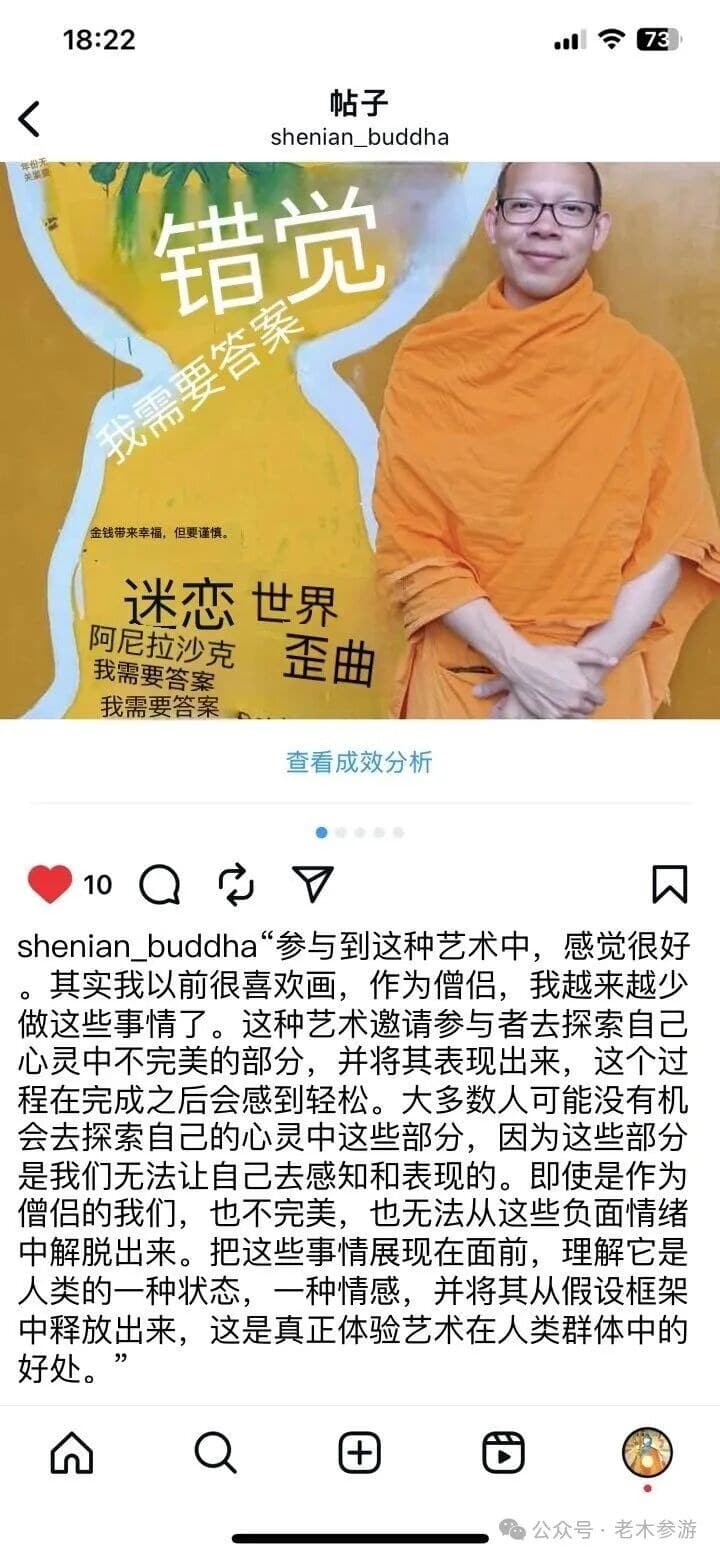
LP Anon, a Thai monk of nearly sixteen years, described his experience of writing onto the sculpture: "When I am creating art, I feel emotions arising in my mind. When I write them down — it is my emotion, in front of me. I feel this is a good thing, because people nowadays may not allow themselves to feel negative emotions. Through this art, you can give people a chance to discover and understand them more."

LP Brandon, a Filipino-American monk ordained at Pa Pae, reflected on the title: "I like the concept of 'She Nian' — it's what you are giving. It reminds me of the biblical phrase: 'Give all your worries to the Christ within.' You give your troubles to the Buddha. On the surface this sounds irresponsible. But I think there is something quantum happening, something important psychologically — because you are going deep within yourself to find it, and when you bring it to the conscious level, it becomes easier to process rather than hiding it in the subconscious."

On the relationship between art and religion, LP Brandon continued: "I think good art and bad art are distinguished by the meaning it carries. Something may look good, but if there is nothing behind it, it won't last. This artwork especially is interactive — you come in and have the opportunity to write freely. That is wonderful and fun. I think this is a very fundamental concept of Buddhism: you come in and you do something, otherwise nothing will happen."

Minha, a Thai volunteer who had been coming to Pa Pae for four years — and who had recently quit her job to volunteer full-time after paying off her student loans — shared her experience of participating in the work: "I think this relates to the feelings you are supposed to avoid. Honestly, during the day I don't experience them so much — the one I notice slightly more is anger, because when work is busy I sometimes lose myself, get angry easily, though not very frequently."

04

Three Levels of Social Sculpture

The project works through three distinct levels to achieve the crossing from inner revolution to social sculpture:

At the individual level — micro-transformation — the work guides each person to regard their own 'five poisons' as sculptable material. Through the practice of 'She Nian,' they perform an inner act of art-making, completing a remodelling and awakening of the self. This is the most fundamental unit of social sculpture: the single human being, reshaped from within.

At the level of the public domain — macro-formation — countless individual inner sculpture processes are connected, displayed, and set in dialogue through public installations, workshops, and an online archive. When personal 'She Nian' stories become public discourse, private transformation flows together into a collective evolution of consciousness, forming the beginnings of a new social and emotional community.

At the level of sustained social action — structural shaping — the project extends naturally into specific social initiatives. Among these is a children's project: teaching children art and empowering them is the outward practice of the 'She Nian' spirit — the letting go of utilitarian thinking — and a direct sculpting of a fairer, more hopeful future social structure. This embodies social sculpture's most fundamental demand: that art ideals transform into real social welfare.

05

A Movement, Not an Object

She Nian Fo transcends the scope of a traditional art exhibition. It is a continuous, open social sculpture process.

It redefines art: art is no longer merely an object for viewing, but a creative labour through which everyone can participate and shape the social 'soul.'

It redefines what it means to become a Buddha: in this context, 'becoming a Buddha on the spot' is equivalent to becoming a self-aware and capable 'social sculptor,' actively engaged in building a more awakened world.

The birth of She Nian Fo is not the completion of an artwork — it is the launch of a social sculpture movement.

This Buddha is our collective social ideal: a civilizational form slowly emerging from the rough stone of the 'five poisons' through countless acts of 'She Nian.' You are not only an observer but a sculptor. Every act of self-examination, every attempt to let go of attachment, carves a decisive mark into a better society.

06

Pa Pae — The Place

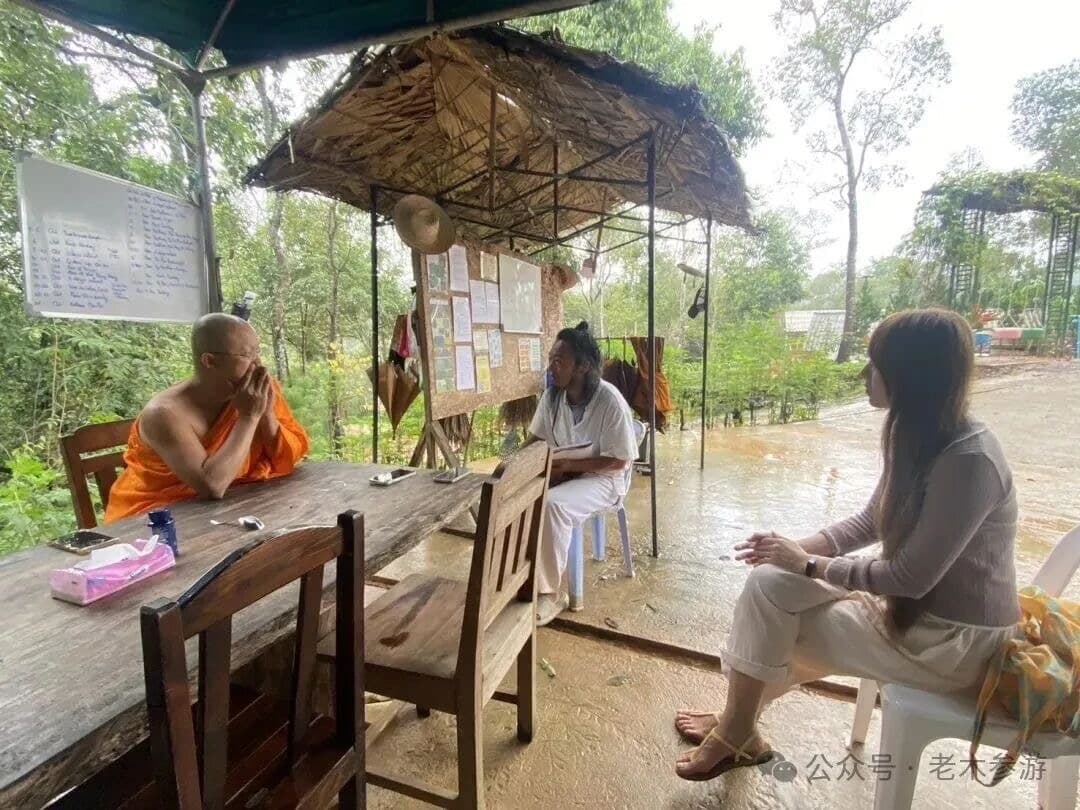
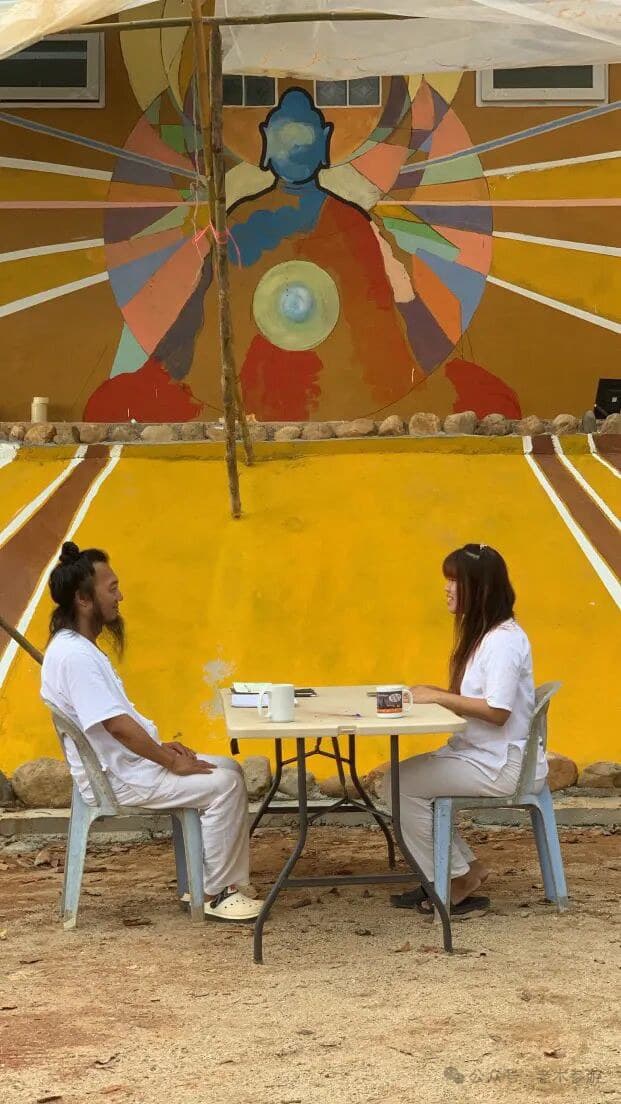
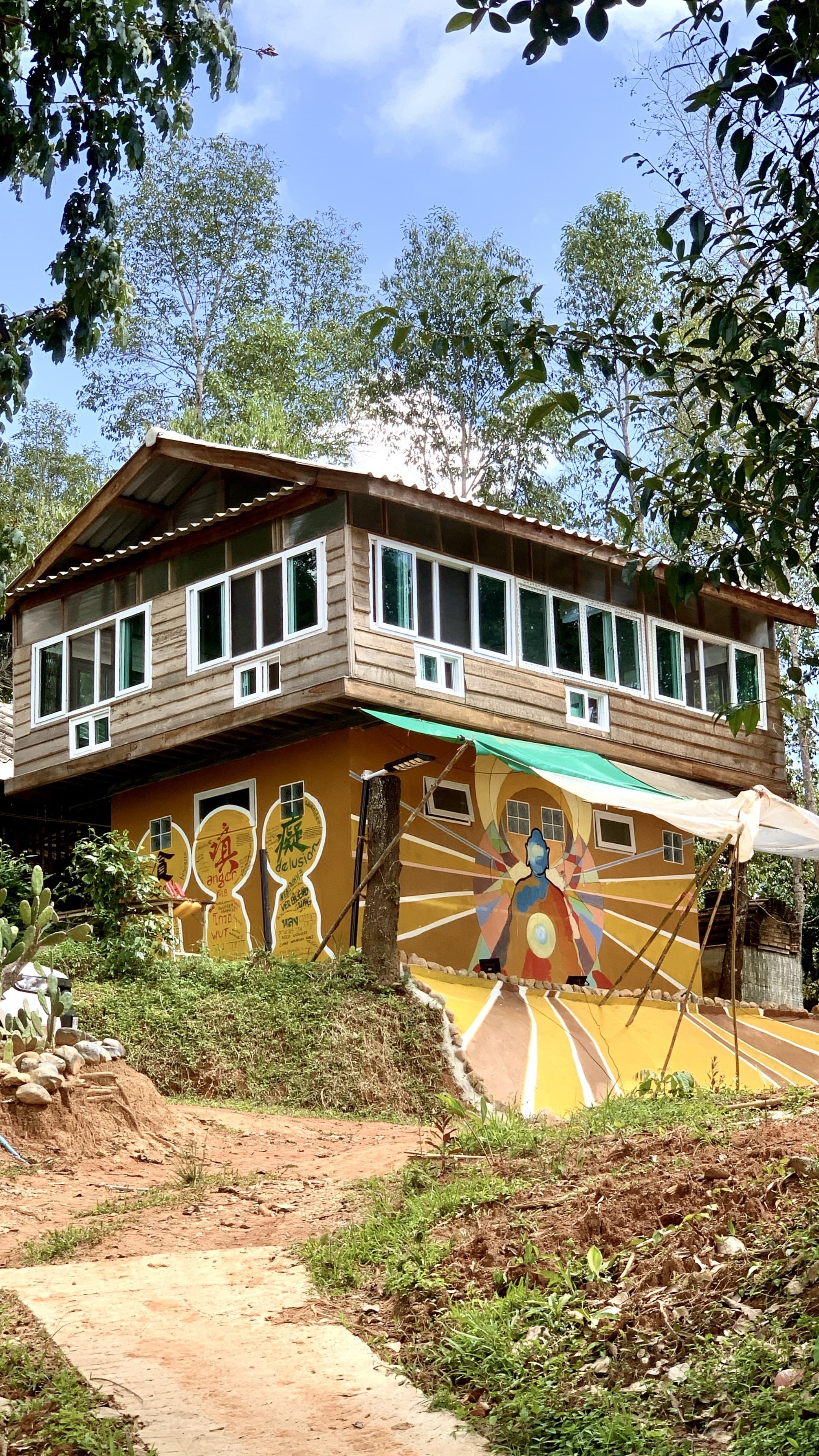
At Pa Pae Meditation Centre — daily life and practice in the mountains between Chiang Mai and Pai

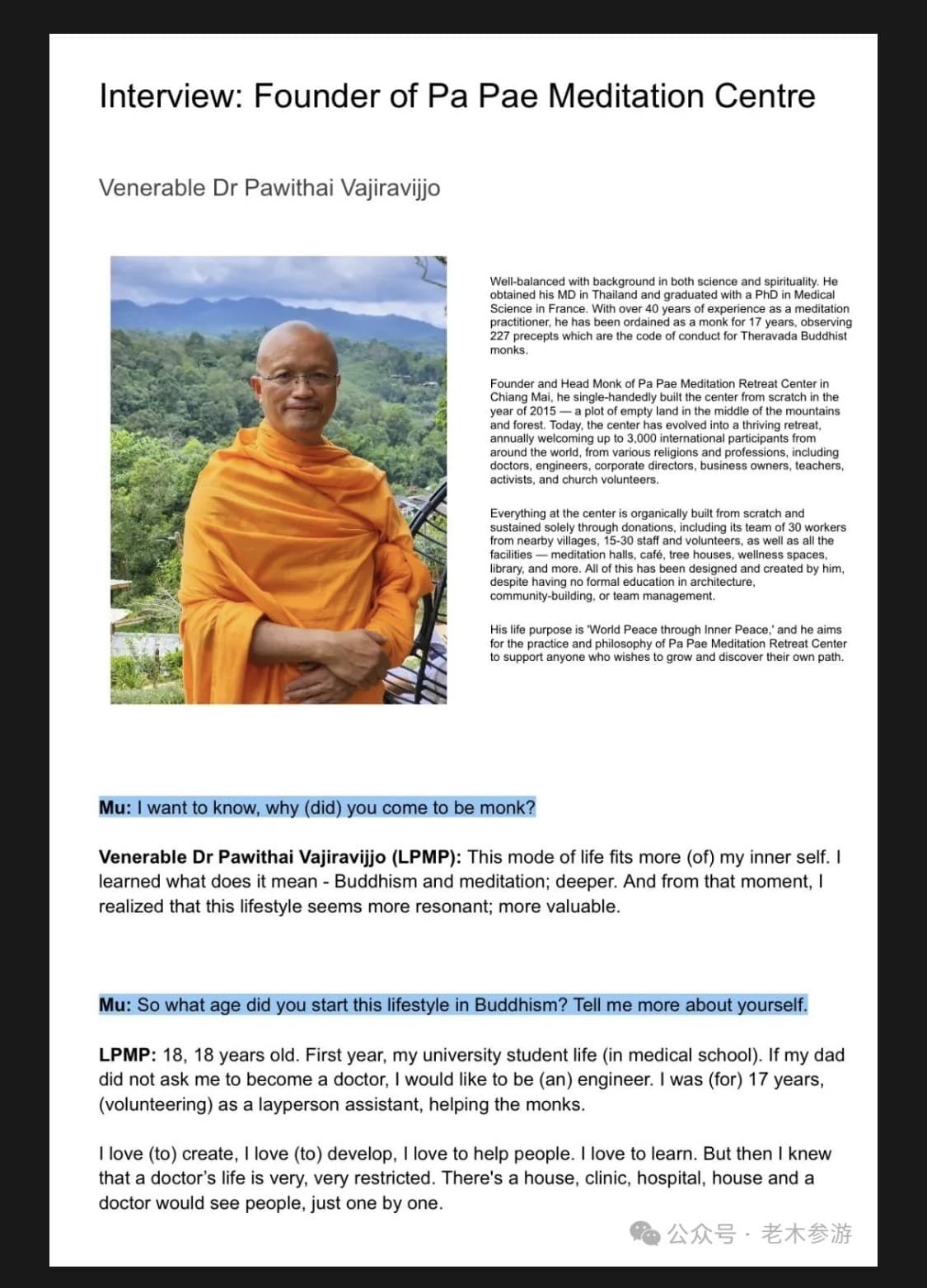
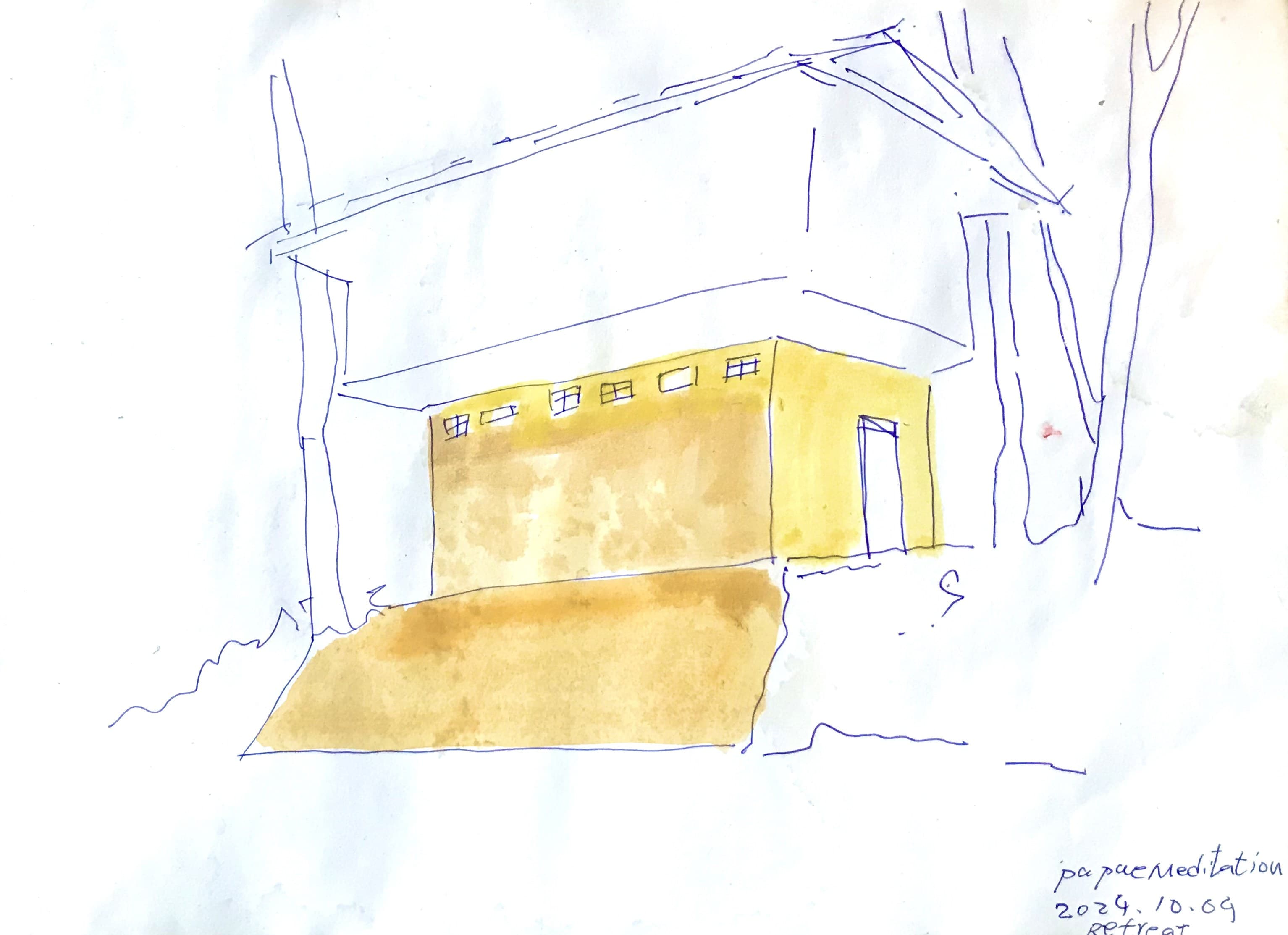
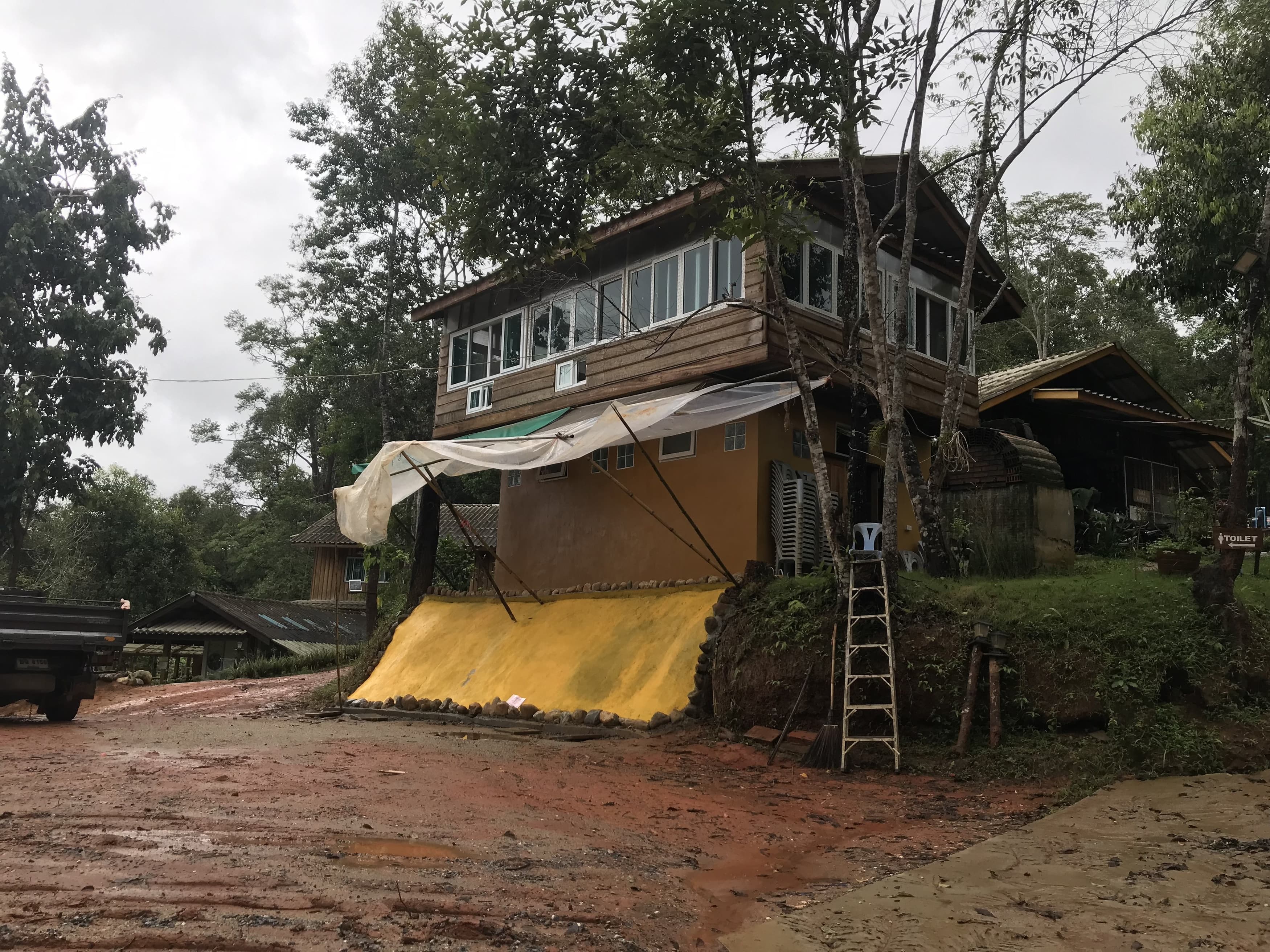
Pa Pae Meditation Centre sits in the mountains between Chiang Mai and Pai, Thailand. It was built from scratch in 2015 by its founder and head monk, Venerable Dr Pawithai Vajiravijjo — on an empty plot of land in the middle of the forest — by a man with no formal training in architecture, community-building, or team management. Today, the centre welcomes up to three thousand international participants each year from all walks of life: doctors, engineers, corporate directors, business owners, teachers, activists, and volunteers. Everything is sustained entirely through donations, including a team of thirty workers from the surrounding villages.

Venerable Dr Pawithai holds both an MD from Thailand and a PhD in Medical Science from France. He has been a meditation practitioner for over forty years and was ordained as a monk at the age of forty, observing the two hundred and twenty-seven precepts of Theravada Buddhism. His mission, from which the centre takes its spirit, is: World Peace through Inner Peace.

In conversation with Lao Mu at the centre, Venerable Dr Pawithai described how he came to build it: 'In my view, we are born with a certain plan, mission, and purpose. Later we begin to connect the dots, because at the beginning we don't understand why — only later, looking back, do you understand. I think I was born to come here. Creating a place for people to meditate — why not try to let everyone feel well? Many successful temples are built on the fame of a single abbot. People come to see the master. I tried to use a different approach: to create a good place where people feel good. That way I have already liberated myself.'

On the design of the centre — with its winding paths, meditation corners, and communal spaces — he described his inspiration: 'I studied nature. I was inspired by the idea behind wildlife parks — where the animals roam free and the humans are the ones in the cage, observing. Each animal tries to find its own corner. But they always leave a main shared space for common purpose. In nature, we see no straight lines — even in tree roots. In the city, everything is straight lines and rigid buildings. Here, I avoided any arrangement that forces people to walk in straight lines. Once you arrive and settle in, the place is like a labyrinth — and you will want to stay forever.'

On the centre's meditation technique: 'We use the Middle Way — placing attention at the body's centre. We base this on the Buddha's teachings.'

On its future: 'For modern people trapped by their own intelligence and modernity, this place can offer a solution. You have everything, you have technology, but you always feel something is missing. Many people do not know how to care for their own minds. We want to show the world: this is a place where people come to recharge, to heal, to find themselves again — and not like a zombie, not like a cog in a machine. This should be a place that belongs to them.'

07

Fieldwork Origins: Thailand and Cambodia, 2023

The She Nian Fo project was not born without precedent. Over a year before the October 2024 conception at Pa Pae, Lao Mu was already conducting fieldwork in Southeast Asia — researching sites, meeting artists and thinkers, and laying the intellectual groundwork for what would become the project.

In May 2023, he met Alex Soulsby at Artist Residency Thailand in Chiang Mai — an internationally respected residency organisation providing high-quality, customised residency experiences for artists and creative practitioners at various stages of their careers. Over tea, they discussed the possibilities of project collaboration. Lao Mu also visited the MAIIAM Contemporary Art Museum, where he encountered the work of Navin Rawanchaikul — a Thai artist working across sculpture, painting, performance, photography, and film, whose work was purchased for the Guggenheim Collection, who won Thailand's Ministry of Culture Silapathorn national award for visual art in 2010, and who represented Thailand at the 54th Venice Biennale in 2011.

The fieldwork continued to Cambodia in the same period, extending the research into the broader Southeast Asian Buddhist and contemporary art landscape. These journeys — through temple complexes, meditation centres, and artist communities — gave concrete form to what Lao Mu had long been thinking: that the relationship between art, spiritual practice, and social transformation was not theoretical but liveable, and was already being lived by people around him.