
The Full Essay
Full Essay
Introduction to the “20 Days · Brittany” Project.
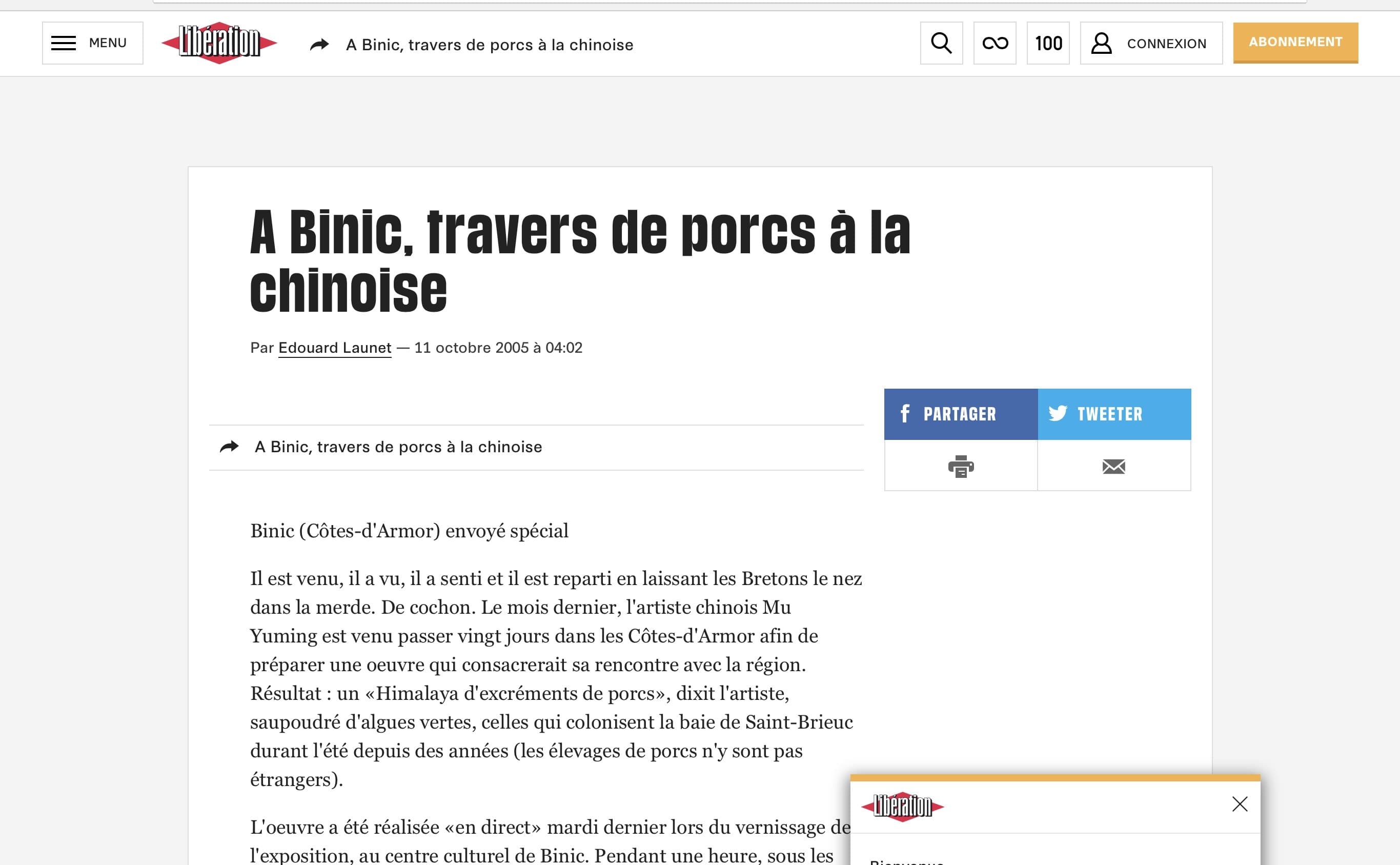
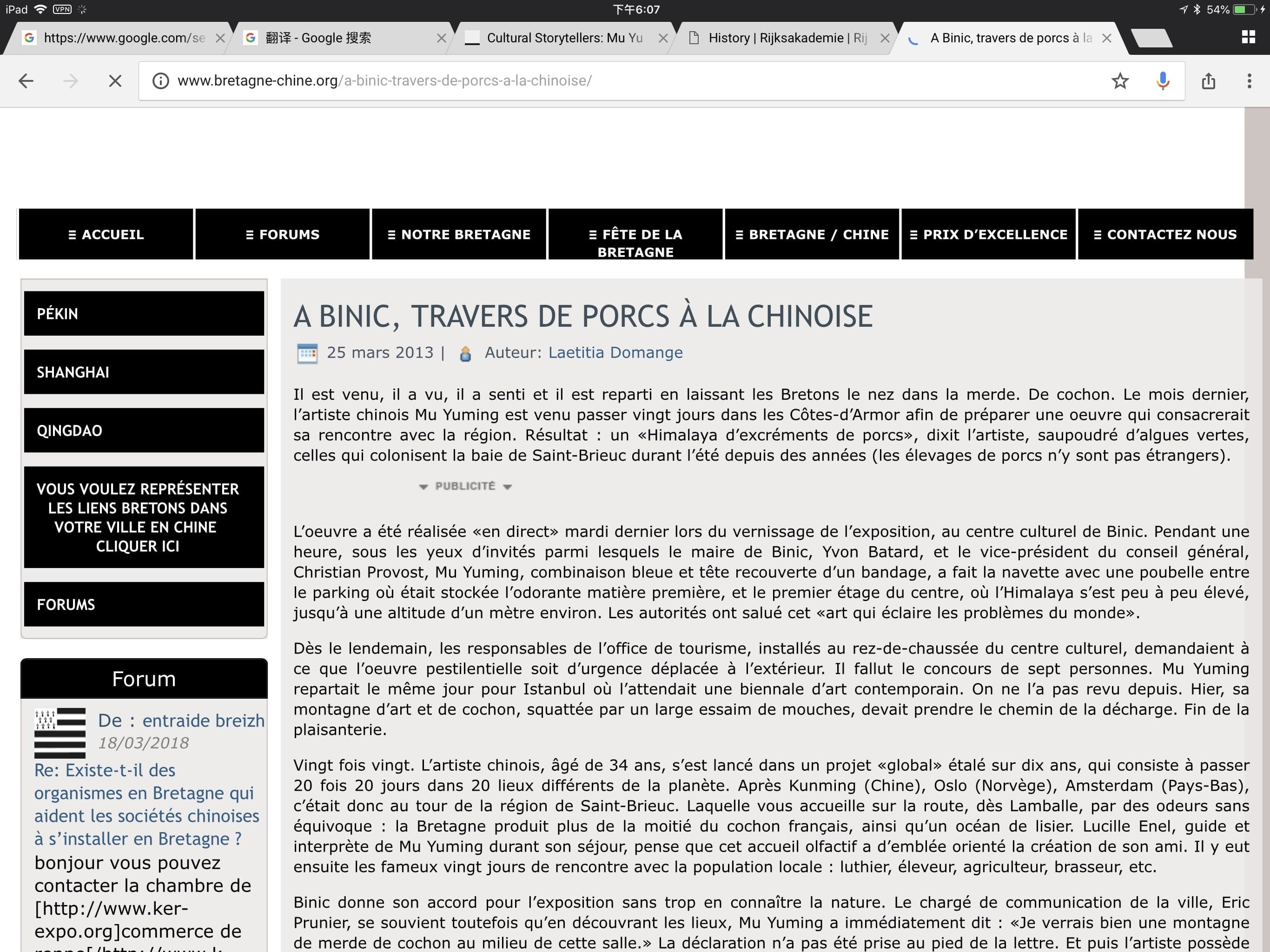
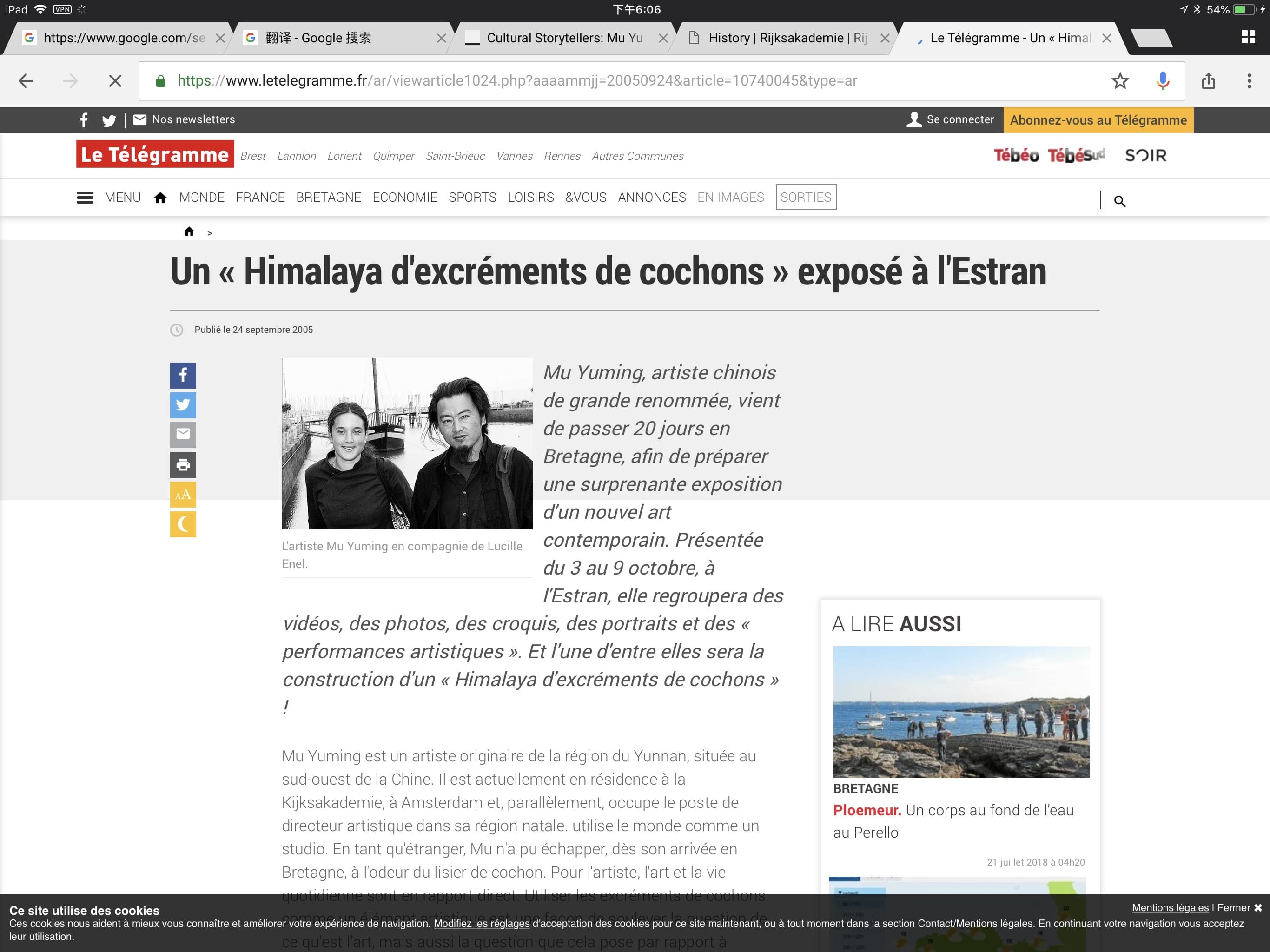
From September to October 2005, the Chinese artist Mu Yuming carried out the fourth station of the “20 Days” project in Côtes-d'Armor, Brittany, France. This practice was reported in detail by the French newspaper Libération (Libération, 11 October 2005, Edouard Launet), becoming the on-site action of the highest theoretical density and deepest media engagement among the project's four stations.
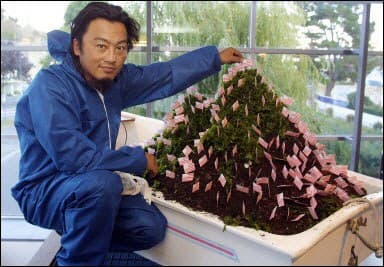
According to Libération, the artist spent twenty days in Brittany preparing a work commemorating his encounter with the region. The exhibition was held from 3 to 9 October at the Binic cultural center (centre culturel de Binic), and the core work, the “Himalaya of pig manure” (Himalaya d'excréments de porcs), was made on the spot at the opening. Wearing blue work clothes and a bandage wrapped around his head, the artist alone carried pig manure back and forth between the parking lot and the exhibition hall in a trash bin for about an hour; the work gradually rose to about one meter, and was sprinkled with seaweed symbolizing the green-algae pollution of the Bay of Saint-Brieuc — pig farming and the marine ecological crisis thus forming a material connection.
At the opening, the mayor of Binic Yvon Batard and the vice-president of the departmental council Christian Provost were present, praising it as “art that illuminates the problems of the world” (“art qui éclaire les problèmes du monde”). The next day, however, the head of the tourism bureau on the ground floor of the cultural center urgently demanded that the work be moved outdoors, which took seven people working together to accomplish. This paradox of “praise and rejection” exposed the structural split between the cultural institution's search for “artistic legitimacy” and the administrative system's maintenance of “spatial normality.”
Examined from the dimension of the philosophy of art, pig manure, as the “abject” in Julia Kristeva's sense — the border-matter between the self and the external world — is here radically made present. The artist does not “display” the abject but “becomes” the abject: physical labor reduces the creator's identity-privilege to an existence equal with matter. Jacques Rancière's theory of “dissensus” here takes flesh: politics is not the reaching of consensus but the rupture of the distribution of the sensible. The juxtaposition of officials and the tourism bureau made the narrative of “progress” suddenly fail. Walter Benjamin's “dialectical image” also flashes here — the tension between the traditional agricultural cycle and industrialized pollution gains a present historical density through the matter of pig manure.
Libération recorded the artist's departure in an ironic tone: “Mu Yuming repartait le même jour pour Istanbul où l'attendait une biennale d'art contemporain. On ne l'a pas revu depuis.” (Mu Yuming set off that very day for Istanbul, where a contemporary art biennial awaited him. He has not been seen since.) This “disappearance” is isomorphic with the removal and rotting of the pig manure — the work refuses to be fixed as heritage, insisting on being a retention that cannot be retained.
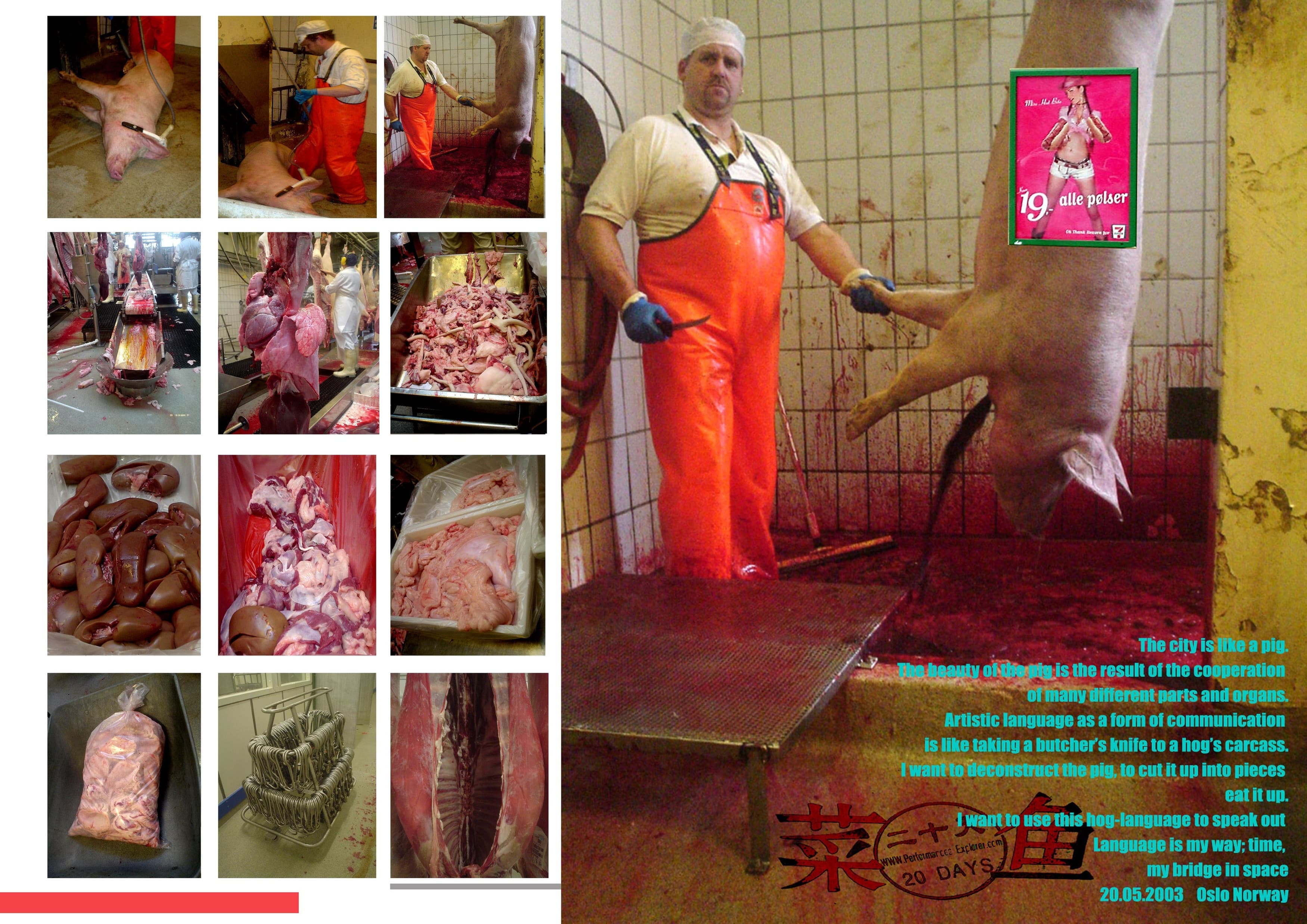
The Brittany station completed the full spectrum of the “20 Days” project — from urban public space (Kunming), through cross-cultural collaboration networks (Oslo) and the interior of the art institution (Amsterdam), to the rural ecological scene — and, with the immediacy of matter, the self-split of the institution, and the unavoidability of the problem, won serious socially-engaged reporting for Chinese conceptual art in international mainstream media.