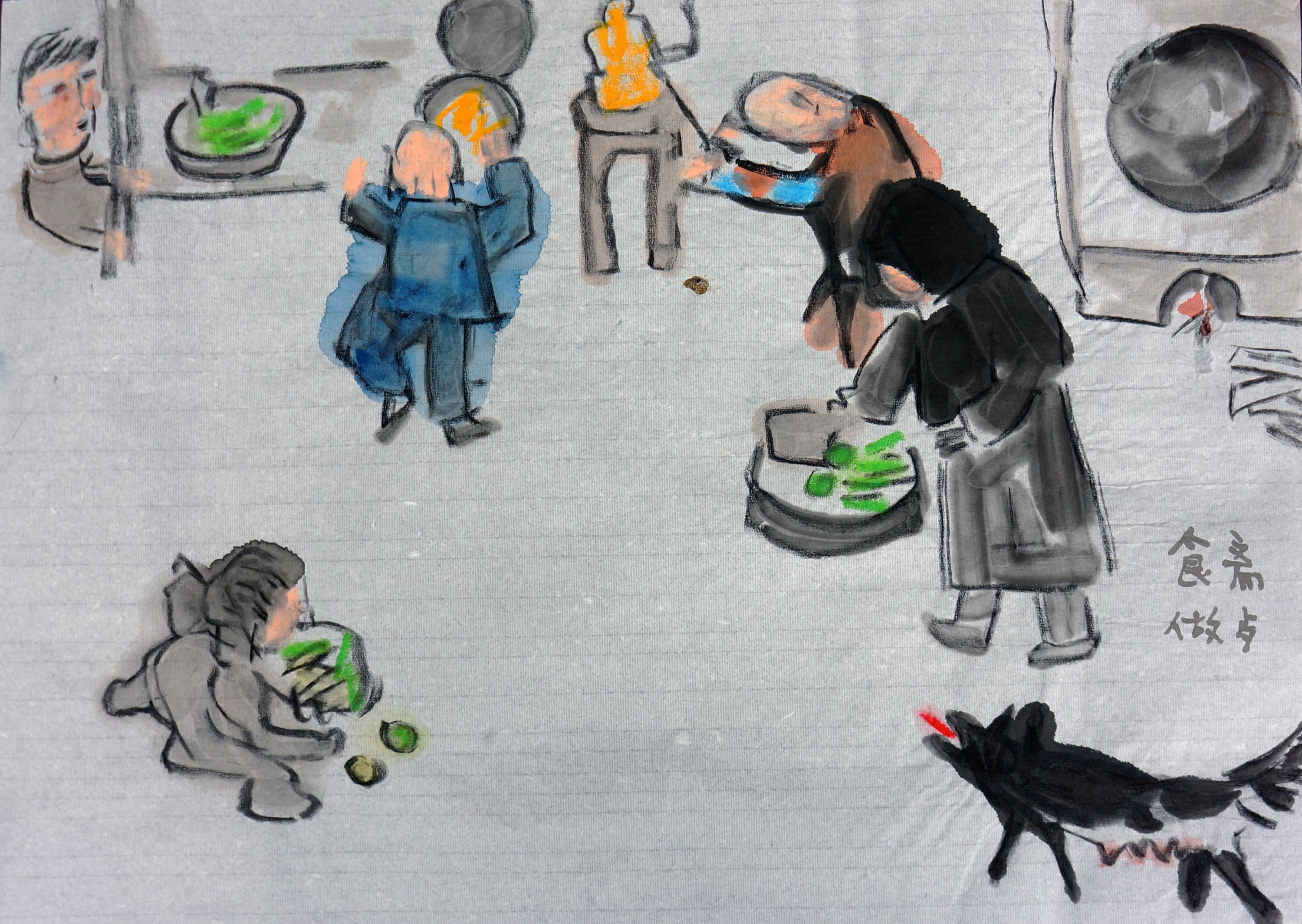
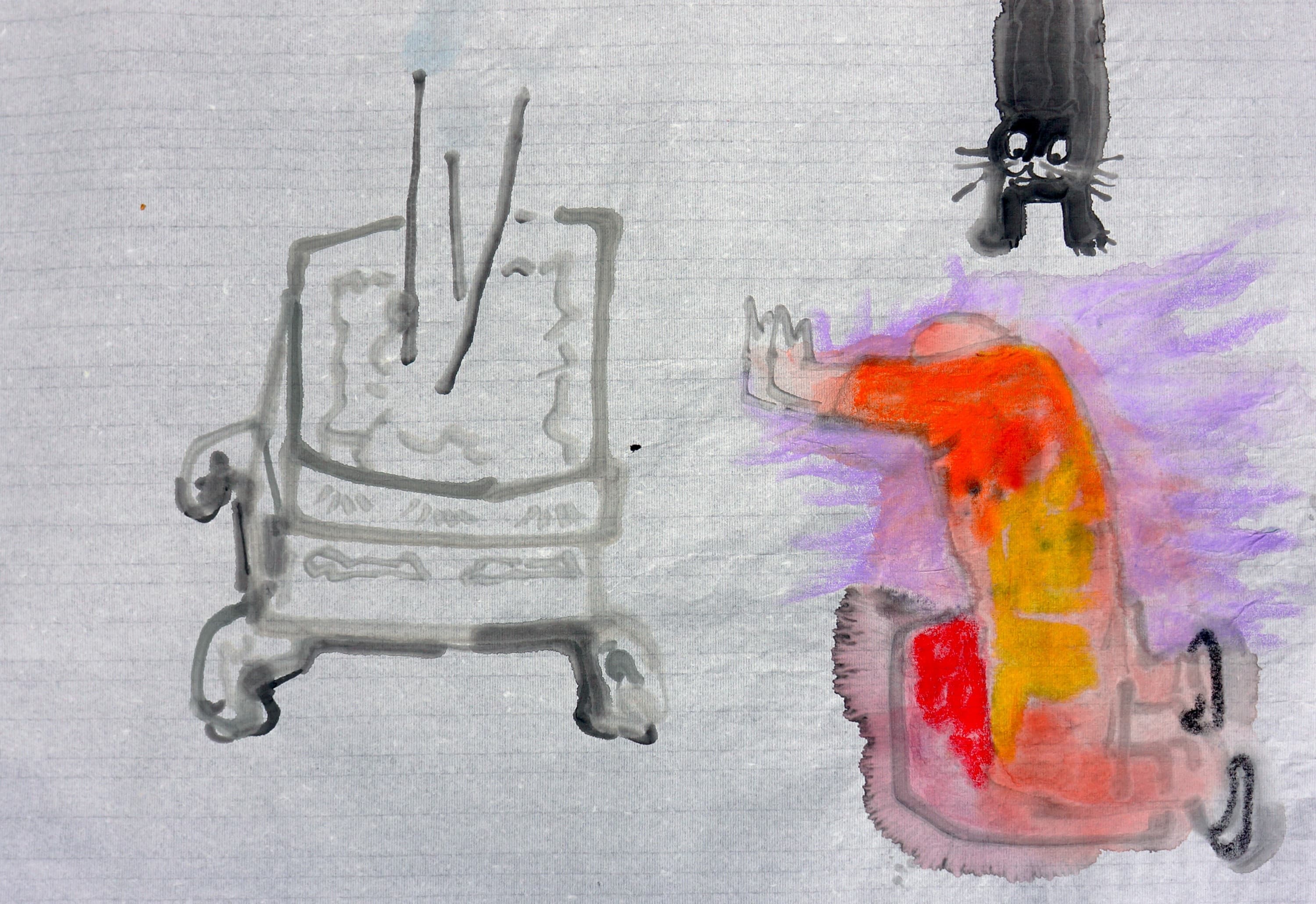
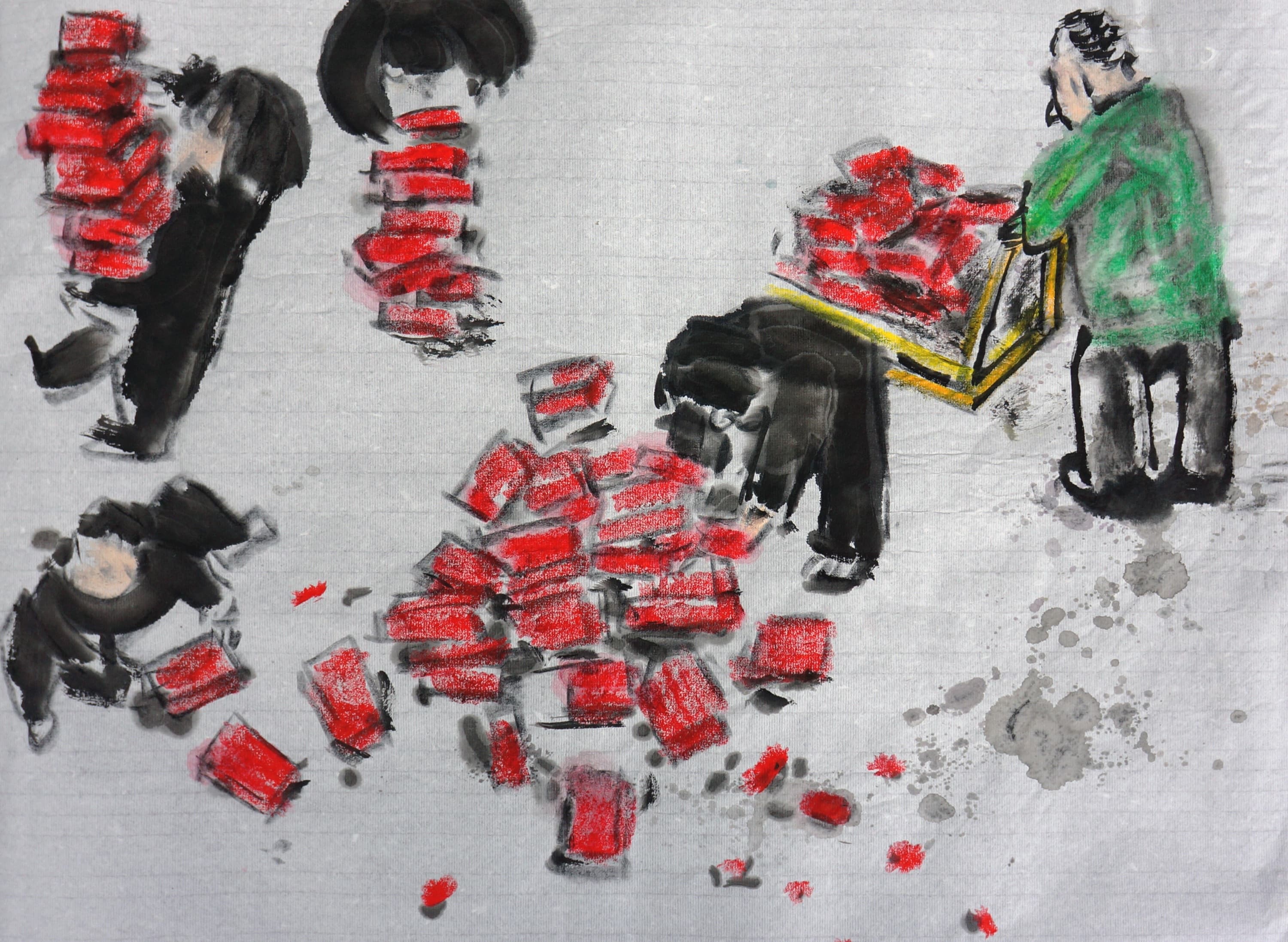
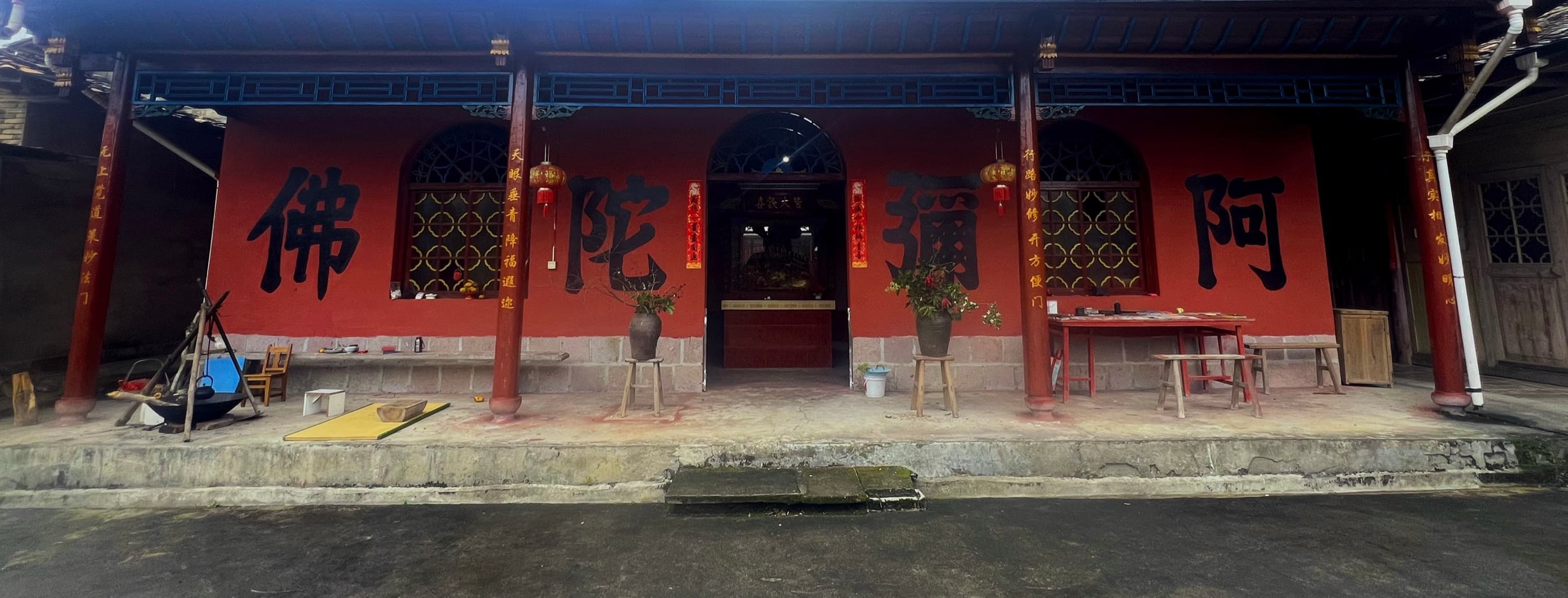
The Full Essay
Project Characteristics
Four threads run through the month at Guirensi, each inverting what a monastery residency usually is.
Method: How the Charcoal Arrived on Paper
【Material at hand】
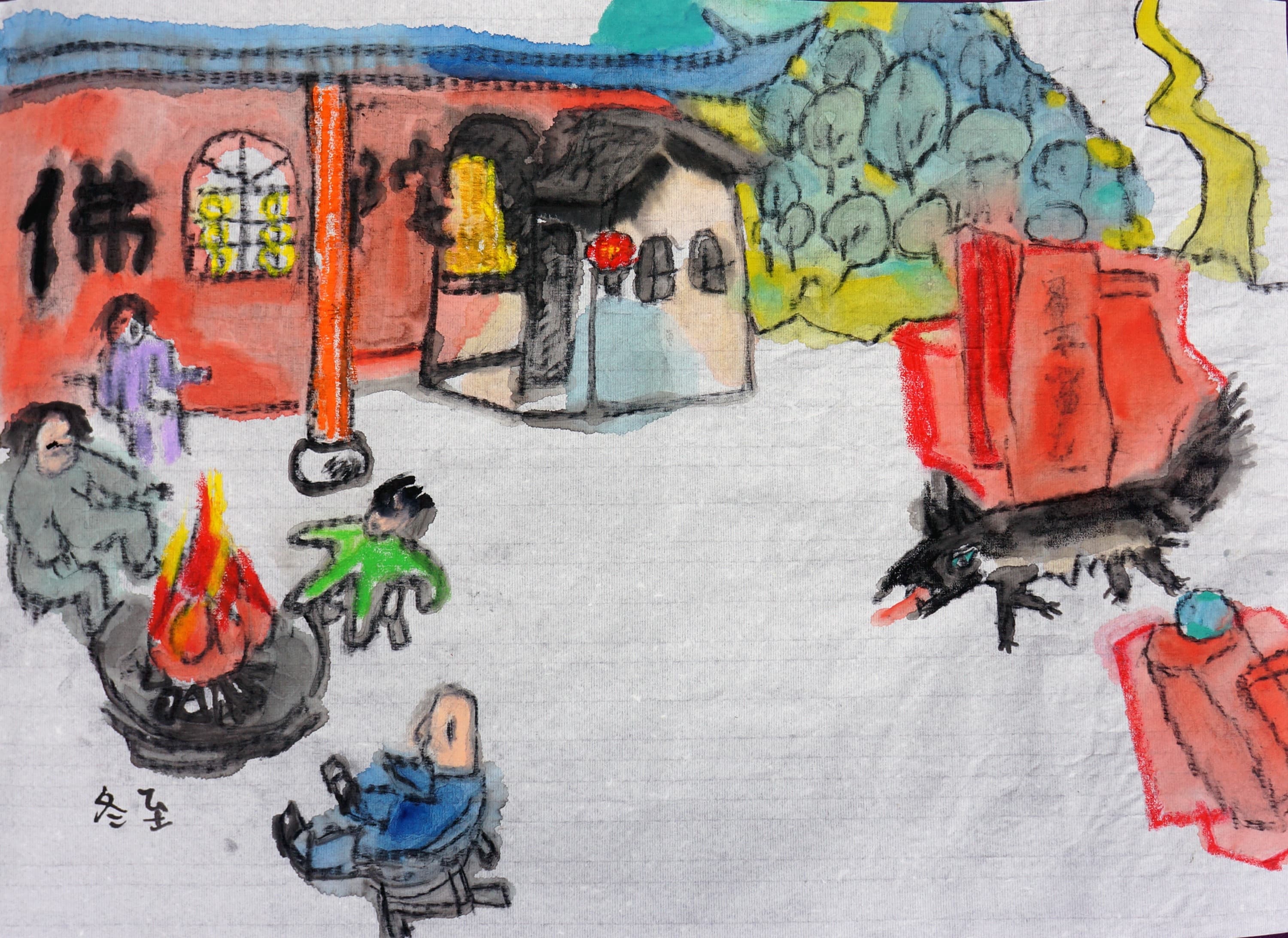
On-site: the charcoal left over after warming by the fire and boiling tea. The stick of charcoal still carries residual heat, coarse and rough, fingertips tracing the ridges of its grain like pebbles in a mountain stream.
【Process】
· Crouching on the green stone slabs of the corridor, painting into the morning dew on the paper
· Charcoal lightly on paper: first a pale grey diffuses out; pressed harder, dense black appears
· Subjects: the tensed back of the master bowing to sweep; the slightly curled knuckles pinching incense
· Ash drifting down on plain white paper like fine snow in morning mist. A breath lifts it, and it settles back slowly, layering the brushwork with the Chan sense of "mountains seen through mist"
Emotional Core
Leaving Taining, the morning mist in the mountain hollow faded into a blurred gauze behind; the temple's stove smoke and tea aroma lingered, still drifting, in memory. Driving along the mountain roads, the artist pulled a stack of xuan paper from the passenger's side glove compartment, fingertips passing over the sheets. The rough texture of charcoal was still plainly present, mixed with the faint scent of plant ash, as if still steeped in the small temple's morning mist.
Mountain shadows receded outside the window, overlapping with the mountains inside the painting. No longer possible to tell whether memory was flowing, or whether the scroll was simply opening itself.
Artistic Value
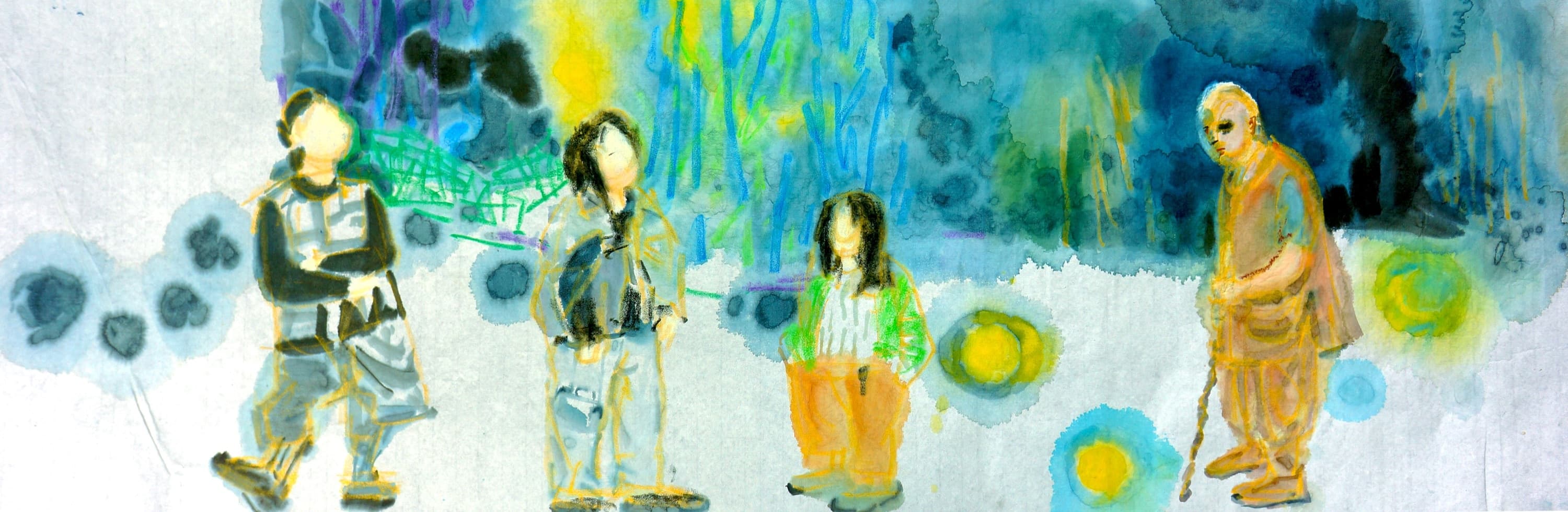
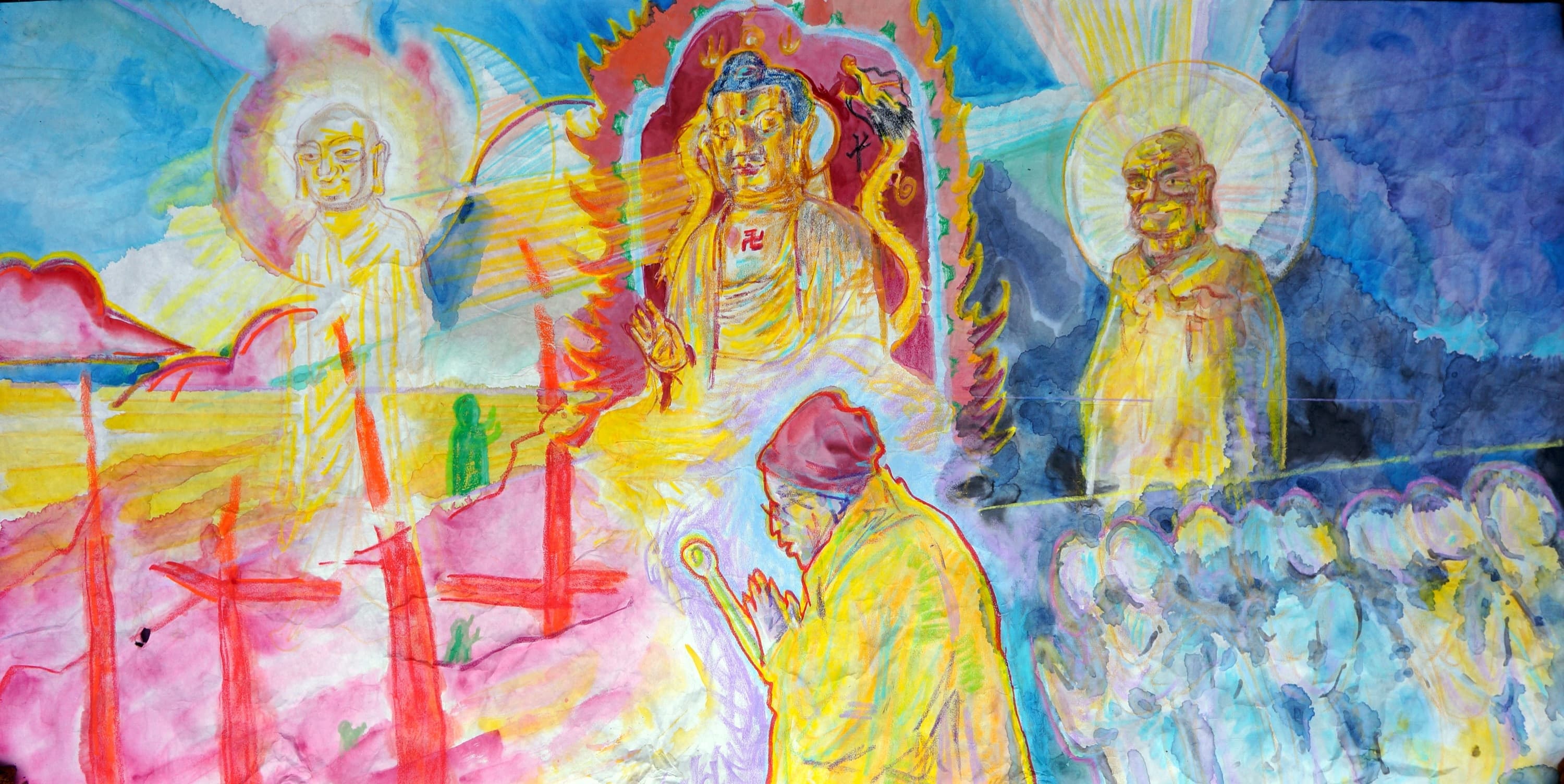
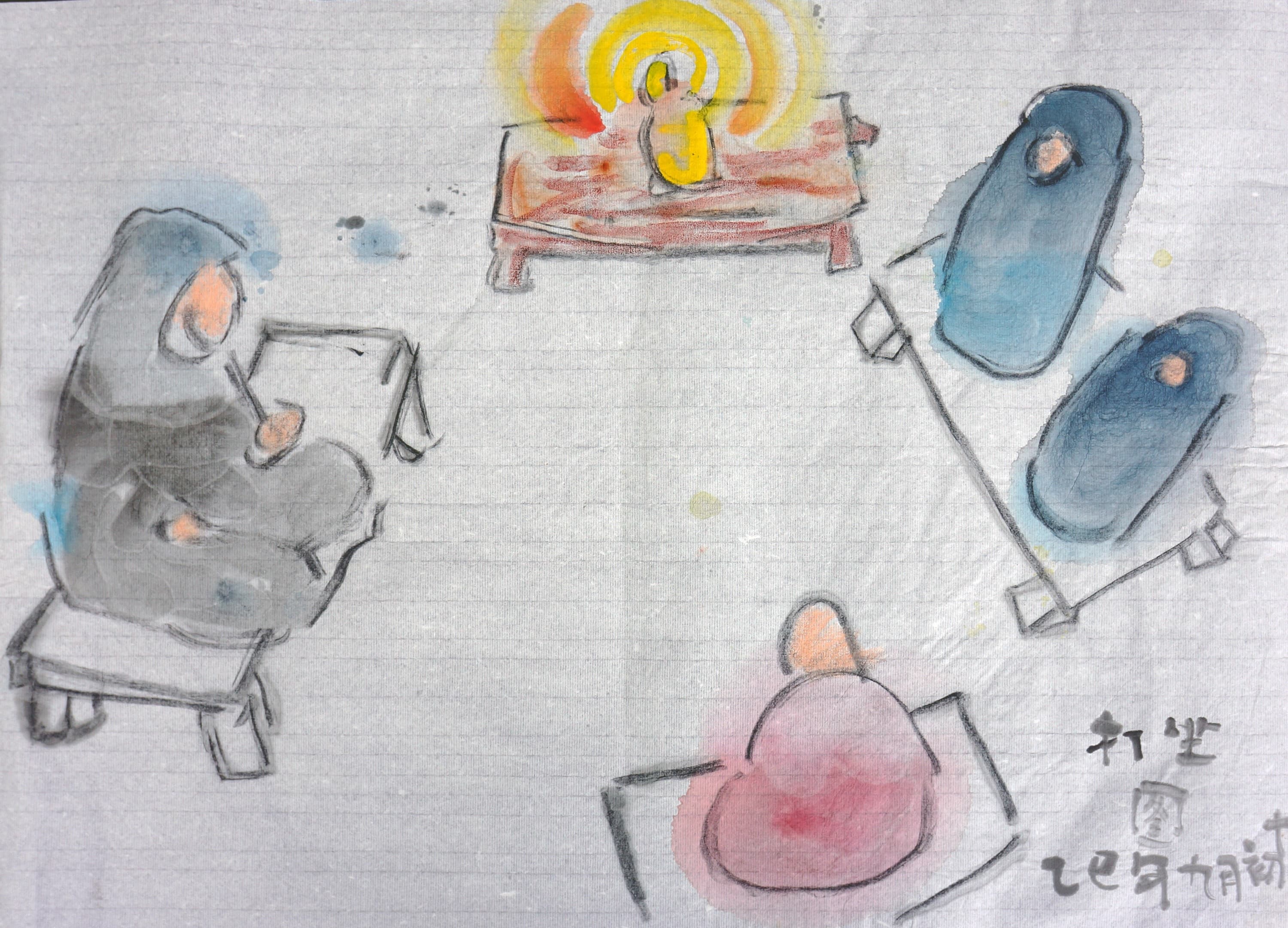
《Guirensi Temple》 continues Mu Yuming's long-standing methodology of "entering creation through action," and binds Eastern Chan aesthetics to the material sensibility of Arte Povera. Through the plainest materials (charcoal and raw xuan paper) it records a specific life experience in a specific time and place: the dissolution of boundaries between faith, community, daily life, and art.