The Full Essay
Core Concepts
【Non-Legitimacy Is Dharma】
Art-making within the Vipassanā retreat is 'unlawful'. It interrupts concentration, introduces discriminating mind. But the artist accepts this non-legitimacy as saṃskṛta (有为法):
Non-legitimacy is itself Dharma; discriminating mind is itself bodhicitta.
The point is not to eliminate the non-legitimate, but to become aware of the non-legitimate within the non-legitimate.
【No-Style as Style】
Style is the market's verdict on the artist: the exhaustion of creative change. No-style is not the absence of style, but the self-dissolution of style:
Each creation is the first time; each is the last.
【Situatedness as Ontology】
It is not a choice to be situated. It is impossible not to be. The body is always somewhere, material is always from somewhere, communion is always with someone:
To acknowledge this finitude is itself freedom.
Contemplation and Conceptual Art
The artist's practice proposes a "Contemplation-Concept Art": not Conceptual Art, but a return of 觀念 to 觀:
Traditional conceptual art privileges idea over vision, language over body, critique over institution, archive as work, artist as idea-producer. Contemplation-Concept art reverses each: seeing before idea, body as medium, drowsiness as entry; the dissolution of the critic/critiqued binary; the scroll is the record, and recording is practice; the artist is a channel in which the 'I' dissolves.
Key transformation: not an idea made real in material, but seeing that is itself idea. 觀 precedes 念; 觀 is 念. Inside seeing, idea arises of its own accord and dissolves of its own accord.
Three Traditions Transformed
【Conceptual Performance → Meditation Action】
The adversarial stance of conceptual performance becomes the absorptive stance of meditation. Forty-one days of retreat discipline, body as instrument of practice; monks and villagers as peers in co-presence; material gathered on site, dissolving creative habit.
【Chinese Ink Tradition → Action Ink】
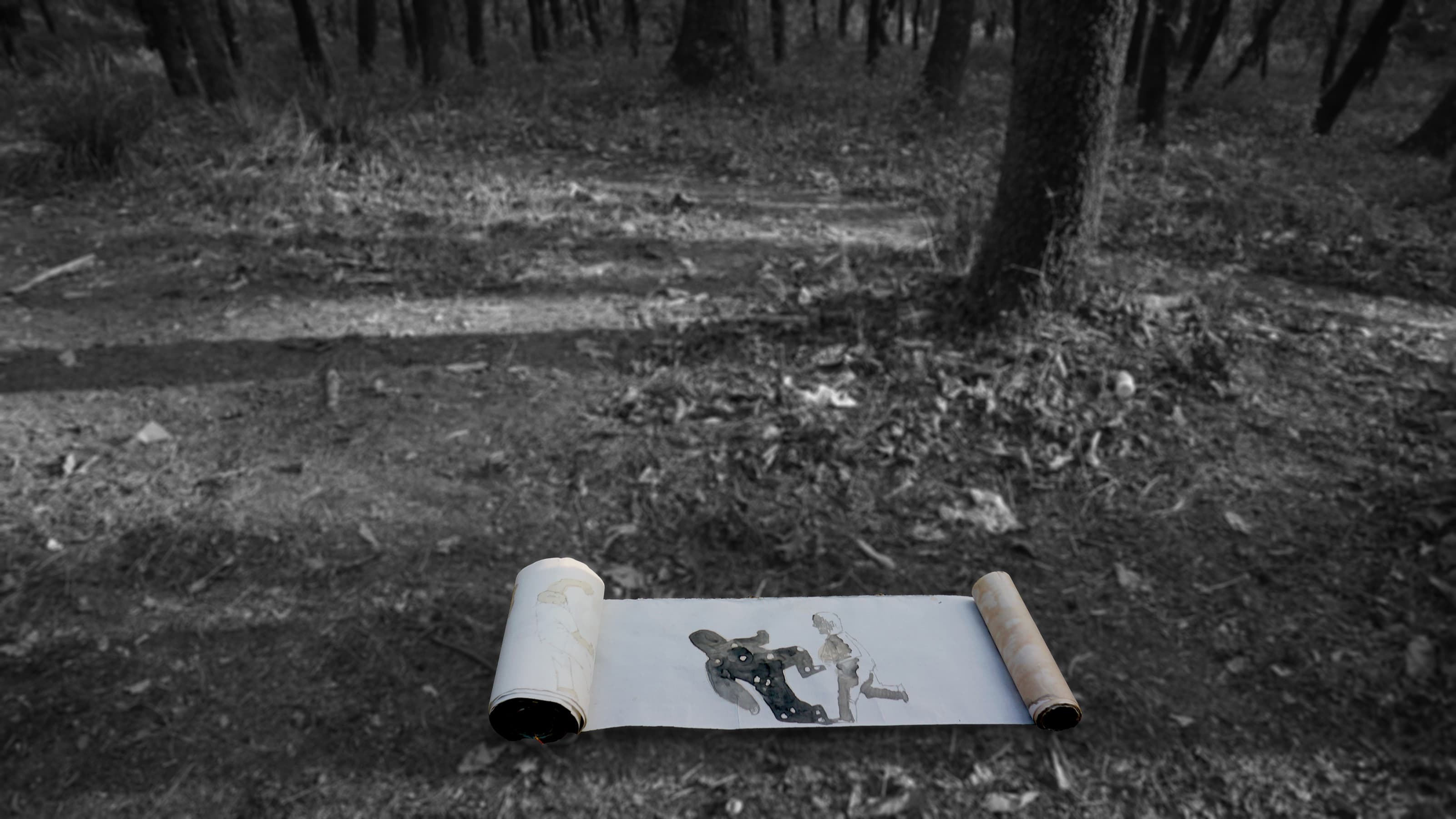
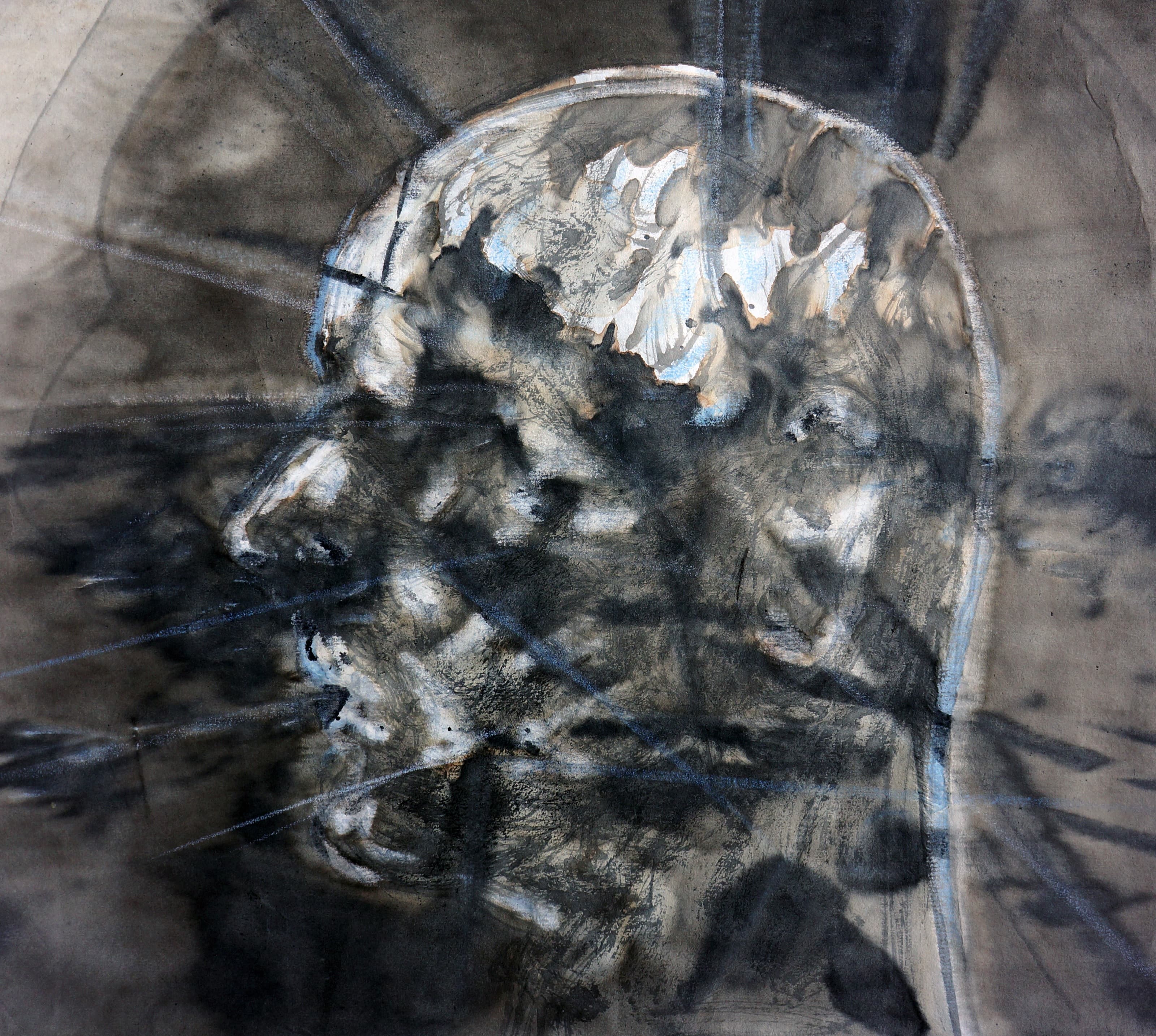
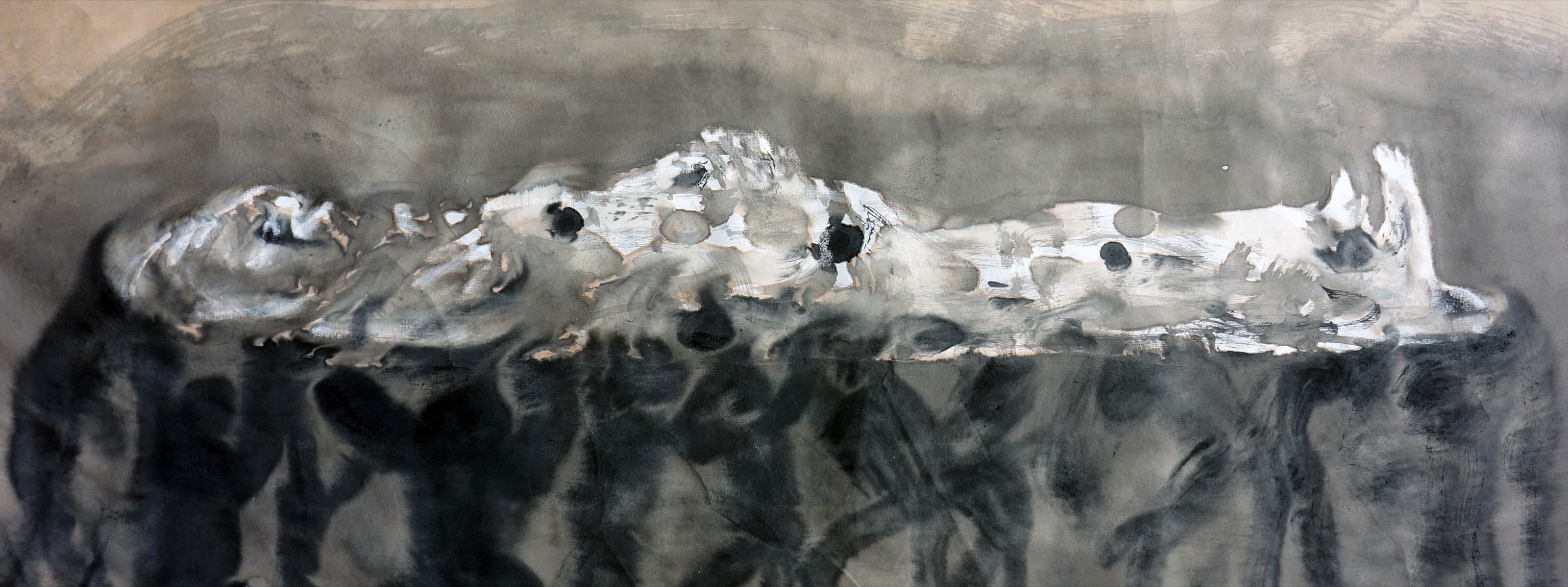
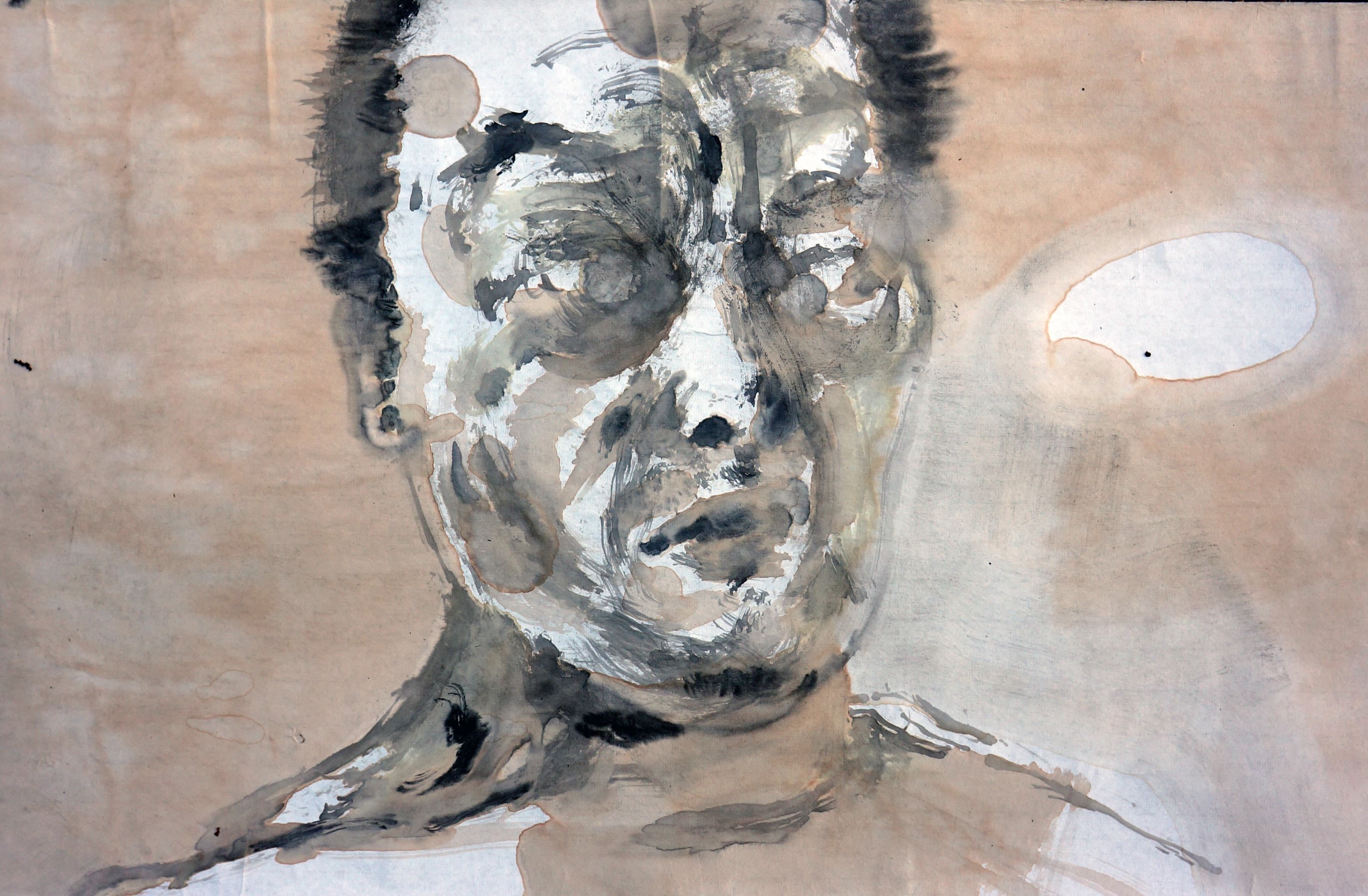
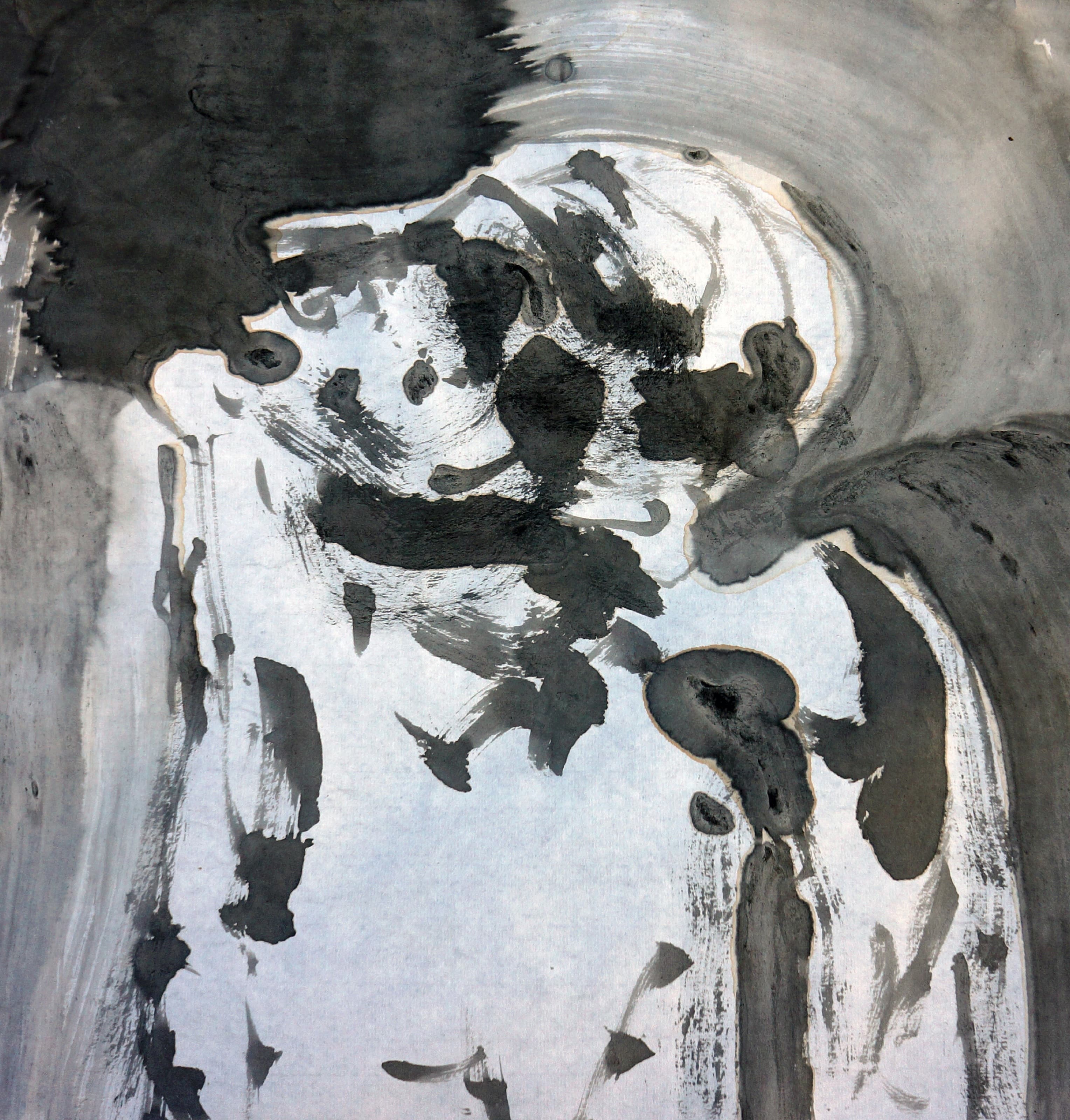
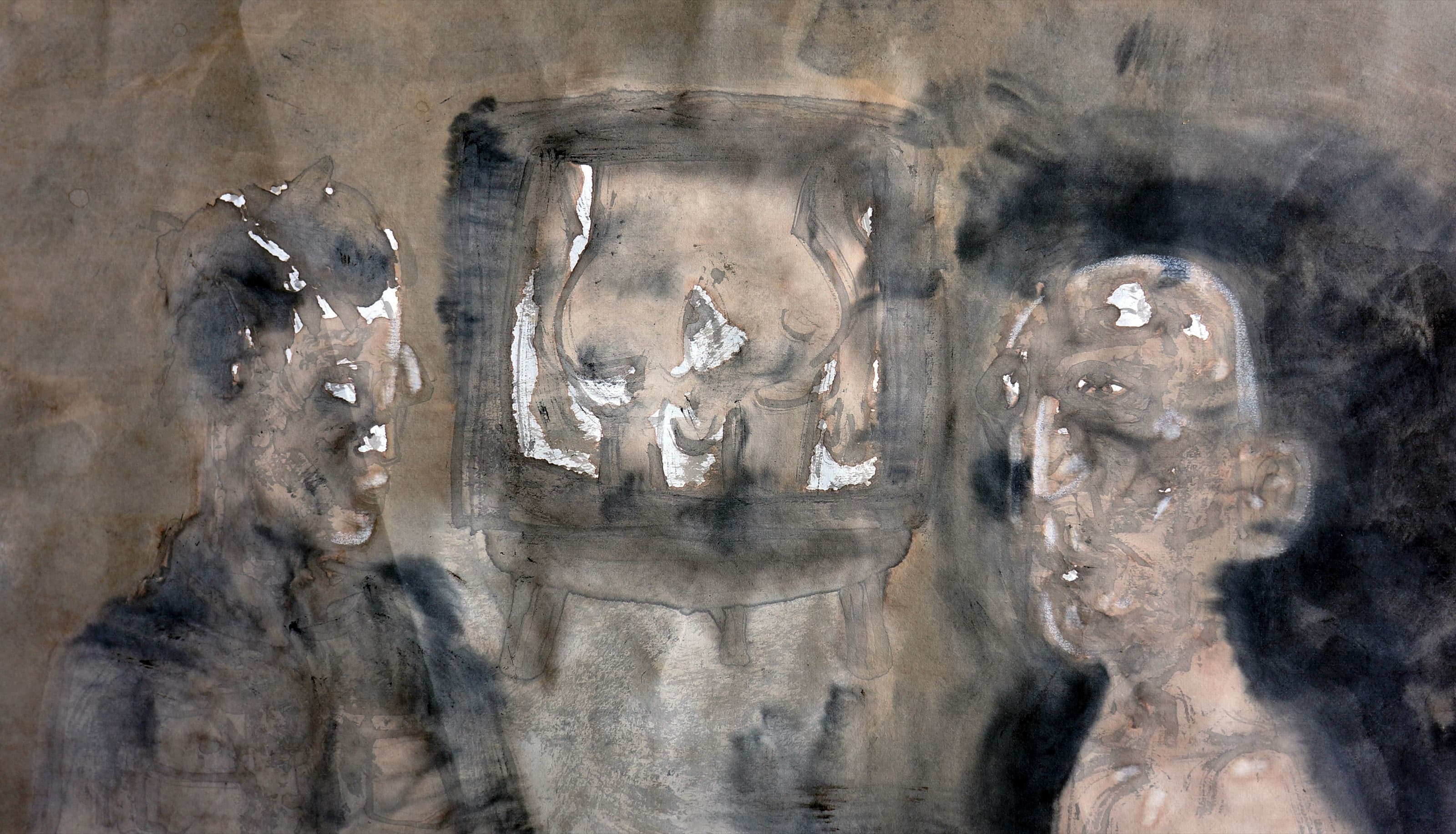
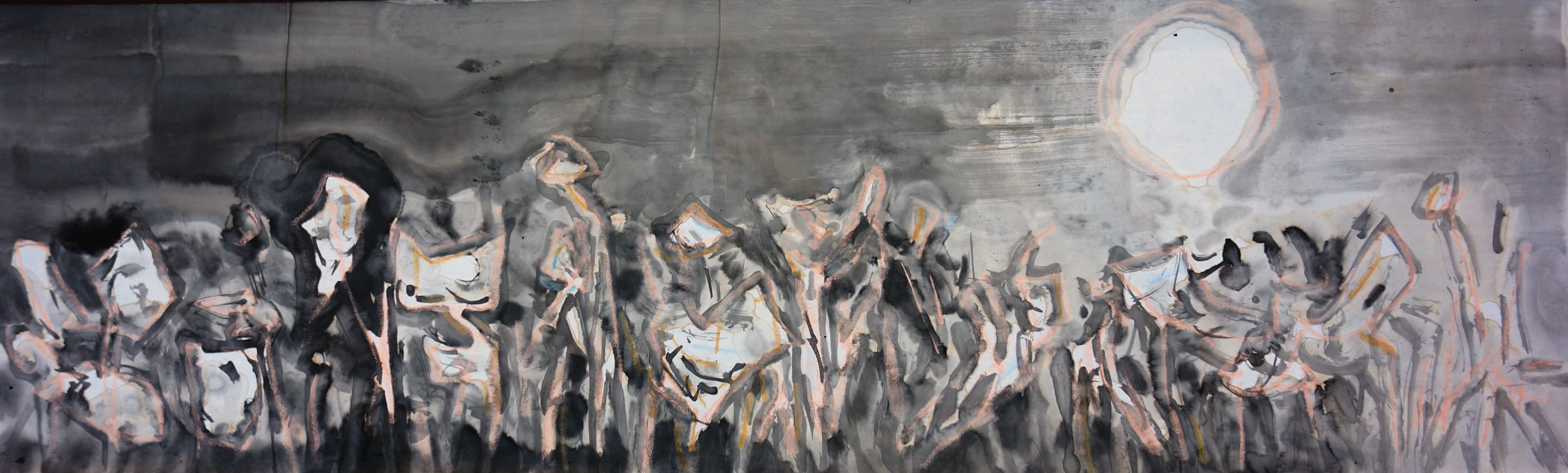
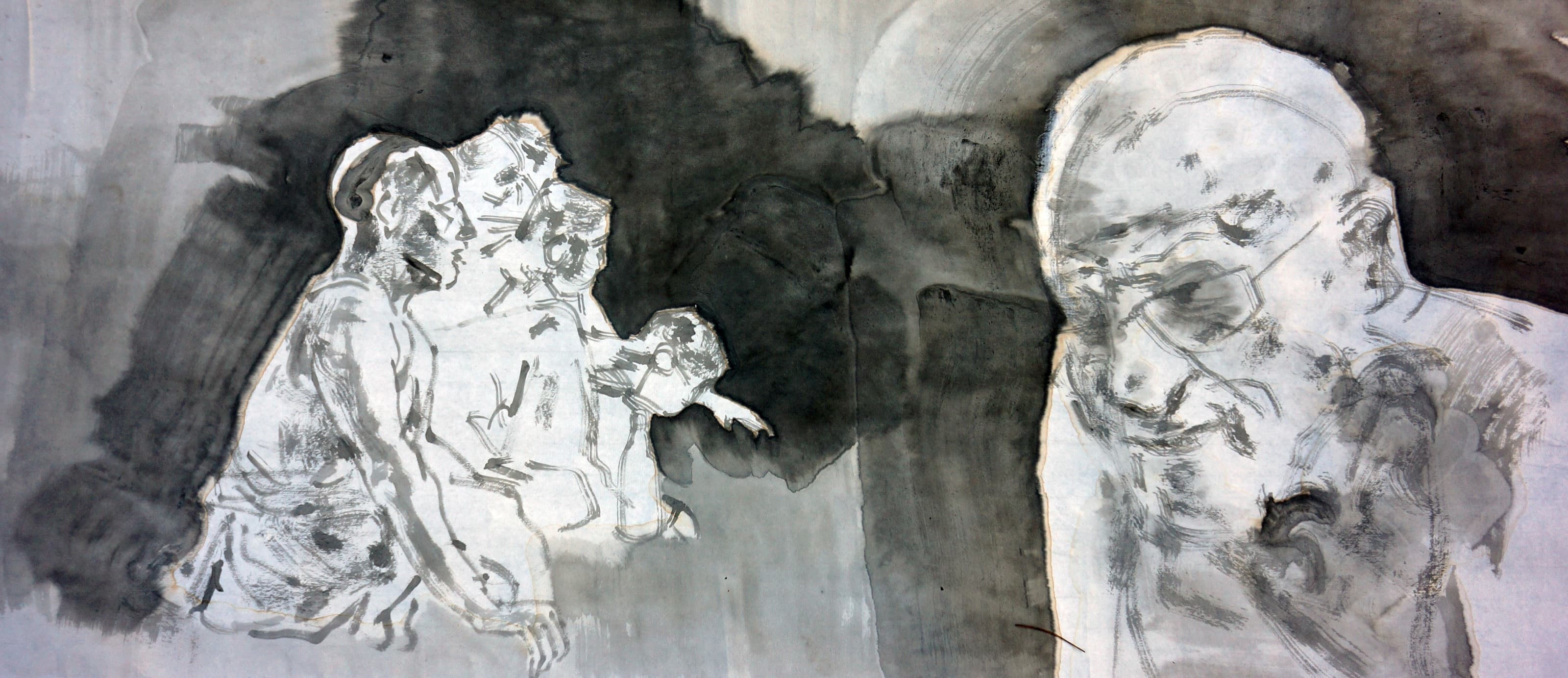
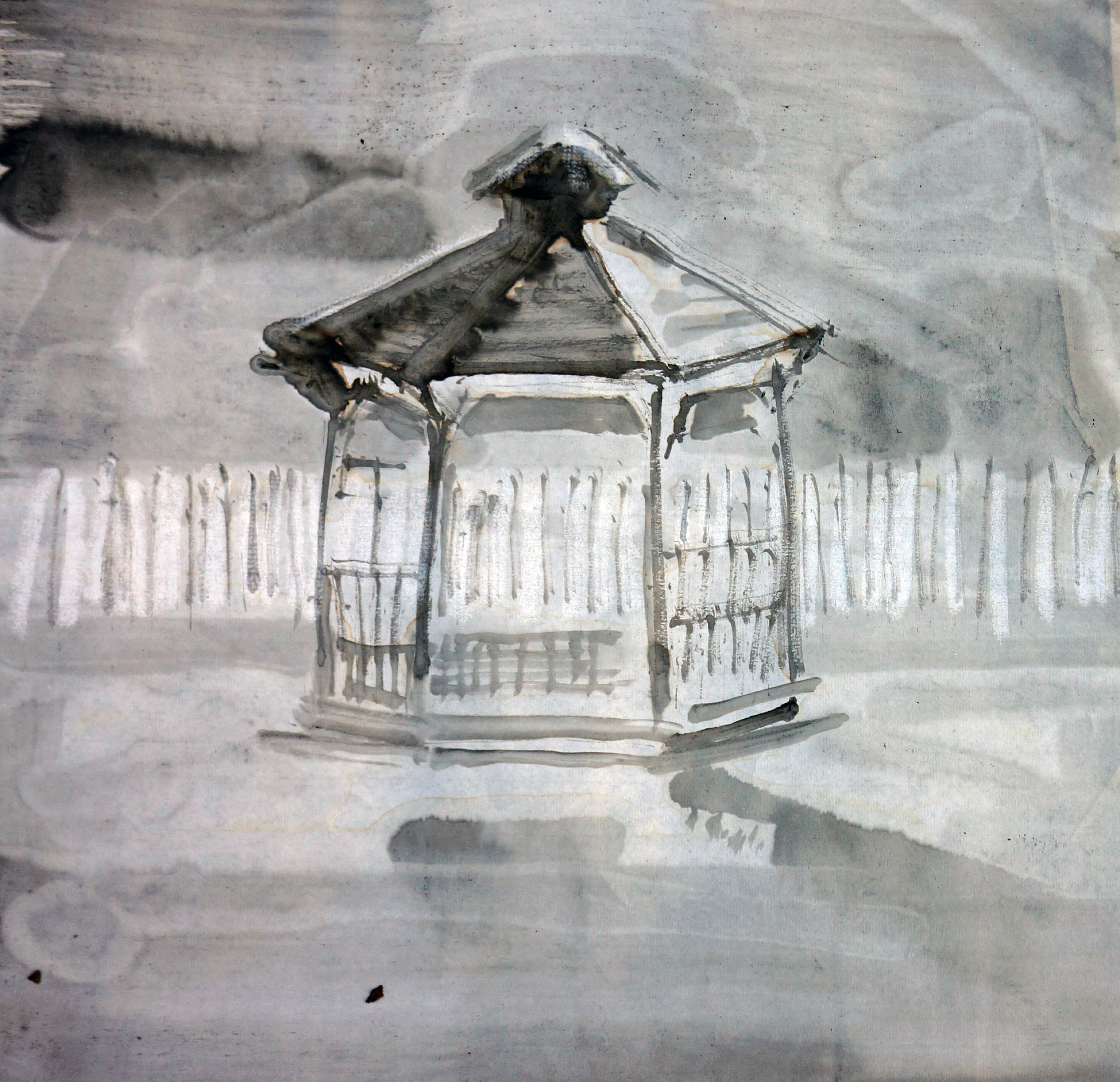
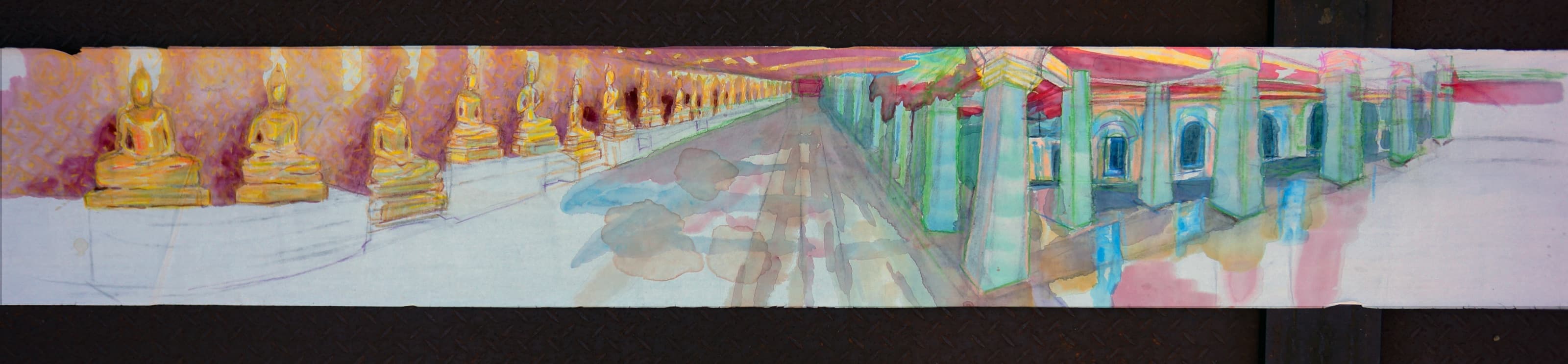
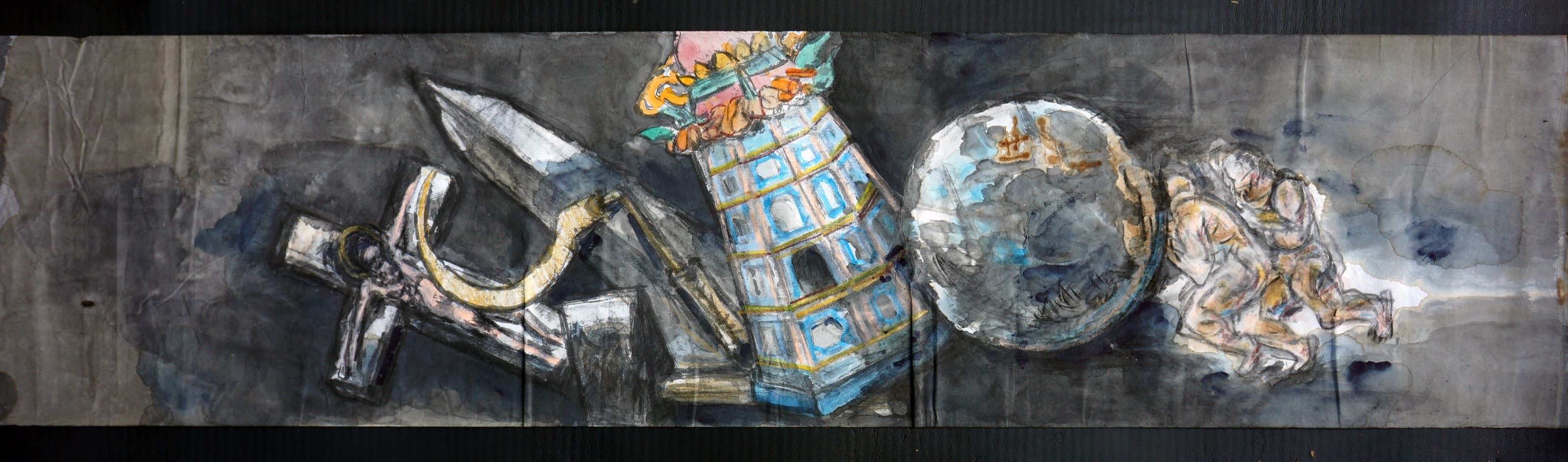
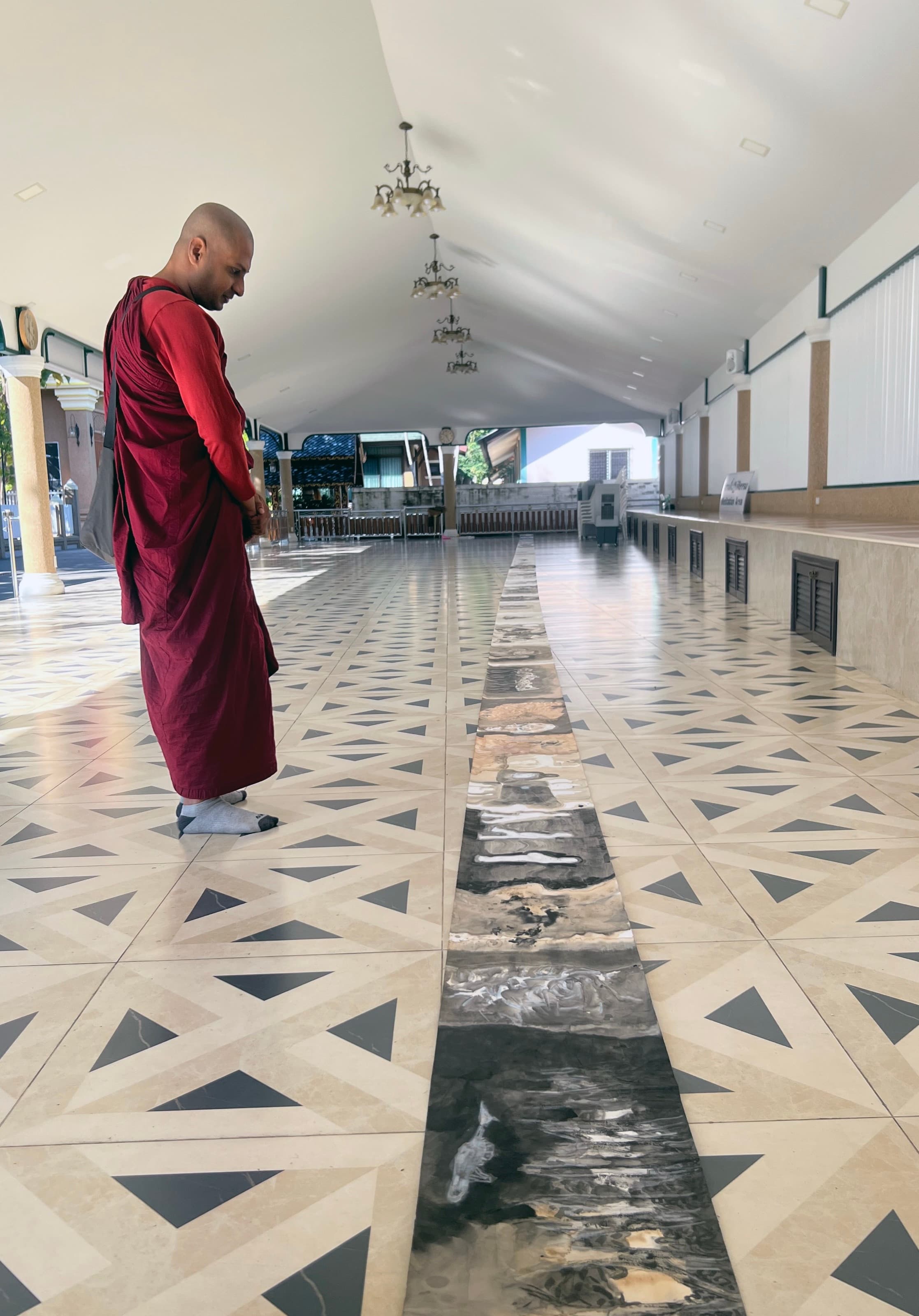
Ink shifts from 'expressive tool' to 'trace of action'. A thirty-five-metre scroll lies open on the floor, walked over, folded. Pu-erh ripened tea, incense ash, charcoal replace pure materials. Brushwork becomes the residue of breath, refusing aestheticisation.
【Theravāda Vipassanā → Art as Practice】
Meditation is not the content or inspiration of the art, but its very method. Creation is practice, practice is creation. The four foundations of mindfulness become the observation of brush, paper, time and space; ink splash is 'neither pursuing nor rejecting', material released to its own agency.
"Thus Should It Be Contemplated"
"All conditioned things are like a dream, an illusion, a bubble, a shadow; like dew, like lightning; thus should they be contemplated." (Diamond Sutra)
In the Zongtong context:
· Conditioned things: art-making as intention, plan, execution.
· Dream and illusion: concepts as fantasy; language as veil.
· Dew and lightning: the instantaneity of forty-one days; the flow of the market.
· Thus contemplated: seeing essence without adding, without fabricating.
The artist's "thus contemplated" is an internal critique of conceptual art: not opposing concept, but seeing the emptiness of concept within concept. Dharma inside non-legitimacy, bodhicitta inside discriminating mind.
The Scroll
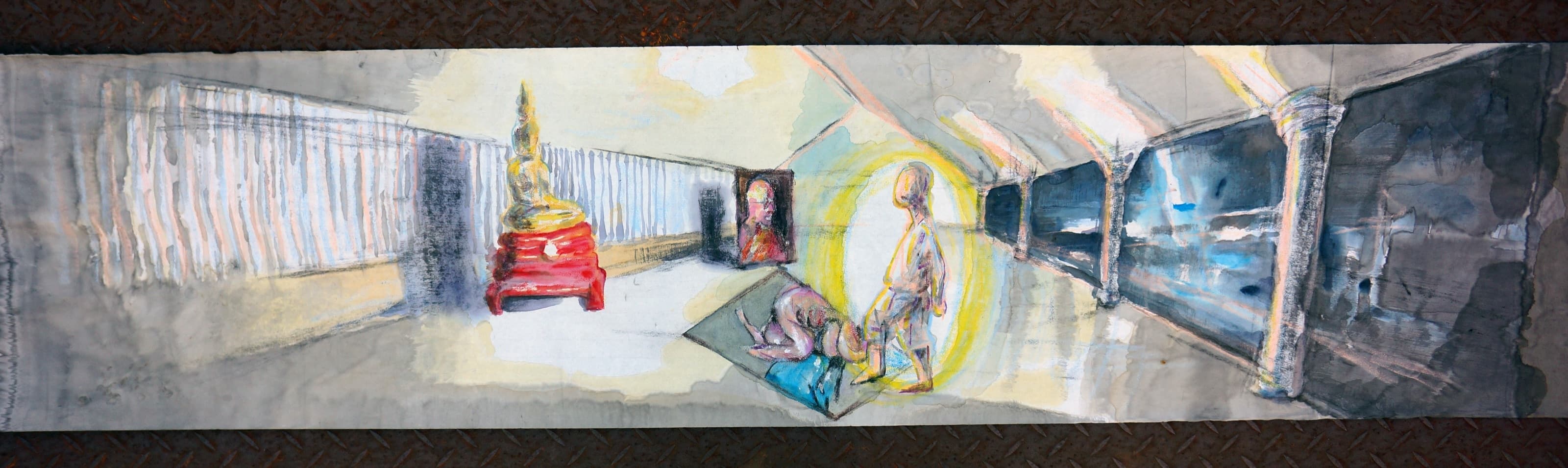
· Dimensions: 35 cm × 50 m
· Materials: raw xuan paper, ink, pu-erh ripened tea water, Chinese mineral pigments, charcoal, incense ash
· Time: 4 December 2025 – 10 January 2026 (forty-one days)
· Place: Wat Jong Thong, Chiang Mai, Thailand
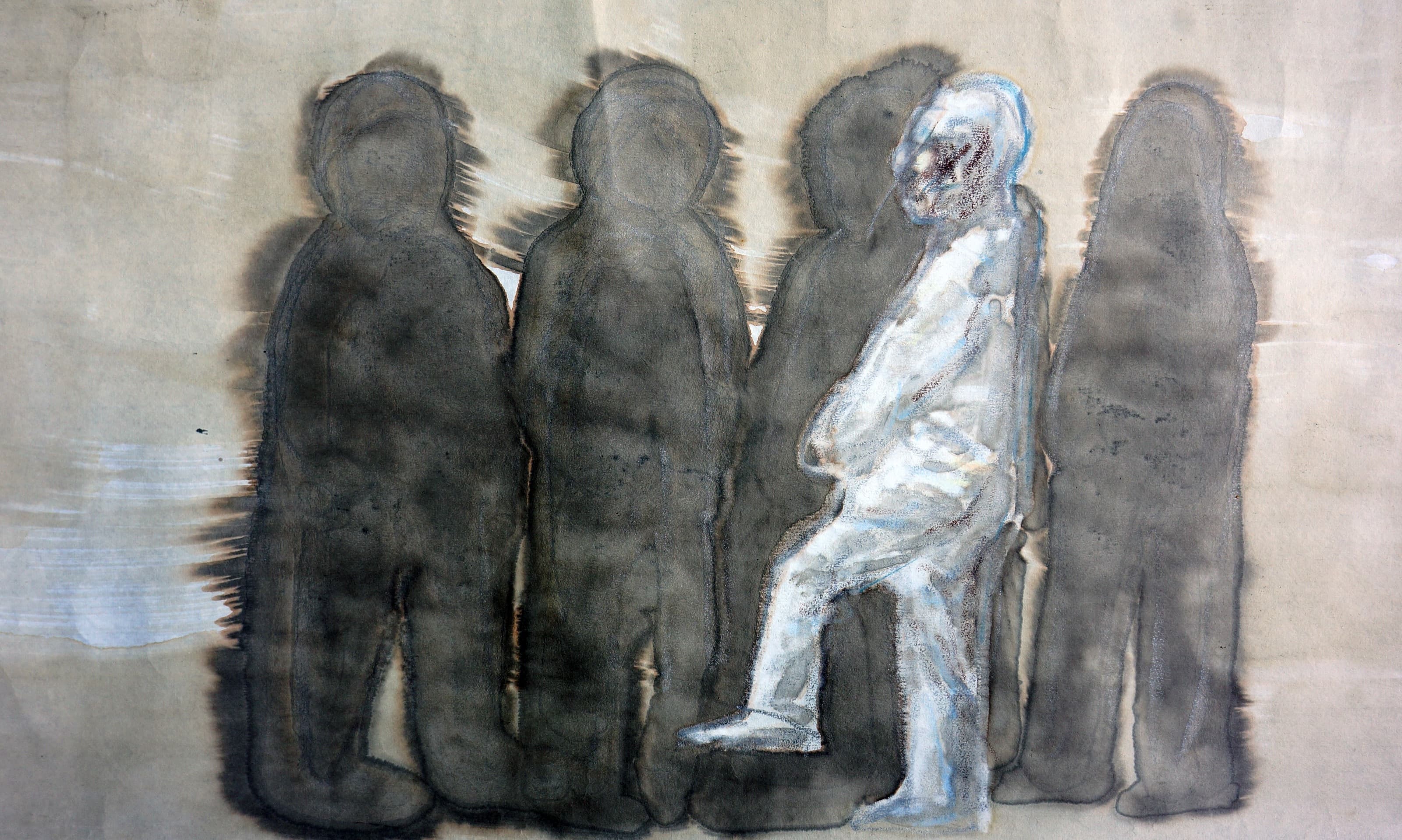
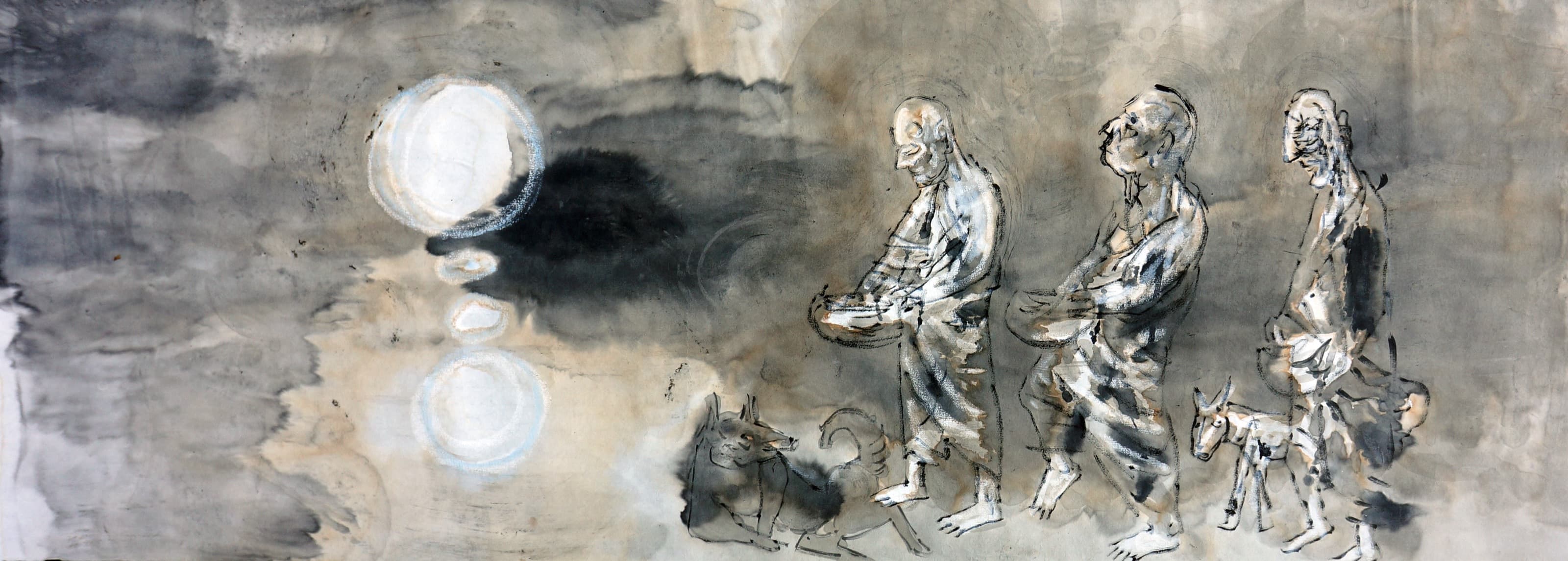
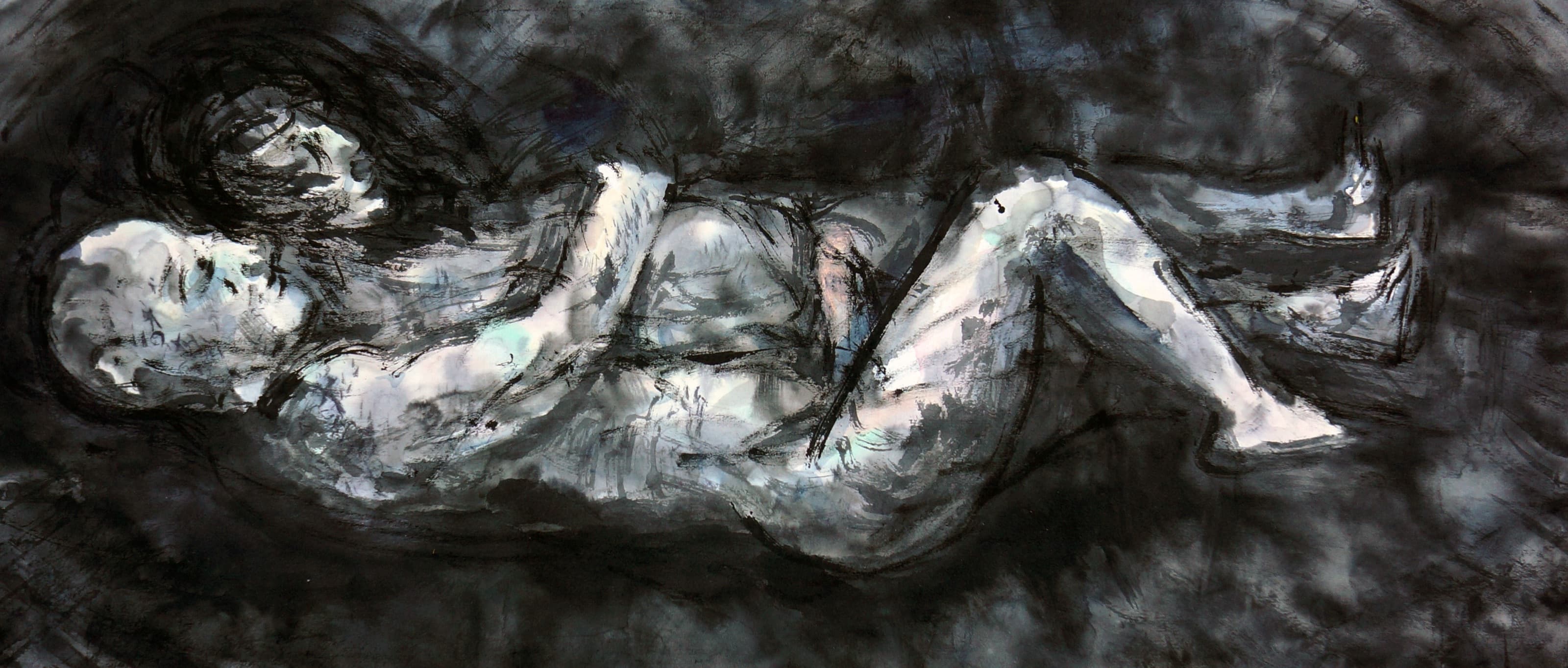
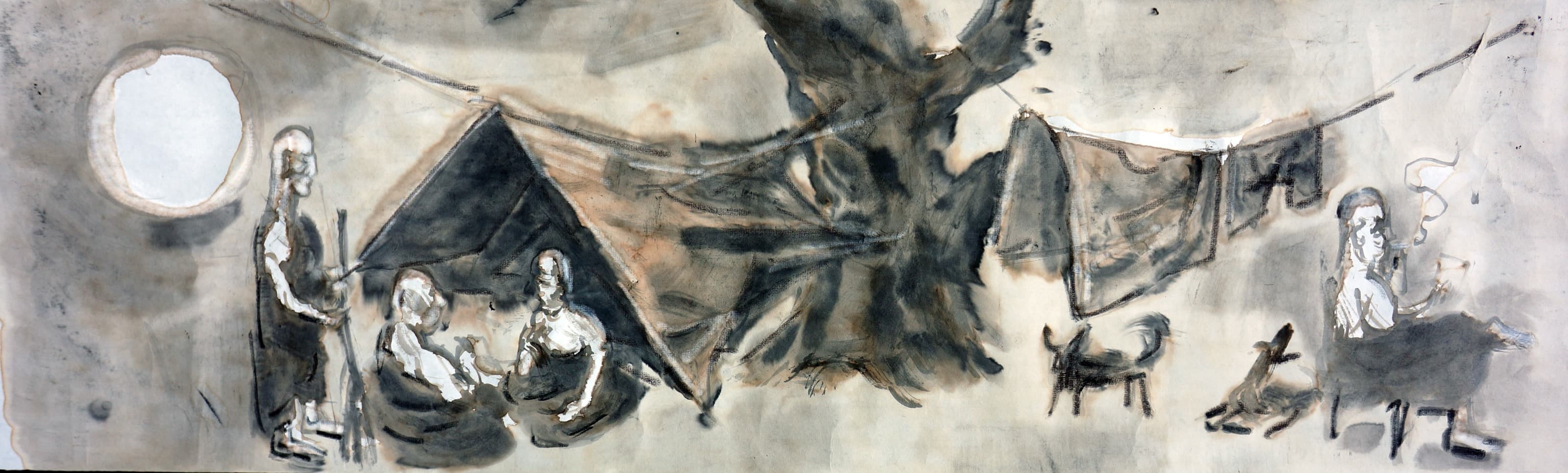
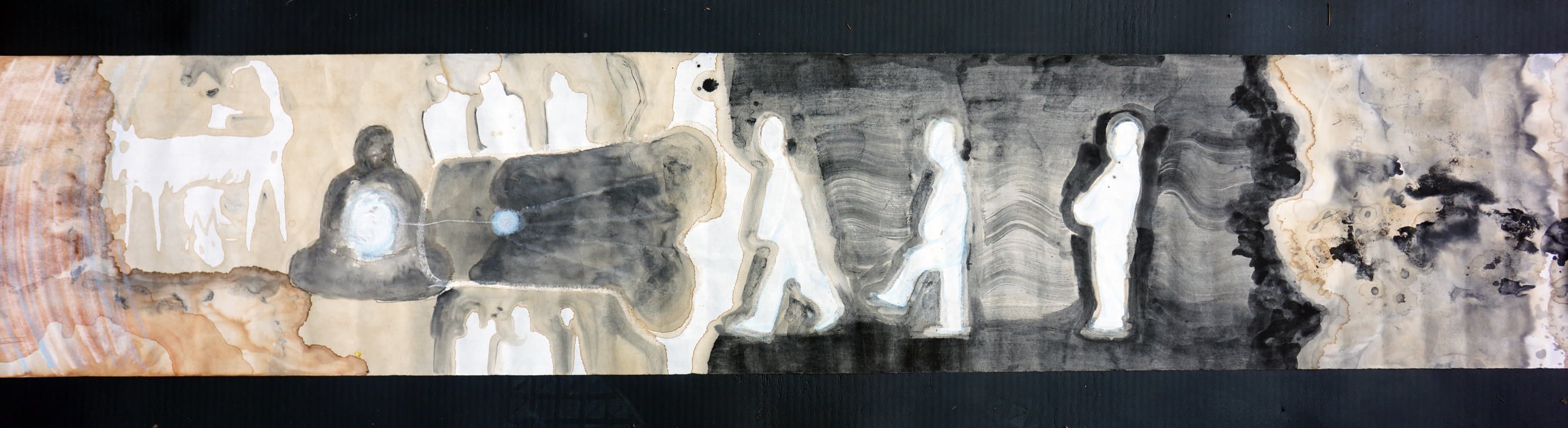
Thirty-five centimetres wide, fifty metres long. The tension between narrow and long corresponds to the body's constriction and extension. The scroll is not 'read'. It is lived through. Spread across the meditation-hall floor, walked over in walking meditation, bent over in seated practice, time sediments on the ground as geological strata.
The Sixteen Insight Knowledges Structure
The project takes the sixteen insight knowledges (ṣoḍaśa-ñāṇa) of the Visuddhimagga as its implicit structure: from the knowledge of discerning mind-and-body to the knowledge of reviewing, gradually piercing the Symbolic and touching the Real: that core which cannot be languaged, styled, or marketed.
Artist's Statement
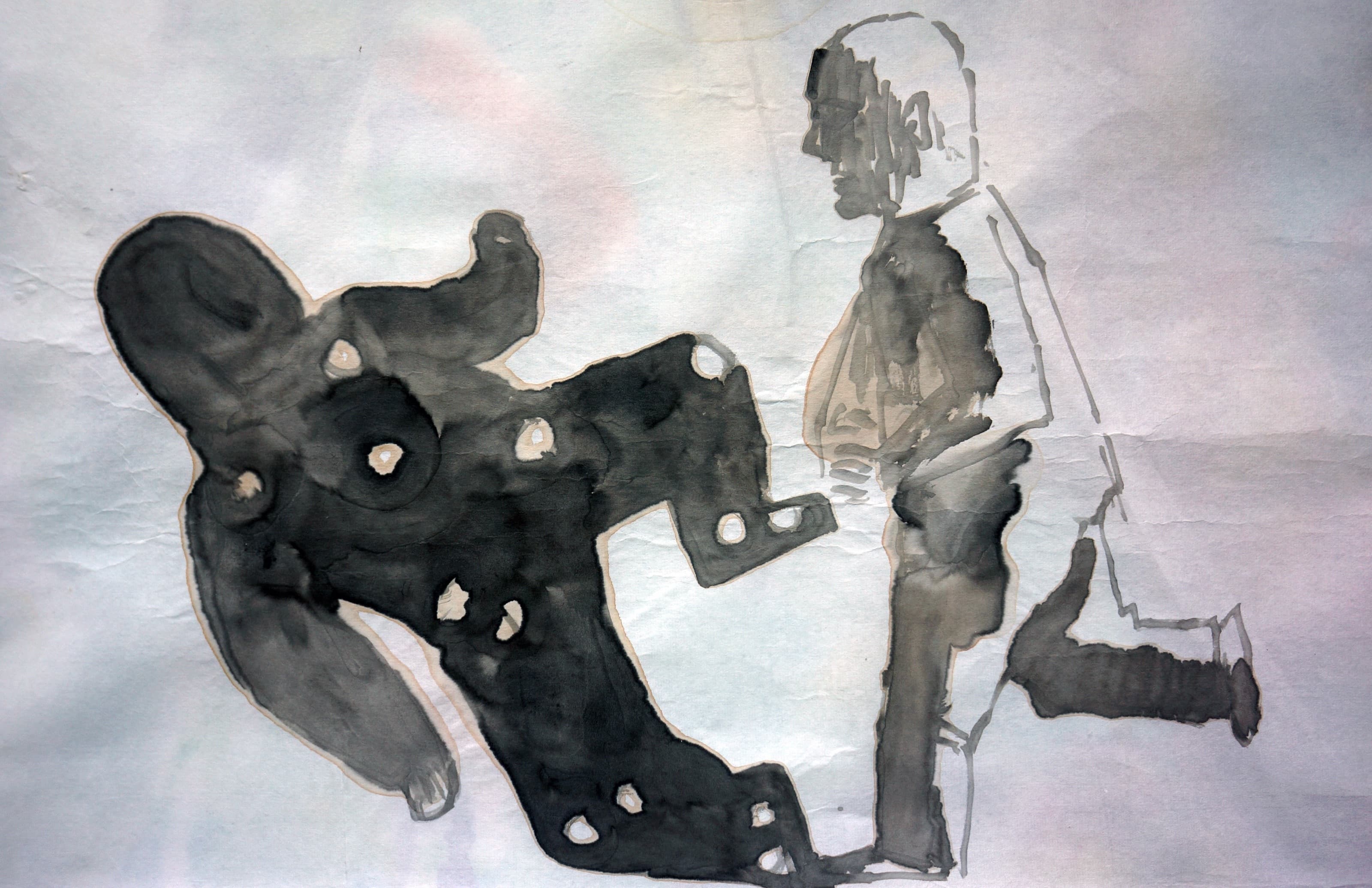
"Between observer and observed exists an angle: that is the 'who am I?' Who I am is sometimes unimportant; who is me begins to carry meaning. Art-making may be an unlawful means of recording and observing the self, but it is also saṃskṛta, a conditioned practice."
"If art could create a better world, I would give everything for it."